In Depth
Water Heater Repair and Replacement in Edmonton, Explained
Hot water tanks in Edmonton homes
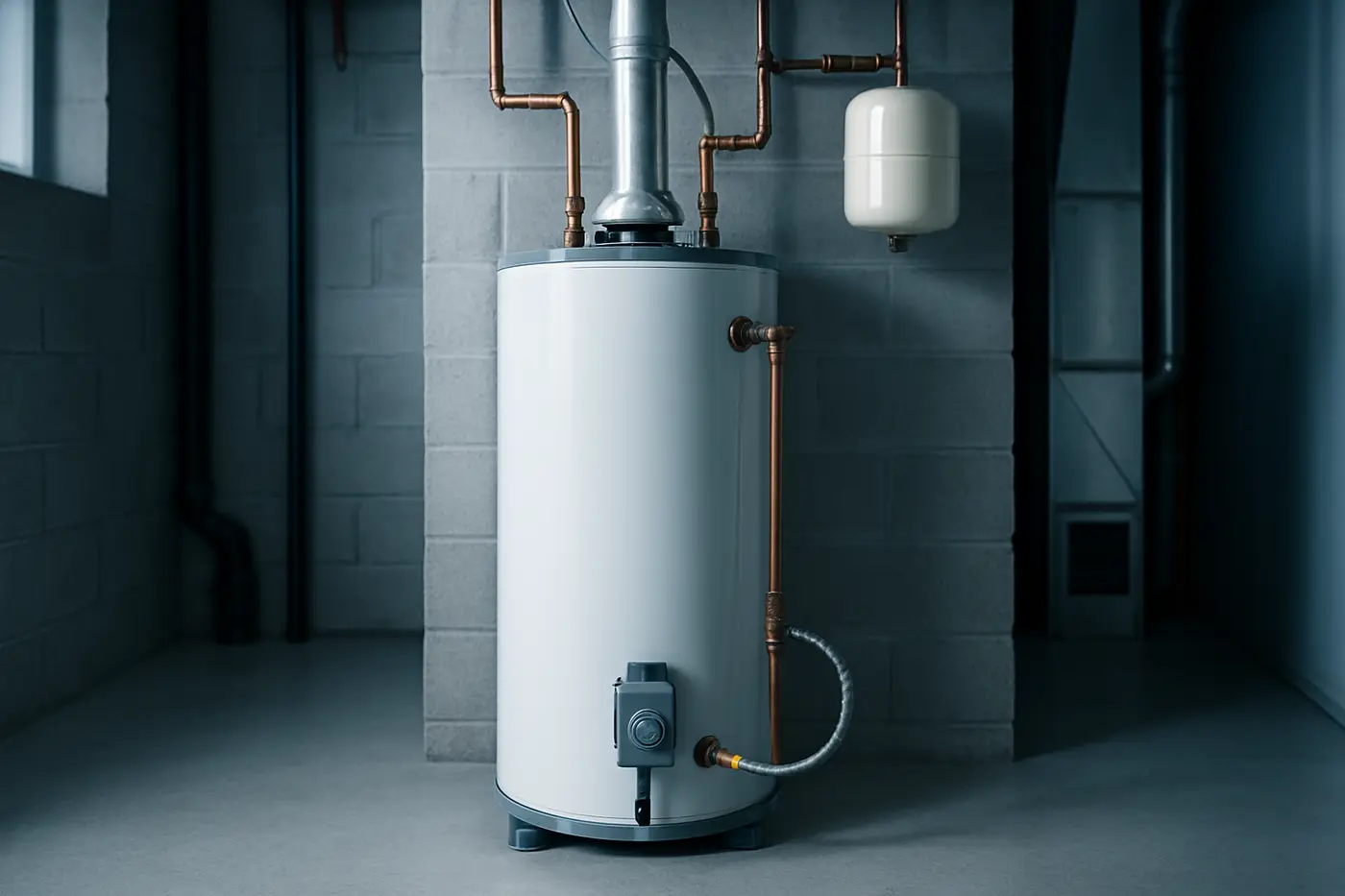
Most Edmonton homes have a 40 to 50 US gallon natural gas hot water tank in the utility room beside the furnace. Older houses usually have an atmospheric tank, which vents its exhaust up a metal flue into the chimney by natural draft. Newer homes often have a power-vent tank, with a fan on top pushing the exhaust out through PVC pipe in the side wall, or a tankless water heater mounted on the wall. Each one fails differently.
Edmonton tap water, supplied by EPCOR, is moderately hard. Minerals settle out as sediment at the bottom of a tank and as scale inside a tankless heat exchanger. That sediment is behind a lot of the rumbling tanks, slow recovery and early failures we see, and it is why flushing matters here.
What fails, by type
Atmospheric gas tanks are simple. The common failures are:
- A thermocouple or thermopile that no longer holds the pilot, so the pilot lights and goes out.
- A gas valve that fails to open or regulate.
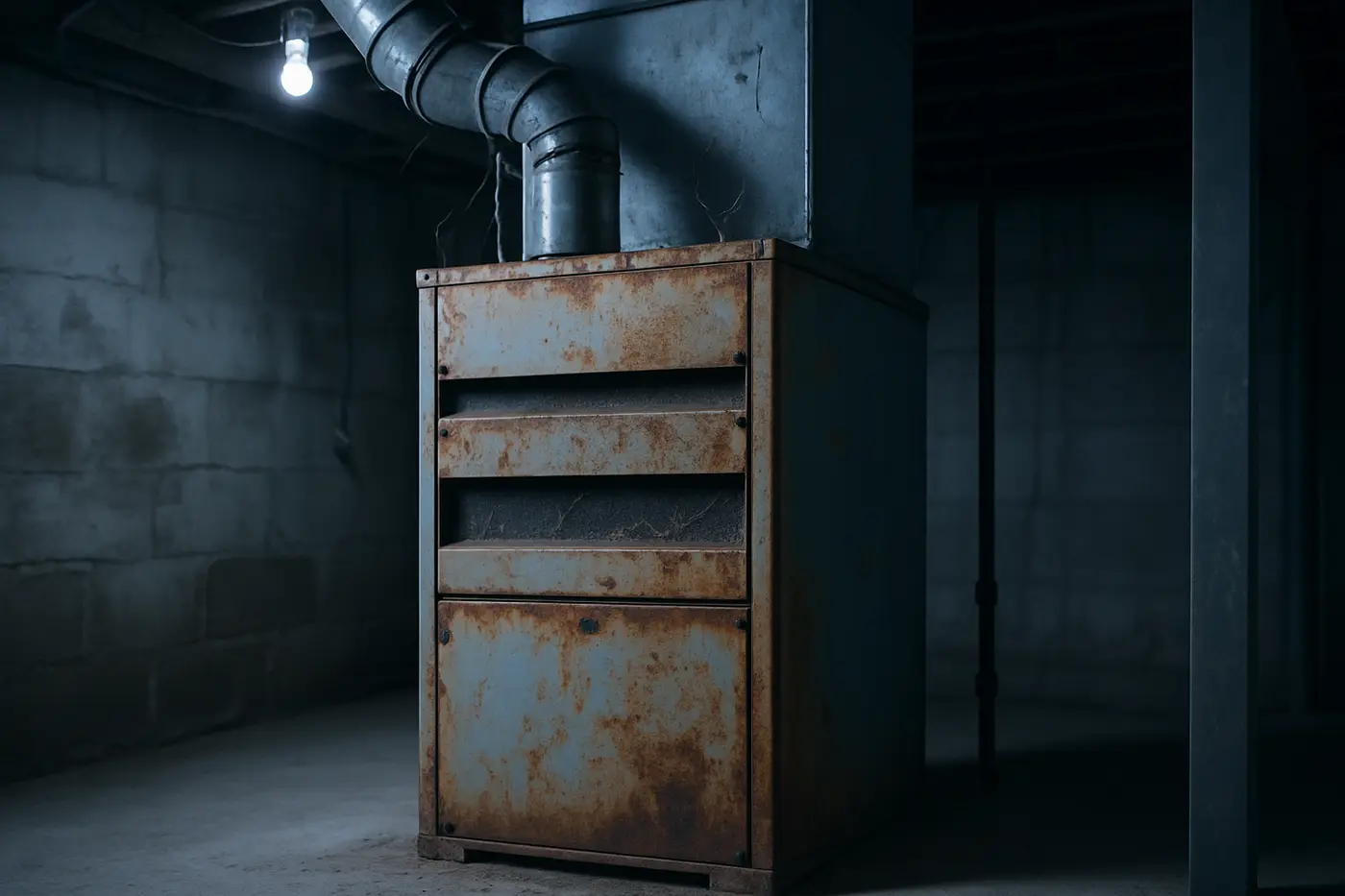
- An anode rod eaten away, which lets the tank itself start to corrode.
- Sediment build-up, causing rumbling, popping and slow recovery.
- A T&P valve that drips or has been leaking into its discharge pipe.
- A leak from the tank body or bottom seam, which means replacement.
Power-vent tanks have all of the above plus a fan, a pressure switch and a control. A blocked or frosted PVC vent in a cold snap will shut one down on its pressure switch, just like a high-efficiency furnace. Snow drifting against a side-wall vent in January is a common cause of a cold shower.
Tankless water heaters fail on scale in the heat exchanger, flame sensing and ignition faults, and venting problems. Edmonton’s water makes regular descaling part of owning one.
What you can check yourself
- Gas smell first. If you smell gas, leave the house now and call ATCO Gas’s 24-hour emergency line or 911 from outside.
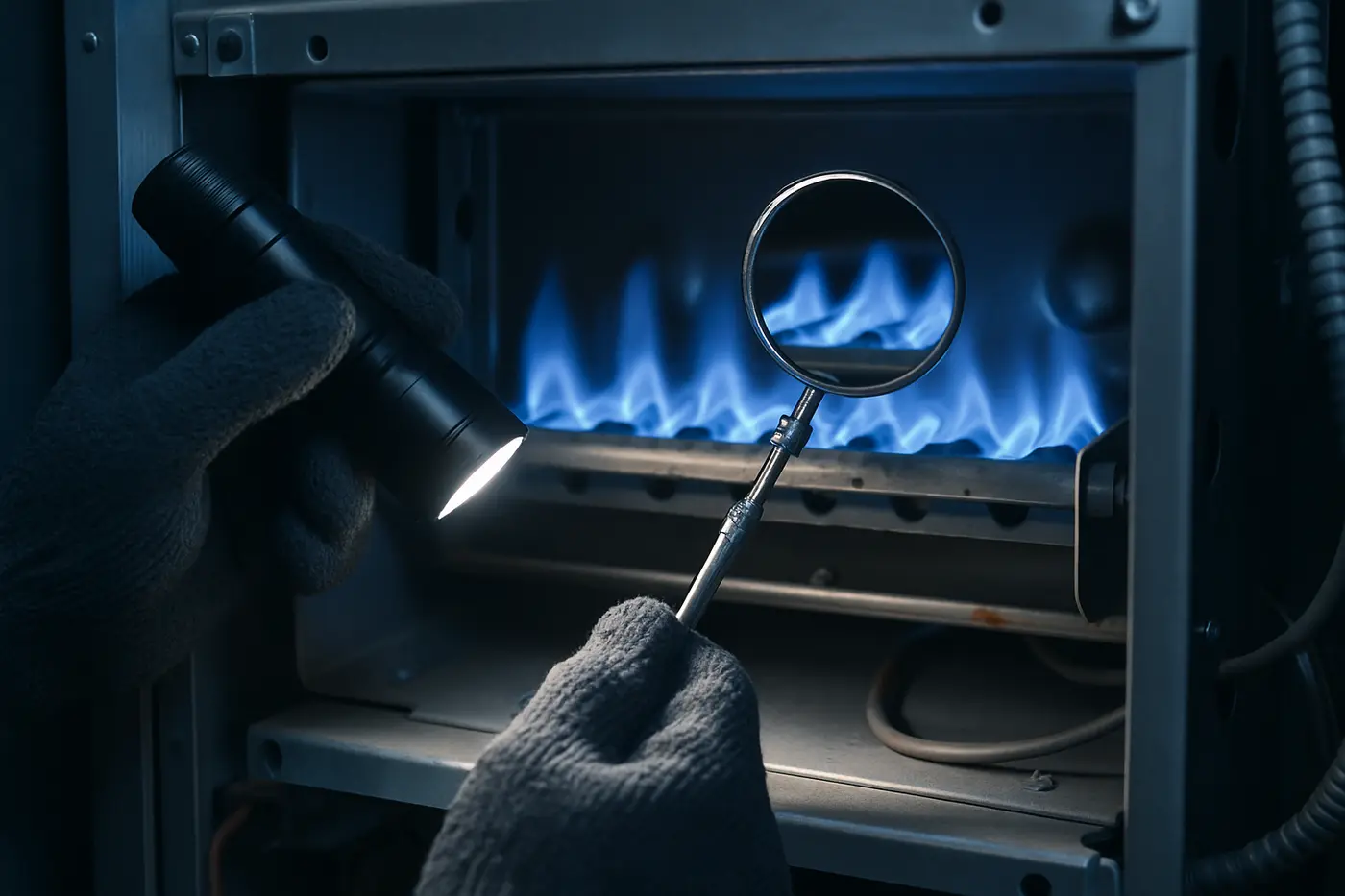
- Pilot. On an atmospheric tank, look through the sight window. If the pilot is out and there is no gas smell, the lighting instructions are on the tank’s label; follow them exactly. If it will not stay lit, stop there.
- Power. A power-vent tank or tankless unit plugs in or is wired to a circuit. Check the plug and the breaker.
- Vent. Walk outside and look at the side-wall vent pipes. Clear snow and frost from around them by hand.
- Leak location. Dry the area and see where the water comes from: a pipe fitting above, the drain valve at the bottom, the T&P discharge pipe, or the tank itself.
Do not remove the burner cover, work on the gas valve, or cap or plug the T&P valve. The T&P valve is the part that stops an overheated, over-pressure tank from failing, and a dripping one is telling you something is wrong.
Repair or replace
A water leak from the tank itself cannot be fixed. Everything else is worth pricing as a repair first. A thermocouple, a thermopile, a power-vent fan fault, a T&P valve or an anode rod typically lands in the $175 to $700 repair range, and on a tank that is otherwise in good shape that is money well spent.
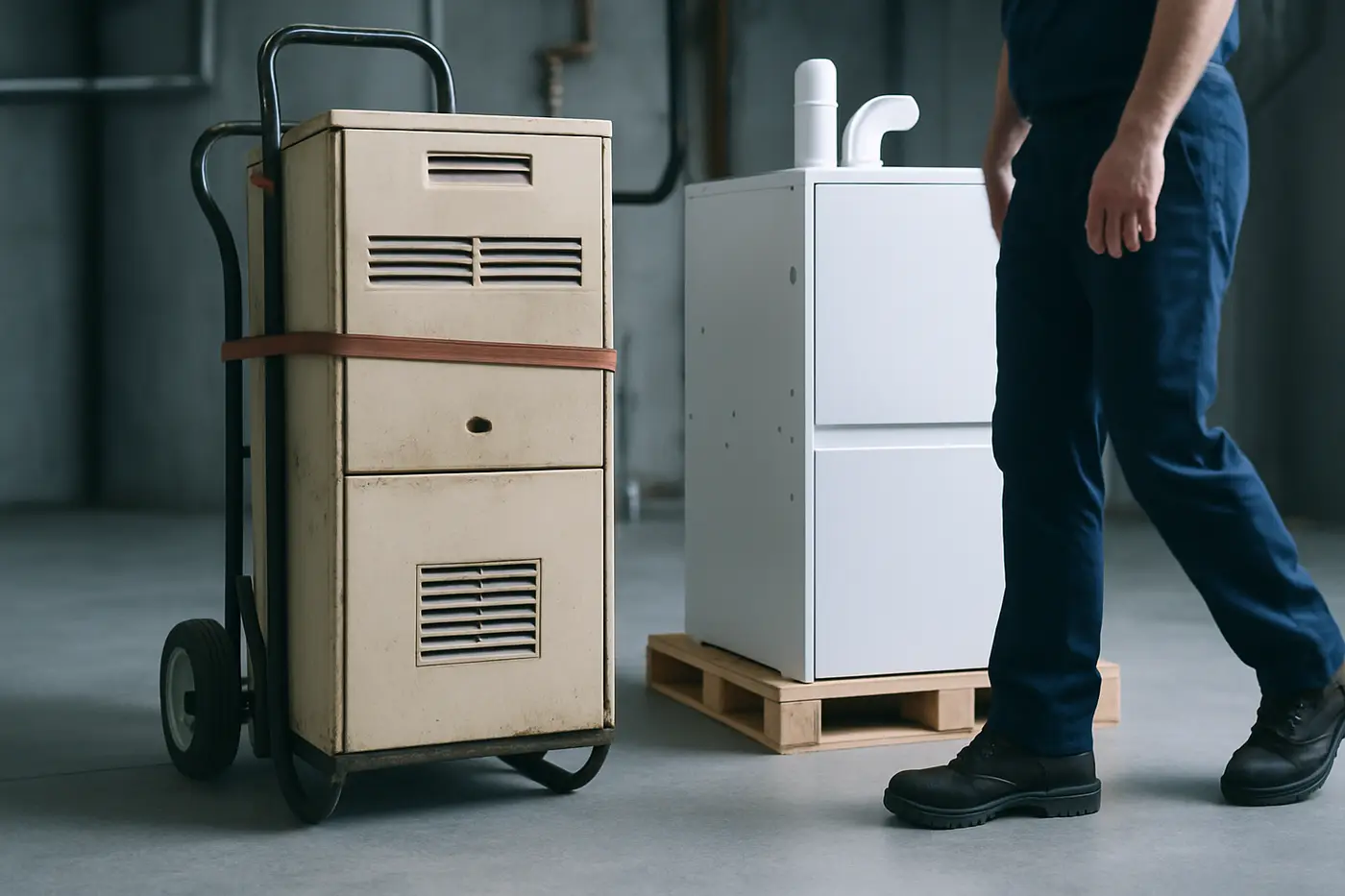
The case for replacing gets stronger when a tank is old, heavy with sediment, rusting at the bottom, and needs an expensive part such as a gas valve. The quote puts both prices on paper, and when replacement is the better call it says why. Many 1970s and 1980s homes in neighbourhoods like Clareview, Castle Downs and Mill Woods are already on their second tank since 2010, so this conversation comes up often.
The orphaned tank problem
In older Edmonton houses, the furnace and a natural-draft hot water tank often shared one chimney. When the furnace was replaced with a high-efficiency model vented through PVC in the side wall, the tank was left alone in a chimney sized for two appliances. It may not draft properly, which can spill exhaust into the house and leave soot around the top of the tank.
The fix is one of three: a chimney liner sized for the tank alone, a power-vent tank vented through the side wall, or re-venting. It is a standard line item on furnace replacements in 1950s to 1980s homes, such as the bungalows in Bonnie Doon, Jasper Place and Beverly and the older houses in Westmount and Glenora, and it typically adds $400 to $1,500. If your furnace was replaced and your tank was not, it is worth having the venting checked; a furnace inspection with a combustion and CO test covers both appliances in the same room. The furnace side of the question is in how much does a new furnace cost in Edmonton.
Choosing a replacement
- Atmospheric tank: the lowest price and the simplest, if the chimney venting is sound.
- Power-vent tank: vents through PVC in the side wall, which solves an orphaned-chimney problem and frees the chimney. It needs a power supply and costs more.
- Tankless: endless hot water and a small footprint, at a higher install cost and with regular descaling needed on Edmonton water.
If the furnace is also near the end of its 15 to 20 years, pricing both together often makes the venting plan simpler; see furnace replacement.
Keeping a tank healthy
A little attention adds years to a hot water tank on Edmonton water. Flushing sediment from the bottom of the tank on a regular schedule keeps the burner heating water instead of heating a layer of minerals, and the technician can do it on a service visit if the drain valve is old or stiff. The anode rod is the part that corrodes so the tank does not; checking it on an older tank and replacing it before it is gone is cheap insurance. Keep the area around a gas tank clear of paint cans, laundry and storage boxes so it gets the combustion air it needs. And on a power-vent tank, check the side-wall vent after every big snowfall, the same way you check the furnace vents beside it.
Permits and trades
A hot water tank replacement in Edmonton requires a gas permit, pulled by the contractor through the City of Edmonton or the surrounding municipality or its accredited agency, and an inspection. Gas work is done by a certified gasfitter, a compulsory certified trade in Alberta. Since 1 March 2019 Alberta has banned door-to-door sales of energy-related home products, including hot water tanks, so a salesperson at the door offering a new tank or a rental is breaking that rule.
What it costs
Typical Edmonton ranges; your price is confirmed in writing before any work starts. Repairs run $175 to $700. A 40 to 50 gallon atmospheric gas tank replacement is $1,900 to $3,200, a power-vent tank $2,900 to $4,500, and a tankless water heater $4,000 to $7,500. Venting conversion for an orphaned tank adds $400 to $1,500 where it is needed. The full list is on the pricing page. Written quotes for replacements are free.
Request a visit
Send the form with what the tank is doing, the type, and the size and date from the label if you can read them. We confirm the arrival window when we reply to your request. Start at the contact page.
Last updated September 24, 2026