In Depth
Heat Pump Installation in Edmonton, Explained
What a heat pump does, in plain terms
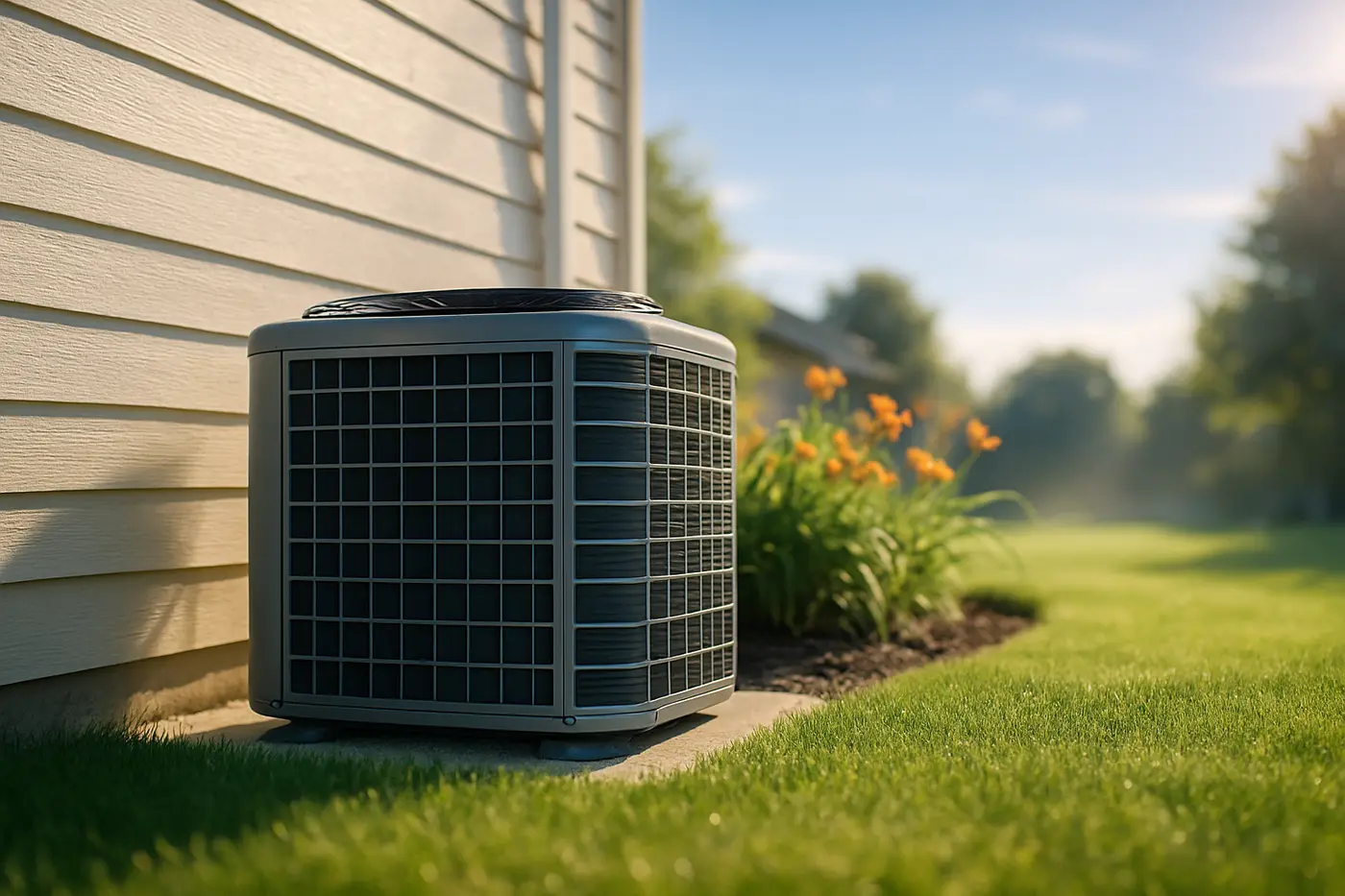
A heat pump is an air conditioner that can run in both directions. In summer it pulls heat out of the house and dumps it outside, exactly like central air. In winter it reverses and pulls heat out of the outdoor air, even cold air, and moves it inside. Because it moves heat rather than making it by burning gas, it can deliver more heat energy than the electricity it uses, at least until the weather gets very cold.
That last part is the whole story in Edmonton. January daily means sit around -10°C, cold snaps below -30°C happen in most winters, and the heating season runs roughly from late September to May. A heat pump here has to be chosen, sized and backed up with that in mind.
Honest numbers on cold-weather performance
Cold-climate air-source heat pumps are built to keep producing heat well below -20°C. What they do not do is produce the same amount of heat at -25°C as they do at 0°C. Capacity and efficiency both fall as the temperature drops. Manufacturers publish the capacity at low temperatures and the lowest temperature the unit will run at; those numbers belong on your quote, not just the rated capacity at mild conditions.
In practice:
- Around 0°C to -10°C, a large part of the Edmonton heating season, a well-sized cold-climate heat pump carries the house on its own efficiently.
- Around -20°C, a cold-climate unit is still heating, but at reduced output. Whether that covers the house depends on the house’s heat loss.
- At -30°C and below, like the January 2024 cold snap that pushed the region into the -40s with wind chill, the heat pump is not the main heat source. The backup is.
That is why nobody honest sells a heat pump in Edmonton as a sole heat source without backup. The details are in do heat pumps work in Edmonton winters.
Hybrid (dual-fuel): the usual Edmonton setup
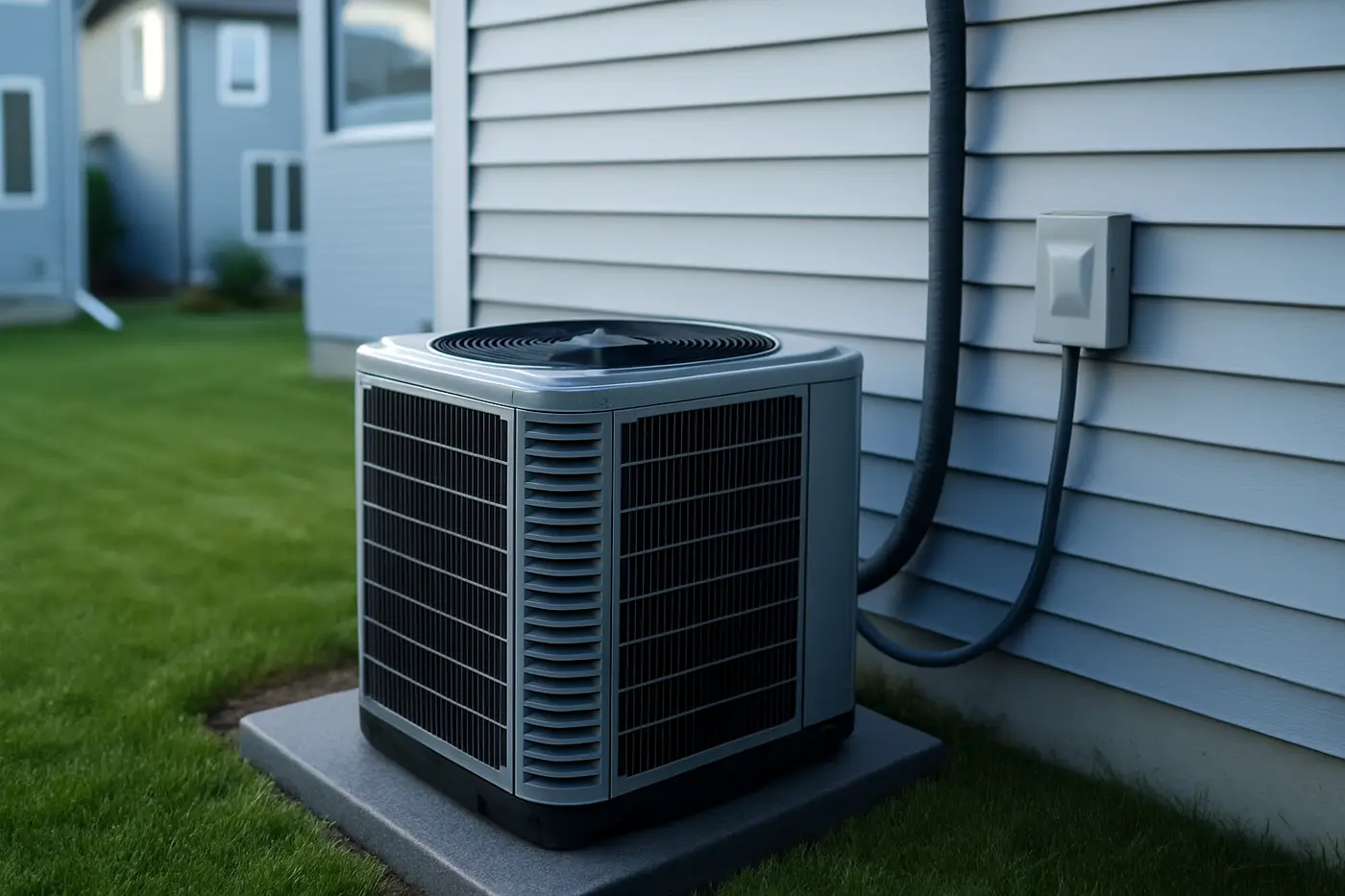
Most Edmonton homes heat with a natural gas forced-air furnace, and the most common heat pump install keeps it. The heat pump’s indoor coil sits on top of the furnace and uses the furnace blower and ducts. The controls run the heat pump above a set outdoor temperature and switch to the gas furnace below it. The switchover point is chosen for the house: where the heat pump’s output meets the house’s heat loss, adjusted for what gas and electricity cost.
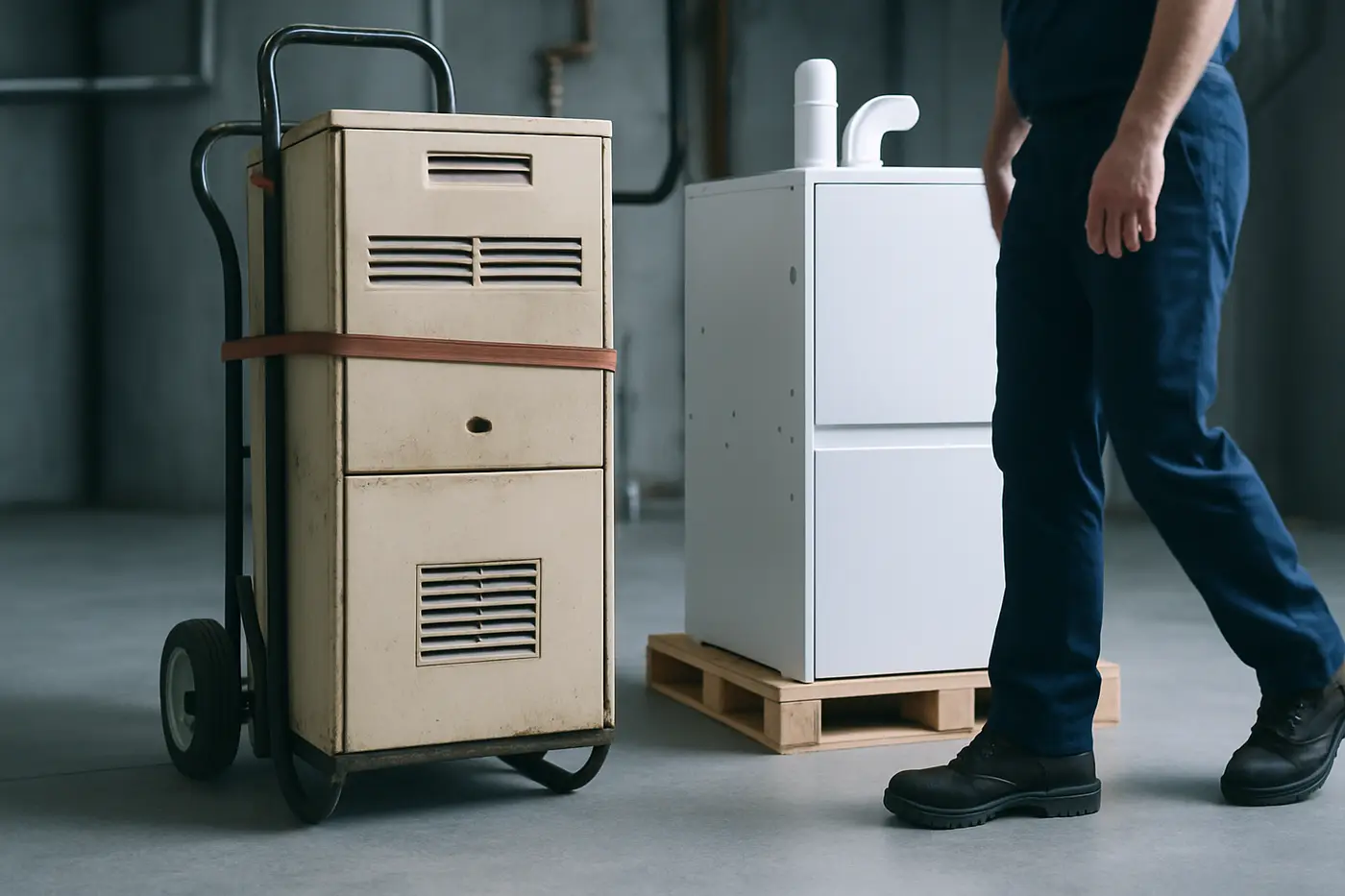
You get central air in summer, lower gas use through the shoulder seasons, and a gas furnace for the -30°C nights. If the furnace is young, it stays. If it is near the end of its 15 to 20 years, replacing it at the same time lets the blower and the coil be matched; see furnace replacement.
Houses without gas use electric backup heat instead, either in the air handler or in the rooms.
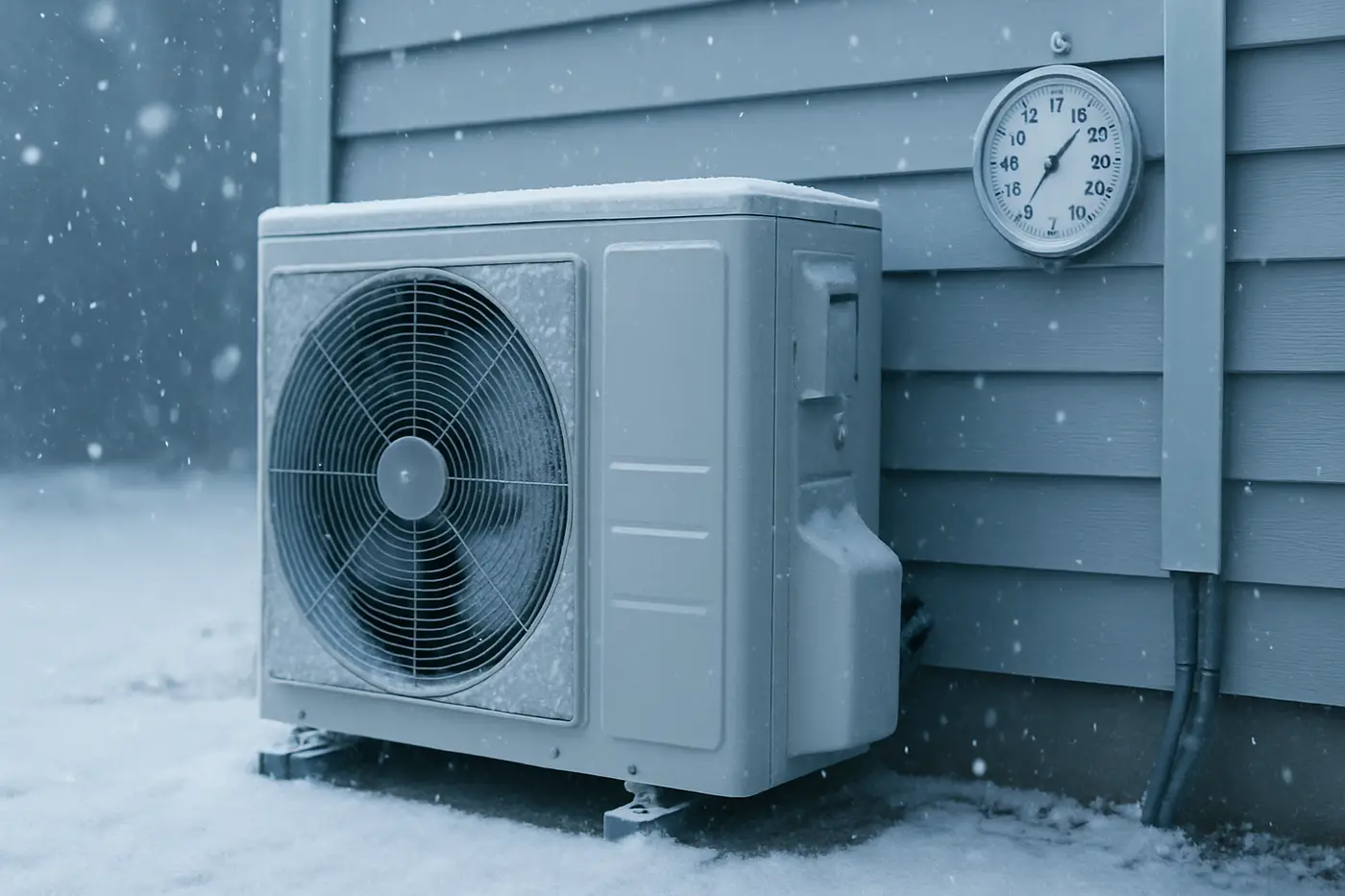
Living with a heat pump feels a little different from a furnace. It runs longer, steadier cycles, and the air at the registers is warm rather than hot. In winter the outdoor unit stops heating for a few minutes now and then to defrost its coil, and a cloud of steam rises off it. Setting the thermostat and leaving it, instead of turning it down at night and cranking it in the morning, lets the heat pump do more of the work before the furnace is called in.
Ducted or ductless
A ducted heat pump works through the existing forced-air system and reaches every room the ducts reach. It suits most houses built since the 1950s.
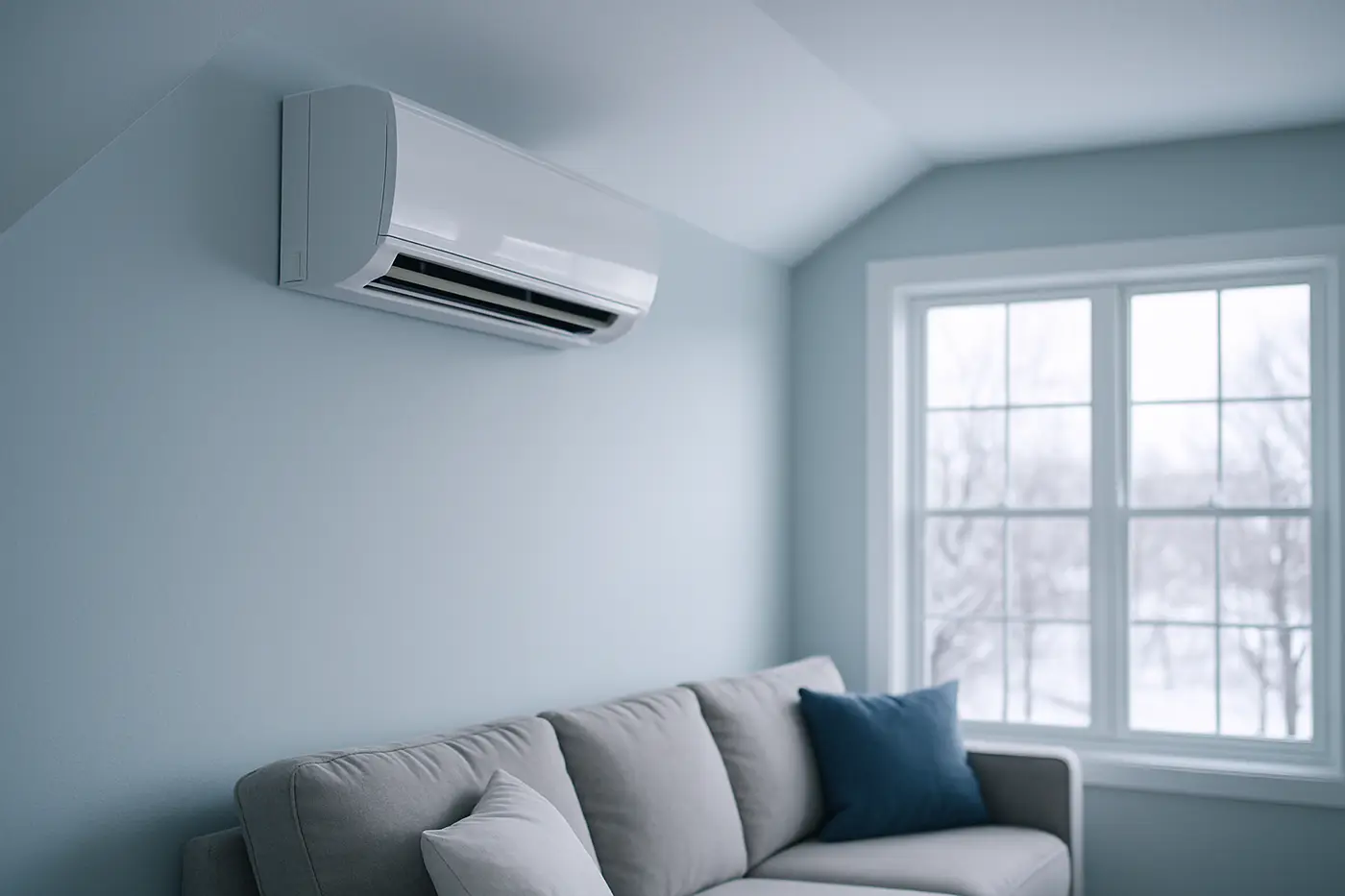
A ductless heat pump puts one or more indoor heads on walls, connected to an outdoor unit by a small line set. It suits character homes with boilers and radiators, bonus rooms over garages, basement suites, additions and garages. Many cold-climate models are ductless. See ductless mini-split installation.
Heat pumps in the suburbs
A lot of Edmonton heat pump interest comes from the newer suburbs and the towns around the city. Subdivisions built from the 1990s on in Terwillegar, Windermere, Heritage Valley and Ellerslie, and newer neighbourhoods in Spruce Grove, Stony Plain, Leduc, Beaumont and Sherwood Park, have high-efficiency furnaces, tight construction with HRVs, and ductwork that suits a heat pump coil. Builder-grade furnaces and air conditioners in the oldest of those phases are reaching 15 to 20 years, which is the natural moment to decide between a like-for-like swap and a hybrid system.
In the older southeast and west of the city, in Mill Woods, Callingwood and Jasper Place, the ducts are older and the returns often small, so the walk-through checks whether the ducts can carry the airflow a heat pump needs. Outside the city limits, in Spruce Grove, Leduc, Beaumont or Sherwood Park, permits go through the surrounding municipality or its accredited agency, and the contractor pulls them there too.
Placing the outdoor unit in snow country
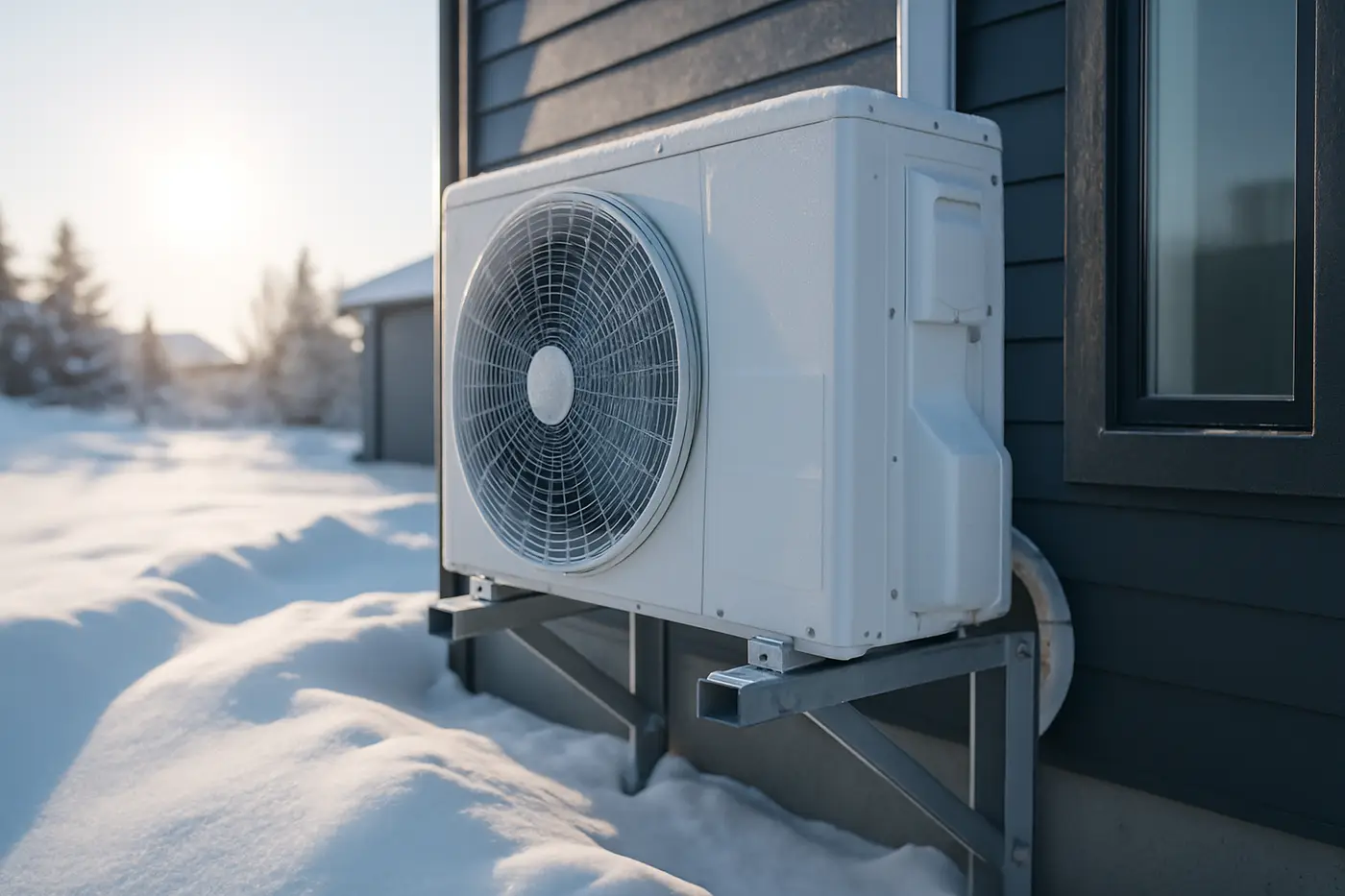
A heat pump’s outdoor unit runs all winter, which an air conditioner never has to do. It needs to sit on a raised stand or wall bracket above the snow, clear of roof drip lines and away from where snow is piled. In heating mode it periodically runs a defrost cycle, and the melt water has to drain away and freeze somewhere harmless, not on a walkway or a step. It also needs the clearances from windows, property lines and the gas meter that any outdoor unit needs.
Rebates and financing
Programs open and close, so check what is open at the time you buy. The federal Canada Greener Homes Grant closed to new applicants in early 2024. The City of Edmonton’s Clean Energy Improvement Program (CEIP) has offered financing for energy upgrades such as heat pumps, repaid through property taxes, in intakes that open and close. We do not quote rebate amounts or promise eligibility. If a program is open, the quote can be written to match what its paperwork asks for.
Permits and trades
A heat pump install typically needs electrical work under a permit, and new ductwork or a new system may also need an HVAC or mechanical permit. If the furnace is replaced at the same time, that needs a gas permit and an inspection. The contractor pulls the permits the job needs. Refrigerant work is done by a certified refrigeration and air conditioning mechanic and gas work by a certified gasfitter, both compulsory certified trades in Alberta.
What it costs
Typical Edmonton ranges; your price is confirmed in writing before any work starts. A cold-climate ducted heat pump installed as a hybrid with your existing furnace runs $9,000 to $18,000. A single-zone ductless system is $4,000 to $7,500, and multi-zone with two to four heads $8,500 to $18,000. For comparison, central air on the existing furnace is $4,800 to $8,500, and a new single-stage high-efficiency furnace is $4,800 to $7,500. The full list is on the pricing page. Written quotes for replacements are free.
Request a quote
Send the form with the age of the house and furnace, whether you have gas, and whether cooling, lower gas use or both matter most. A walk-through is booked and the quote comes back in writing, with the heat pump option and, where it fits better, a plain air conditioner option beside it. Start at the contact page.
Last updated September 24, 2026