In Depth
Furnace Replacement in Edmonton, Explained
When replacement is the right call
A furnace in Edmonton runs from late September into May, far more hours a year than one in Vancouver or Toronto, and its typical service life is 15 to 20 years. It is shorter when the furnace was oversized and short-cycled, or never maintained. That still leaves a lot of furnaces that are worth repairing, and the honest starting point for any replacement is whether you need one.
Replacement is the right call when:
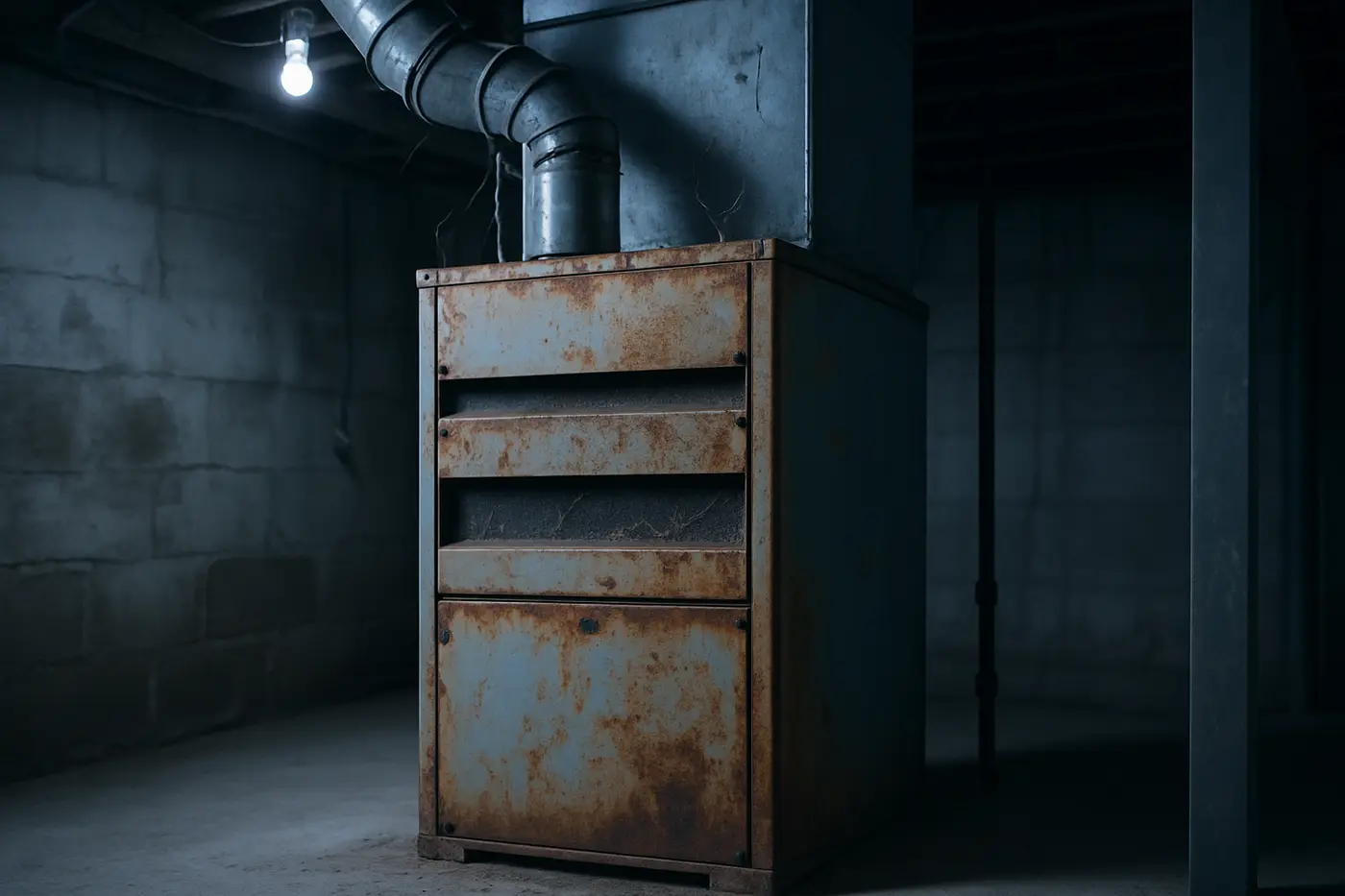
- The heat exchanger is cracked. It usually means replacement. The part is expensive, the labour is heavy, and on a furnace old enough to crack one, the rest is not far behind.
- The furnace is past about 20 years and needs a major part like an inducer, a control board or a blower motor.
- It has had repeated major failures in a couple of seasons.
- It is a mid-efficiency furnace still venting into a chimney. It is old, and parts are harder to find every year.
Repair is the right call when a 12-year-old furnace needs a $300 igniter or a flame sensor, or when a 15-year-old furnace with a sound heat exchanger has its first real failure. The rules we use are laid out in repair or replace your furnace.
What it costs
Typical Edmonton ranges; your price is confirmed in writing before any work starts.
| Replacement | Typical range |
|---|---|
| Single-stage 95–96% AFUE, installed (straight swap) | $4,800–$7,500 |
| Two-stage or modulating 96–98% AFUE, installed | $6,500–$11,000 |
| Chimney liner or hot water tank re-vent (orphaned tank) | $400–$1,500 |
| Power-vent hot water tank, replaced | $2,900–$4,500 |
| Humidifier on the new furnace | $500–$1,100 |
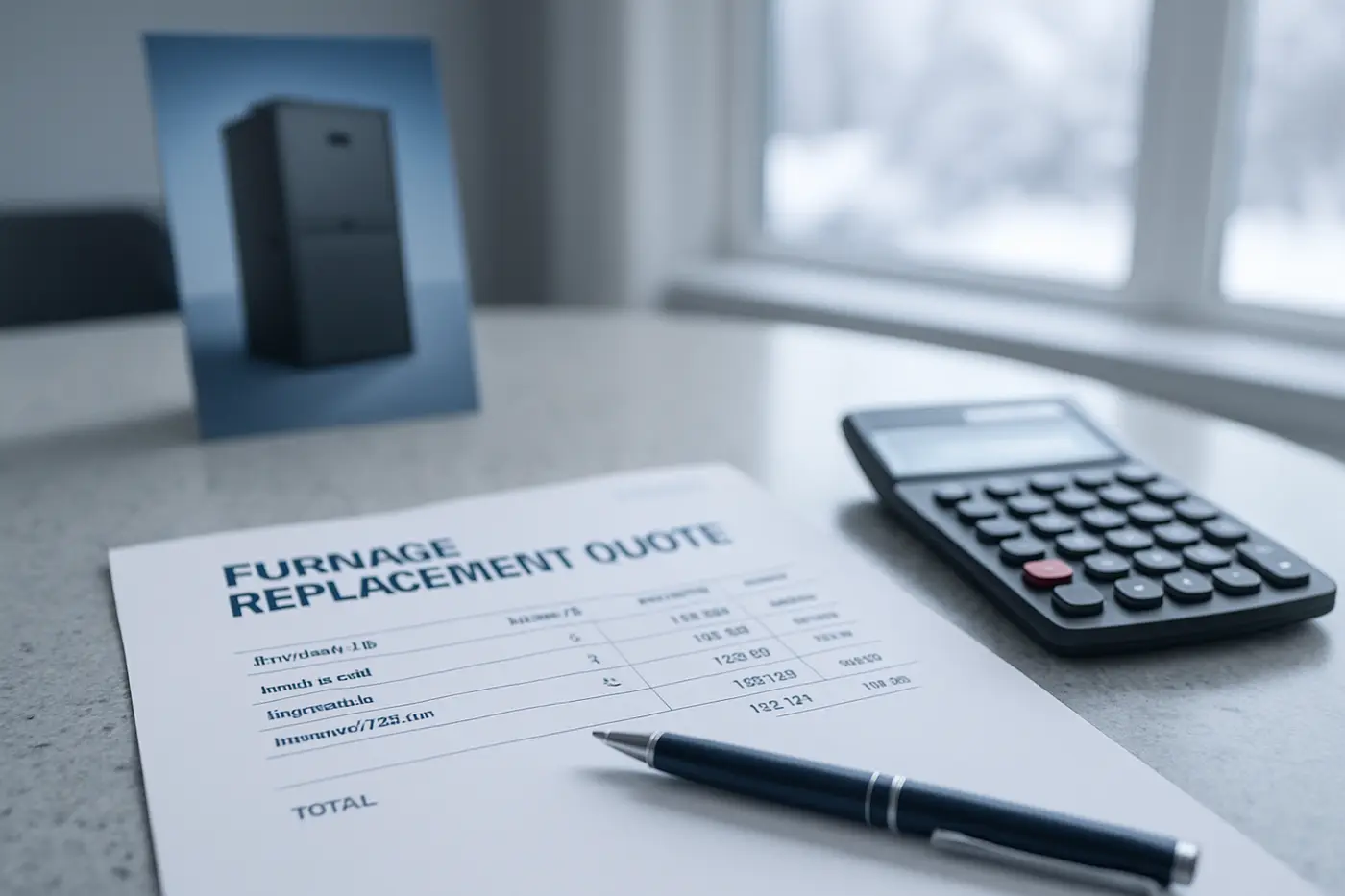
What moves the number: the stage count and blower, the length and route of the new venting, whether the old chimney leaves a hot water tank orphaned, duct changes, and access to the furnace room. The detailed breakdown is in the new furnace cost guide and the full table on the pricing page. Written quotes for replacements are free.
The orphaned hot water tank
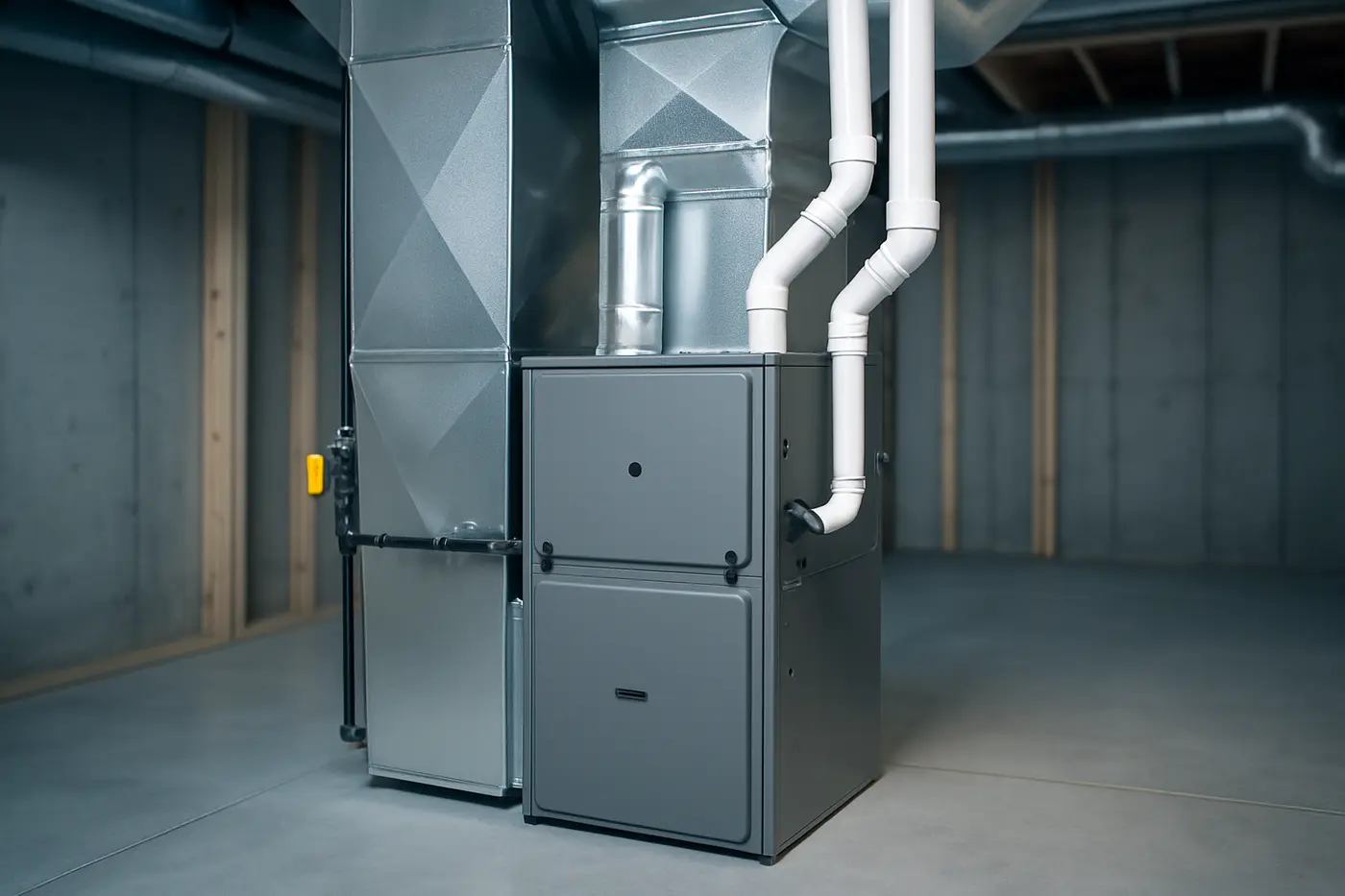
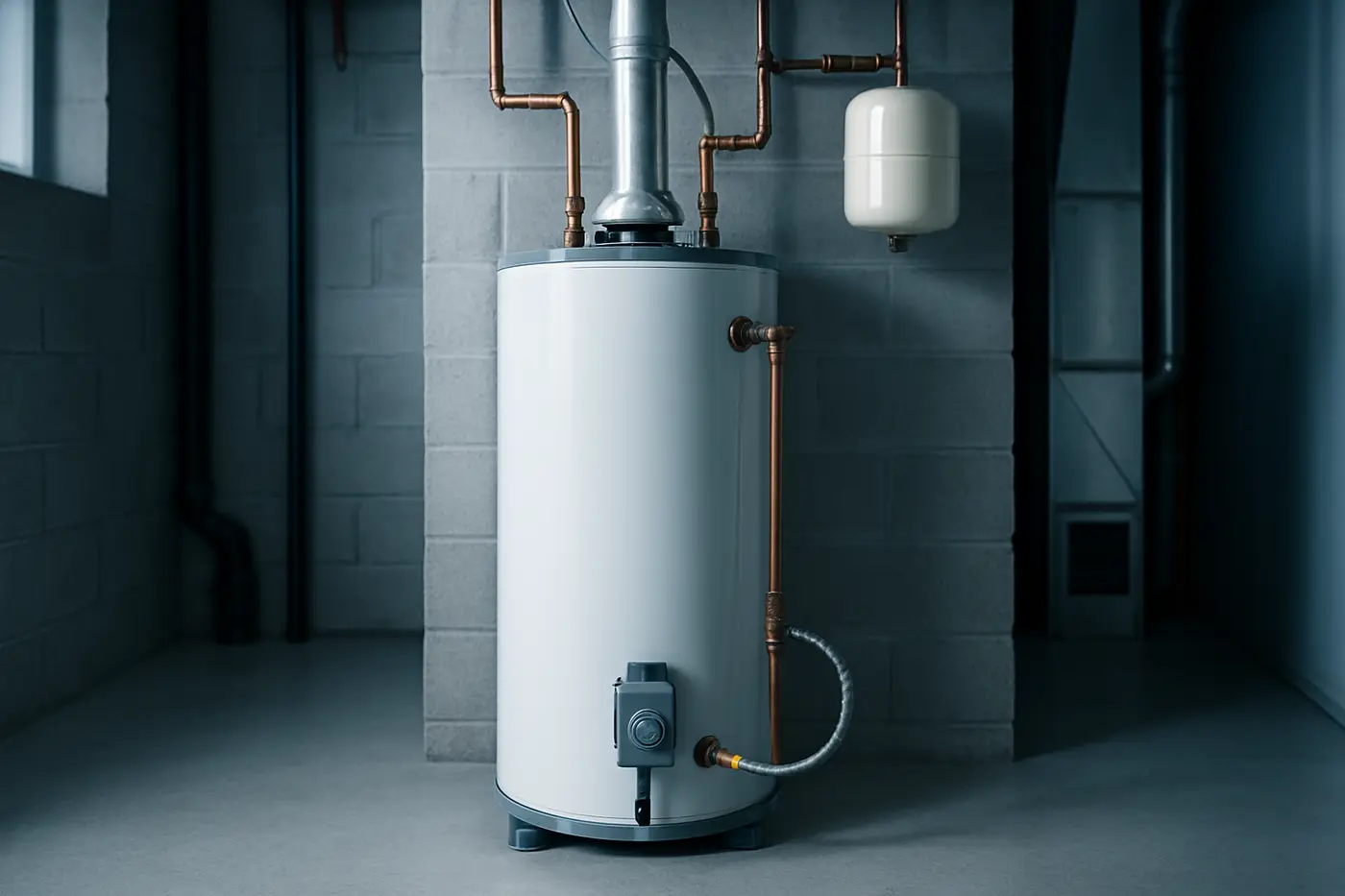
This is the line item that surprises people in older Edmonton homes. A 1960s bungalow in Jasper Place or Bonnie Doon usually had a chimney-vented furnace and a chimney-vented hot water tank sharing the same flue. Since the end of 2009, new natural gas furnaces sold in Canada must be at least 90% AFUE, which means condensing furnaces that vent out the side wall in PVC. When the old furnace leaves the chimney, the hot water tank is left alone in a flue sized for two appliances. It may not warm the chimney enough to draft properly, and a tank that does not draft spills combustion gases into the basement.
The fixes are a chimney liner sized for the tank, a power-vent tank that vents in PVC like the furnace, or re-venting. Which one makes sense depends on the age of the tank: paying for a liner to keep a 12-year-old tank running rarely does. If the tank is near the end, replacing it with a power-vent unit at the same time is often the tidier answer; see hot water tank replacement. Either way, it belongs on the quote, not as a surprise on install day.
Single-stage, two-stage or modulating
All new furnaces are high-efficiency, 95 to 98% AFUE. The choice that changes how the house feels is staging.
Single-stage fires at full capacity every time. It is the lowest price, and in a properly sized installation it heats the house fine. It is also the loudest start and the widest temperature swing.
Two-stage runs on a low fire most of the winter and switches to high fire in a cold snap. Cycles are longer and quieter, rooms are more even, and in a two-storey house the upstairs bedrooms tend to stay closer to the main floor.
Modulating adjusts the fire in small steps to match the load. It gives the most even heat and the highest price.
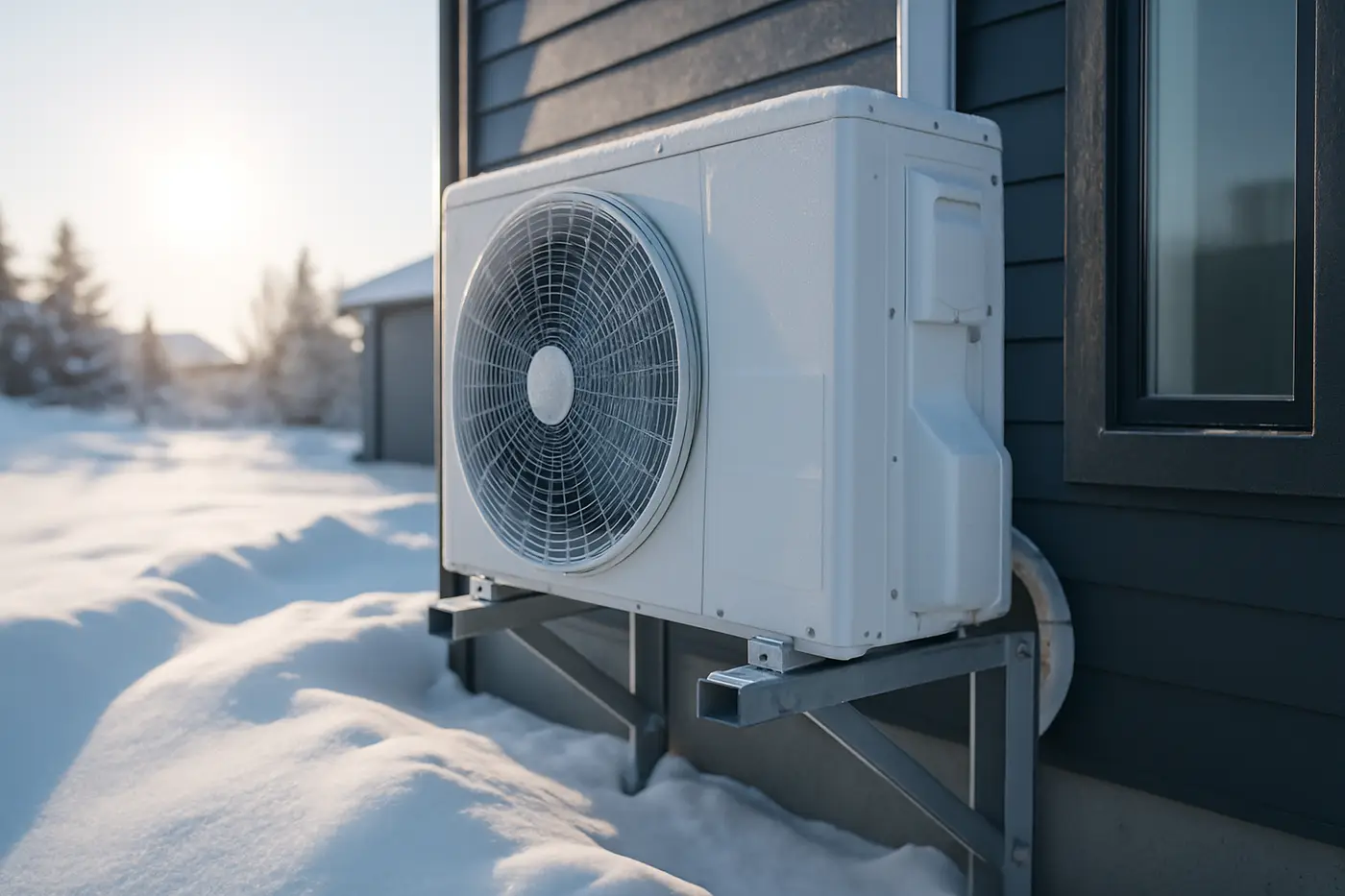
A variable-speed (ECM) blower pairs well with two-stage and modulating furnaces, and it makes central AC or a cold-climate heat pump easier to add later. Lennox, Carrier, Goodman, Trane, Rheem and others are all installed in Edmonton. Brand matters less than sizing, venting and installation.
Sizing the new furnace
Copying the size of the old furnace is how oversizing gets passed from one generation to the next. In 1970s and 1980s suburbs like Clareview or Castle Downs, the furnace being replaced is often the second or third in the house, and each was sized off the one before it. Windows, insulation and air sealing may have changed since. A heat loss calculation, room by room, sizes the new furnace to the house as it is now. A right-sized furnace runs longer, quieter cycles and lasts longer.
Install day
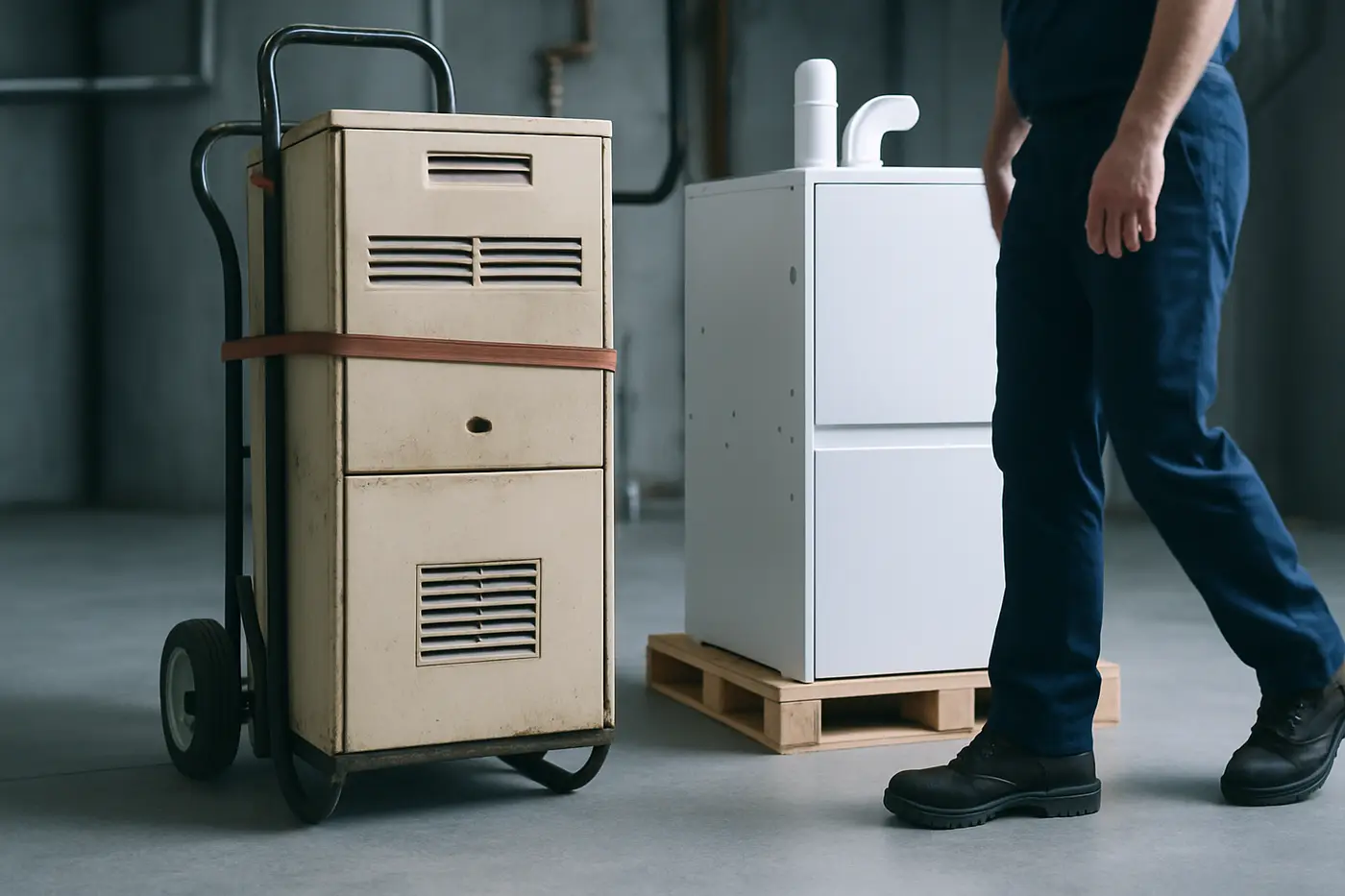
Most straight swaps are done in a day, with the gas off to the furnace for part of it. The old furnace is disconnected and carried out, the new one is set on the same footprint or close to it, and the plenum and return are adapted to fit. The gas connection is made by a certified gasfitter and leak-tested. New PVC intake and exhaust go out the side wall, the condensate line is routed to the drain away from cold walls, and the chimney opening is sealed or the tank is re-vented. At start-up, combustion, gas pressure, temperature rise and static pressure are measured and written down, and the filter size and thermostat settings are gone over with you before the technician leaves.
What a written quote should list
Ask for these on paper, and compare quotes line by line:
- Make, model number, AFUE and heating capacity.
- Single-stage, two-stage or modulating, and the blower type.
- Venting route, termination location and condensate routing.
- Chimney liner, tank re-vent or tank replacement if the tank is orphaned.
- Duct changes, thermostat, filter rack.
- Removal and disposal of the old furnace.
- The gas permit and inspection.
- Price before GST, and warranty terms from the manufacturer and the contractor.
Door-to-door sales are banned
Since 1 March 2019, Alberta has banned door-to-door sales of energy-related home products, including furnaces, air conditioners and hot water tanks. Anyone knocking to sell you a furnace, or to “inspect” one and then sell you a new one, is breaking the rule. A replacement starts when you ask for it.
Permits and trades
Gas work in Alberta is done by a certified gasfitter, refrigerant work by a certified refrigeration and air conditioning mechanic, and a furnace replacement needs a gas permit that the contractor pulls through the City of Edmonton or the surrounding municipality, followed by an inspection. New ductwork may also need a mechanical permit. The contractor pulls the permits the job needs.
Get a written quote
Request a visit with the age of the furnace, what failed or what a technician told you, and whether the hot water tank shares the chimney. You will get a repair-or-replace answer first and, if it is replacement, a free written quote with every line listed.
Last updated September 24, 2026