Skip to content
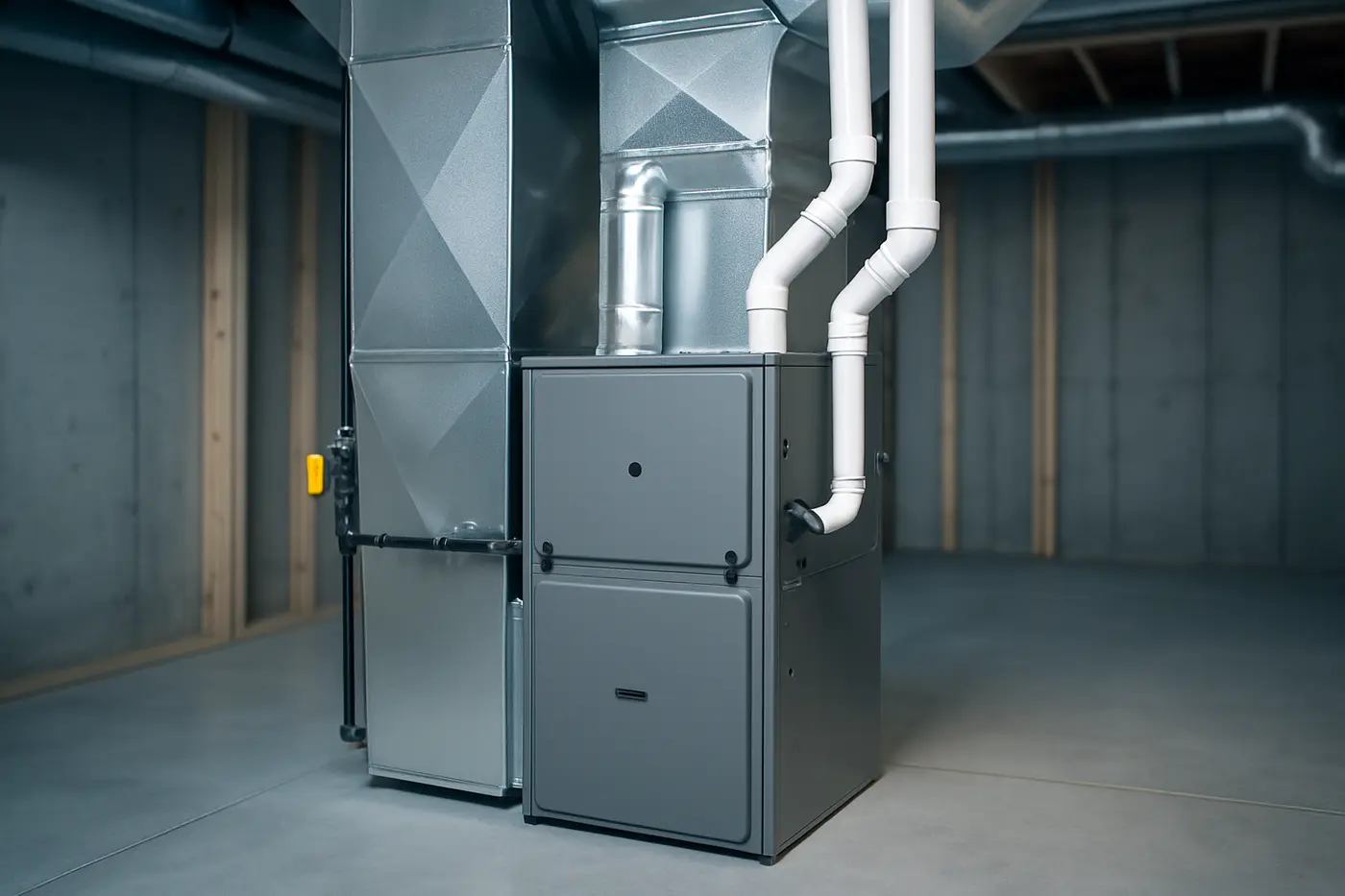
New high-efficiency gas furnace installed with fresh ductwork and PVC venting

Heating · Edmonton and area

Furnace Installation Edmonton

A new furnace for an addition, a basement development, a garage suite or a house that has outgrown its heat. It starts with a room-by-room heat loss calculation, not a guess from the square footage, and ends with a gas permit, an inspection and a written record of what was installed.

  • Written Price
  • Certified Gasfitters
  • Gas Permit Pulled
  • Honest Advice
  • Furnace, AC & Water

Diagnosis first

The real cause found and explained before anyone talks about parts or a new unit.

Price in writing

Parts, labour and permit on paper before work starts. No surprise lines on the invoice.

Certified trades

Gas work by certified gasfitters, refrigerant work by certified refrigeration mechanics.

New high-efficiency gas furnace installed with fresh ductwork and PVC venting

Not sure it needs a technician?

Many no-heat calls are a filter, a switch or a frosted vent. Our safe checks come first.

What's Included

Everything the Job Needs, Scoped First

Every furnace installation visit in Edmonton includes the work below as standard. It is written into the quote, so nothing appears on the invoice that you didn't see first.

  • Room-by-room heat loss calculation for the house, including the addition or basement being developed
  • Furnace size, stage count and blower chosen from the calculation and the existing ductwork
  • High-efficiency 95–98% AFUE furnace with PVC intake and exhaust run to side-wall terminations placed away from drifts, windows and the gas meter
  • Condensate trap, line and drain or pump routed where it cannot freeze
  • Ductwork assessed and extended or modified for new rooms, with returns sized to match
  • Gas permit pulled by the contractor, gas work by a certified gasfitter, municipal inspection booked
  • Start-up with combustion test, gas pressure, temperature rise and static pressure recorded
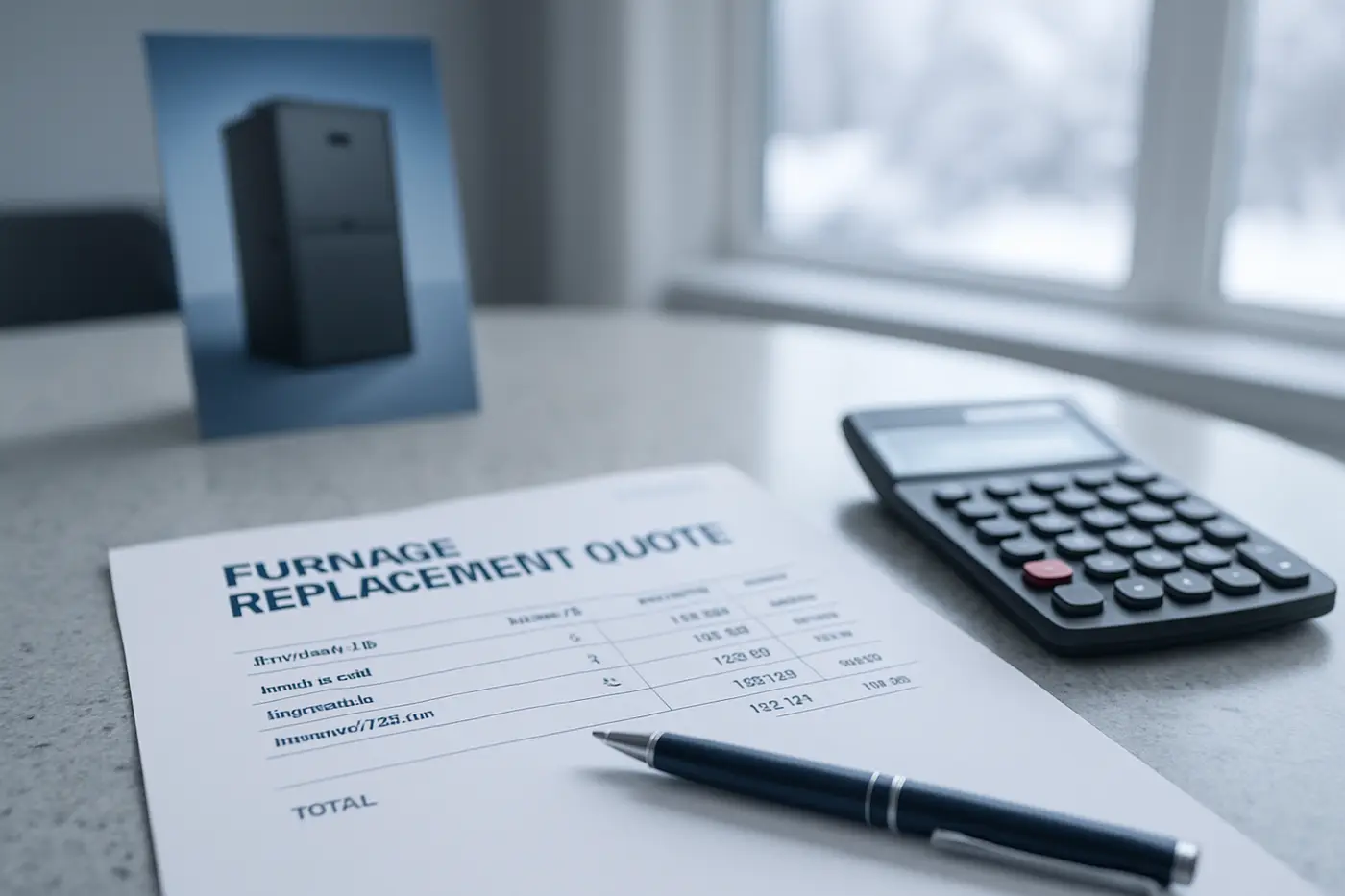
  • Written quote listing model, AFUE, capacity, venting, ductwork, permits and warranty terms

When to Call

Signs You Need Furnace Installation

Any of these is worth a visit. Note what the thermostat was set to, what the furnace or unit did, and any blink code, and put it in the request.

Smell gas or hear a CO alarm?

Get everyone out first. Don't touch switches, the thermostat or the furnace. Call ATCO Gas's 24-hour emergency line or 911 from outside.

  • You are developing the basement and the new rooms need heat and returns
  • An addition or garage suite is planned and the existing furnace was sized for the old house
  • A new build or major renovation needs a furnace and ductwork designed from scratch
  • Upstairs bedrooms or a bonus room over the garage run cold all winter
  • The house is converting from a boiler or old gravity system to forced air
  • You want a furnace ready for a heat pump or central AC later

Working Process

How Furnace Installation Runs

From the request to the final test, you know what is happening, why, and what it costs at each step.

  1. Step 1: Measure the house

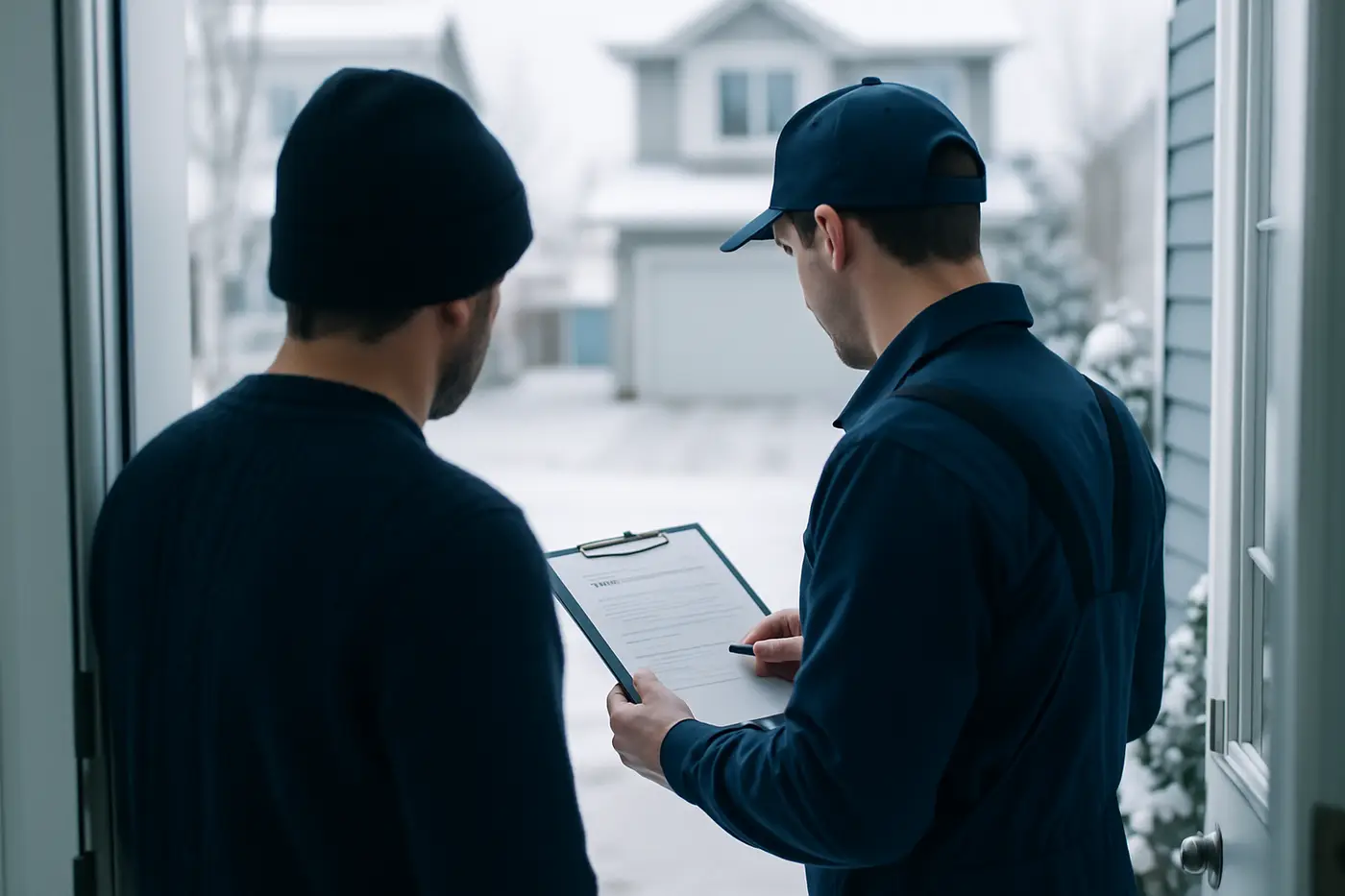
    The technician measures rooms, windows and insulation levels, notes the ductwork, the vent route options and the gas line, and asks about planned changes. The heat loss calculation is done from those numbers, room by room.

  2. Step 2: Design and quote in writing

    The furnace size, stages, vent route, condensate route and any duct changes are laid out in a written quote with the model, AFUE, capacity, permits and warranty terms. The quote is free for installations and replacements.

  3. Step 3: Permit and install

    The contractor pulls the gas permit and any other permit the job needs. The furnace is set, piped by a certified gasfitter, vented in PVC, wired, and connected to the ductwork, with the condensate routed away from cold walls.

  4. Step 4: Start-up and inspection

    Gas pressure, combustion, temperature rise and static pressure are measured and recorded. The thermostat is set up with you, the filter size written down, and the municipal inspection completed.

Price Guide · CAD, 2026

What Furnace Installation Costs in Edmonton

Typical Edmonton ranges before GST. Your price is confirmed in writing before any work starts.

ItemTypical range
Single-stage 95–96% AFUE furnace, installed (straight swap) New ductwork or long venting adds to this$4,800–$7,500
Two-stage or modulating 96–98% AFUE, installed$6,500–$11,000
Venting conversion extras (chimney liner or water heater re-vent) When an old chimney-vented tank is left orphaned$400–$1,500
Humidifier installed on the furnace$500–$1,100
Central AC installed on the new furnace and ducts$4,800–$8,500
Cold-climate ducted heat pump, hybrid with the furnace$9,000–$18,000

If the diagnosis changes the scope, work stops and you get a revised price before anything else is done.

Full Price Guide

In Depth

Furnace Installation in Edmonton, Explained

When a new furnace goes in

This page is about furnaces going in where the job is more than swapping one box for another: a basement development, an addition, a garage suite, a major renovation, a new build, or an older house converting to forced air. If your furnace simply died or is at the end of its life and the house is otherwise unchanged, furnace replacement covers that job, and much of what follows applies there too.

Most Edmonton homes heat with a natural gas forced-air furnace, and a furnace here works hard. The heating season runs roughly from late September to May, January daily means sit around -10°C and most winters bring a cold snap below -30°C. A furnace that is sized, vented and ducted properly runs quietly through all of that. One that was sized by guesswork and vented wherever was easiest shows its faults every January.

Sizing from a heat loss calculation

The most common mistake in furnace installation is size. The old rule of thumb takes the square footage, multiplies by a number, and picks a furnace. It almost always lands too big, and installers round up again to be safe. An oversized furnace heats the house in short bursts, shuts off, cools, and starts again. That short-cycling wears igniters, inducers and heat exchangers faster, leaves rooms far from the thermostat uneven, and cuts the 15 to 20 years a furnace should last.

A heat loss calculation works room by room: wall area and insulation, ceiling, windows and their direction, below-grade walls, air leakage, all against Edmonton’s winter design temperature. It gives the heat each room loses on a very cold day, which sizes the furnace and tells you how much air each room needs, which sizes the ducts. On a basement development or an addition, it also answers whether the existing furnace has capacity to spare. In a 1990s house with a furnace sized by rule of thumb, it often does; the ducts are the limit.

The equipment

Since the end of 2009, new natural gas furnaces sold in Canada must be at least 90% AFUE. Everything installed in Edmonton now is a high-efficiency condensing furnace, running 95 to 98% AFUE. The choices are:

  • Single-stage. Full fire or off. Simple, lowest cost, fine in a well-sized installation.
  • Two-stage. A low fire for most of the winter and a high fire for cold snaps. Longer, quieter runs and more even rooms.
  • Modulating. Adjusts the fire in small steps to match the load. The most even heat and the highest price.

Pair any of these with a variable-speed (ECM) blower if central AC or a heat pump is planned. Lennox, Carrier, Goodman, Trane, Rheem and others are all installed in Edmonton; brand matters less than size, venting and installation quality. The new furnace cost guide compares the options by price.

Venting and condensate

A condensing furnace vents through two PVC pipes, intake and exhaust, usually out a side wall. In Edmonton the termination location matters more than the manual suggests. Drifting snow buries low terminations on the windward side, and the exhaust plume freezes on anything close by. Terminations are placed with the required clearances from windows, doors, the gas meter and the property line, and with the drift pattern of the lot in mind. In new subdivisions like Heritage Valley, with narrow side yards and fences close to the wall, this is the detail that decides whether the furnace shuts down on its pressure switch every cold snap.

The furnace also makes water, and the condensate line has to reach a drain without running along a cold outside wall or through an unheated space. Frozen condensate lines are one of the most common no-heat calls in an Edmonton January, and nearly all of them trace back to how the line was run at installation.

If the new furnace replaces a chimney-vented one, a natural-draft hot water tank left alone in the old chimney can be “orphaned” and may not draft properly. The fix is a chimney liner, a power-vent tank or re-venting, and it belongs in the quote.

Ductwork for new rooms

A basement development is the job that most often needs furnace work in Edmonton. The finished basement needs supply runs to each room and returns to bring the air back. Framing that boxes in the main trunk, blocks the return path or closes off the furnace room with no air supply is common, and it shows up later as cold rooms, a noisy furnace and a limit switch that trips. The time to plan ducts is before the drywall goes up. The furnace room itself needs clearances for service, a filter the homeowner can reach, and room for a future AC coil or heat pump coil above the furnace. A basement suite or garage suite may also call for separate zoning or a separate system, which is worked out with the heat loss numbers for each space rather than by adding a register and hoping.

In older homes the problem is the opposite. In Glenora, Westmount and Garneau, many 1910s to 1950s houses were converted from coal or gravity heat, with ductwork added later and often undersized. A new furnace in one of these houses is sized to the house, and the duct design works with the tight basement and low ceilings rather than pretending they are not there.

Permits, trades and inspection

Gas work in Alberta is done by a certified gasfitter, and refrigerant work by a certified refrigeration and air conditioning mechanic. A new furnace needs a gas permit, pulled by the contractor through the City of Edmonton or the surrounding municipality or its accredited agency, followed by an inspection. New ductwork or a new system may also need an HVAC or mechanical permit. The contractor pulls the permits the job needs; ask to see them. Door-to-door sales of furnaces have been banned in Alberta since 1 March 2019, so a legitimate installation starts with you making the request, not with a knock on the door. More on choosing an installer is in how to choose a furnace company in Edmonton.

What it costs

Typical Edmonton ranges; your price is confirmed in writing before any work starts. A single-stage 95 to 96% AFUE furnace installed as a straight swap runs $4,800 to $7,500, and a two-stage or modulating 96 to 98% AFUE furnace $6,500 to $11,000. Ductwork for new rooms, long vent runs and venting conversion extras ($400 to $1,500 for a chimney liner or tank re-vent) are priced on the job. A humidifier adds $500 to $1,100. Adding a cold-climate heat pump as a hybrid runs $9,000 to $18,000, and central AC $4,800 to $8,500. The full table is on the pricing page, and written quotes for installations are free.

Start the quote

Request a visit with what you are building or changing, the age and size of the house, and your timeline. If there are plans for a basement or addition, send them. The heat loss calculation and the written quote come from the visit, with every line listed.

Last updated September 24, 2026
Questions

Furnace Installation, Answered

Straight answers about cost, timing, permits and what to expect from furnace installation in Edmonton.

All Questions
How is the right furnace size worked out?

With a heat loss calculation: the walls, ceilings, windows, floors and air leakage of each room, worked against Edmonton's winter design temperature. It gives the heat the house actually loses on a very cold day. The rule of thumb that assigns furnace size from square footage alone usually lands too big, and an oversized furnace short-cycles, wears out sooner and leaves rooms uneven.

What efficiency does a new furnace have to be in Canada?

Since the end of 2009, new natural gas furnaces sold in Canada must be at least 90% AFUE. In practice, the high-efficiency furnaces installed in Edmonton run 95 to 98% AFUE. They are condensing furnaces, so they vent through PVC pipes in the side wall and drain condensate, instead of venting hot gas into a chimney.

What does furnace installation cost in Edmonton?

Typical Edmonton ranges: a single-stage 95 to 96% AFUE furnace installed as a straight swap runs $4,800 to $7,500, and a two-stage or modulating 96 to 98% AFUE unit $6,500 to $11,000. New builds, additions and basement developments add ductwork and sometimes longer venting, which is priced on the job. Your price is confirmed in writing before any work starts.

Do I need a permit for a new furnace in Edmonton?

Yes. A new furnace needs a gas permit, which the contractor pulls through the City of Edmonton, or through the surrounding municipality or its accredited agency in places like St. Albert, Sherwood Park or Leduc, followed by an inspection. New ductwork or a new system may also need an HVAC or mechanical permit. The contractor pulls the permits the job needs.

Can my existing furnace heat a new basement development?

Sometimes. Many furnaces in Edmonton are oversized for the house, so there is capacity to spare, but the ductwork is the limit: the basement needs supply runs and, just as important, returns. A basement with supplies and no returns stays stuffy and cold. The heat loss calculation and a look at the ductwork answer whether the furnace can carry the extra space or whether it should be replaced during the development.

Where do the vent pipes go on a high-efficiency furnace?

Out a side wall, usually the shortest practical route, with clearances from windows, doors, the gas meter and the property line. In Edmonton the location also has to account for snow drifts and frost from the exhaust plume, which is why a termination on the windward side a foot above grade is a poor choice. Concentric or raised terminations help where the wall options are tight.

Can I add air conditioning or a heat pump later?

Yes, if the furnace is chosen with that in mind. A variable-speed blower and a cabinet that fits a coil make adding central AC or a cold-climate heat pump straightforward. In Edmonton heat pumps are usually installed as a hybrid, with the gas furnace as backup for the coldest days.

Related Services

All Services

Helpful Reading

Guides That Go With This Service

Furnace Installation in Edmonton, Priced Before We Start.

Tell us what it's doing. We reply with an arrival window and a price range, and nothing is done without your OK in writing.