In Depth
Furnace Inspection in Edmonton, Explained
What a furnace inspection is for
A furnace can heat the house perfectly well and still be unsafe. The things that make a furnace dangerous, a cracked heat exchanger, poor combustion making carbon monoxide, a blocked or leaking vent, a hot water tank that stopped drafting, mostly cannot be seen or felt from the living room. A furnace inspection is the visit that looks for them on purpose, measures what can be measured, and writes it down.
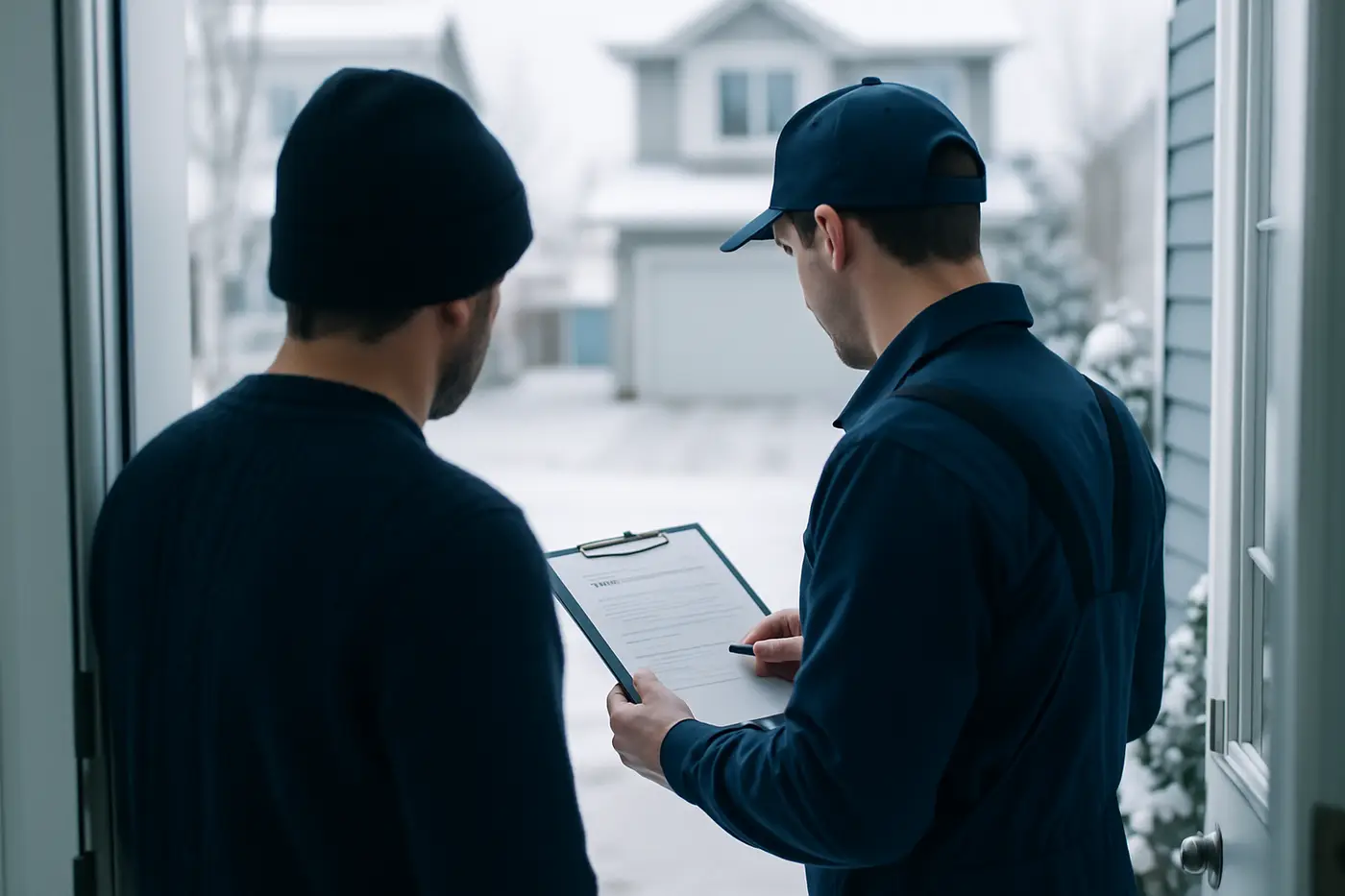
People book an inspection for a handful of reasons: they are buying a house with a furnace of unknown age, they rent out a property and want a record, an insurer or property manager asked for one, a CO alarm went off, or the furnace just seems wrong: soot, a strange smell, a flame that looks lazy through the sight glass. It is different from a yearly tune-up, which cleans and adjusts to keep the furnace running. An inspection is focused on safety, and it ends in a written report.
What gets checked
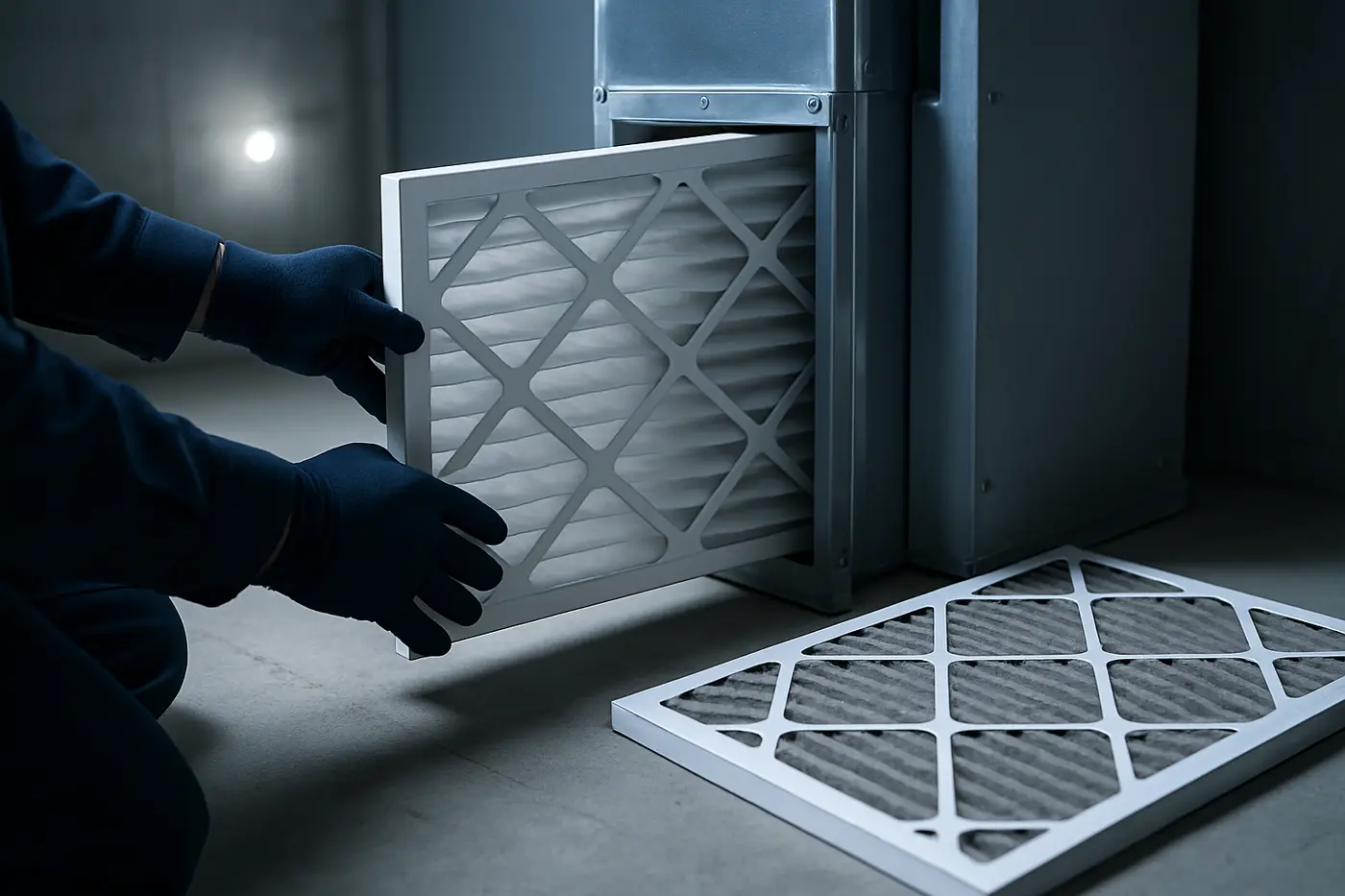
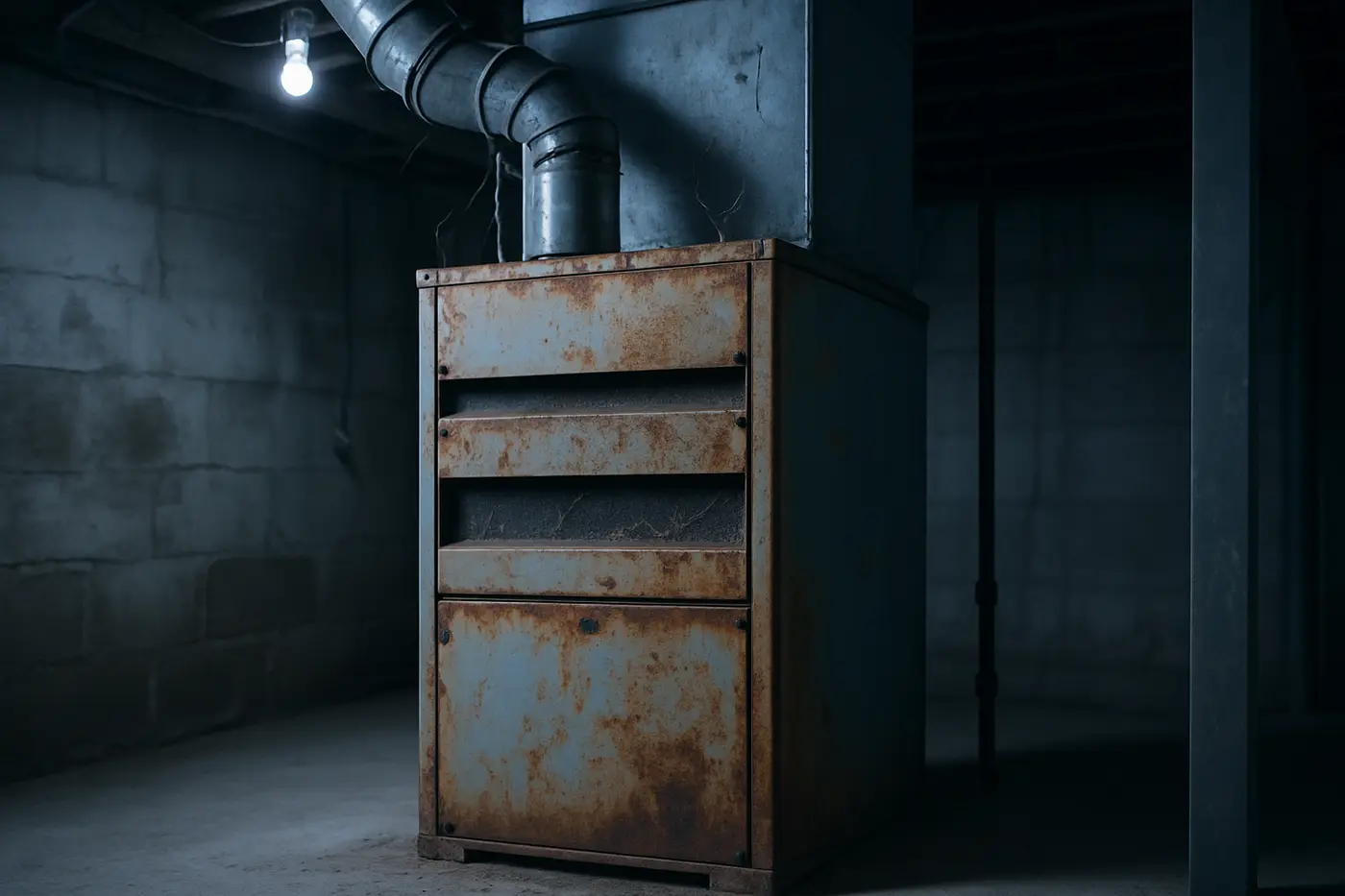
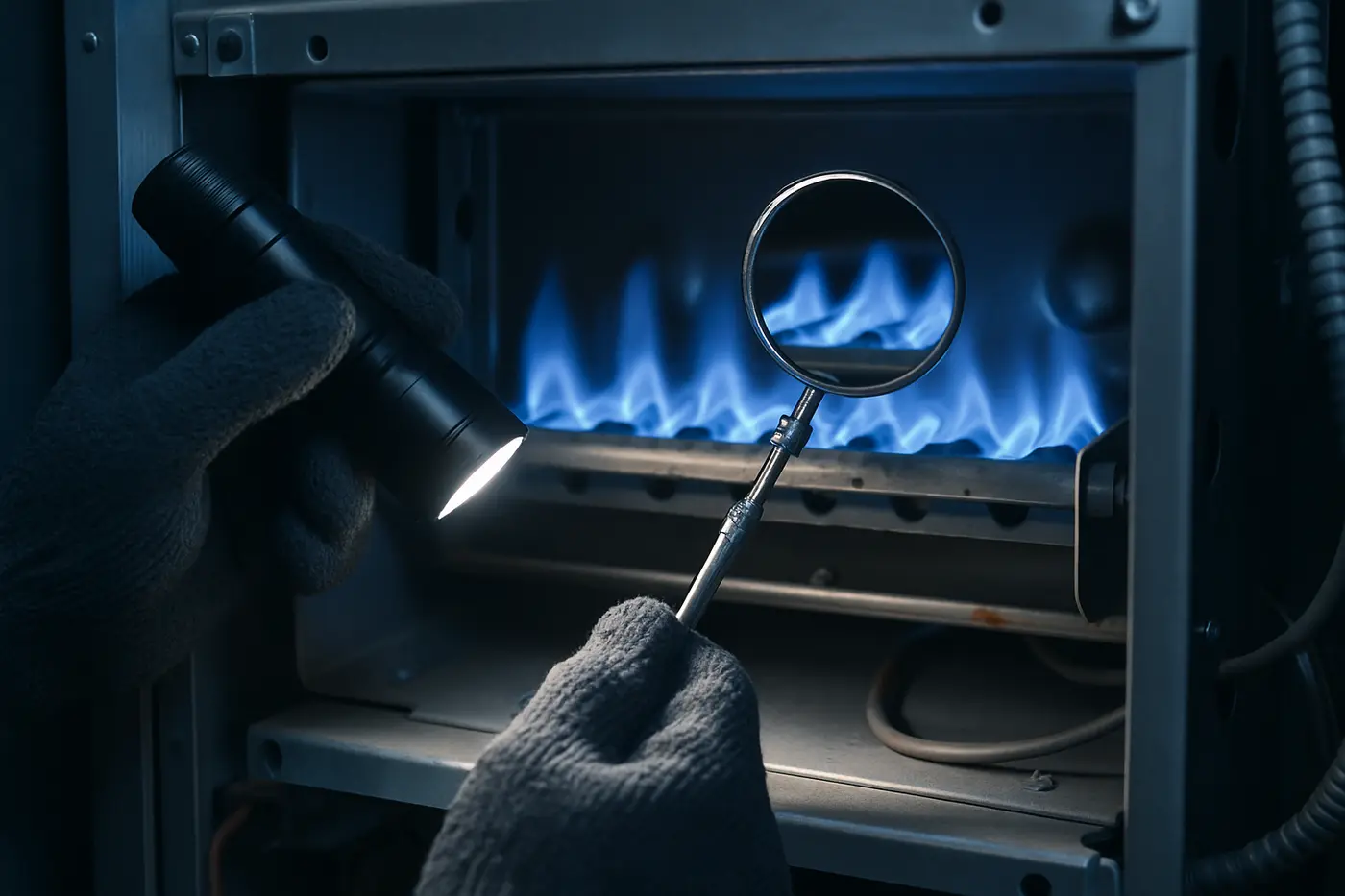
Heat exchanger. This is the metal chamber that holds the fire and the combustion gases, while the house air passes over the outside and picks up the heat. It is what keeps carbon monoxide out of the air you breathe. The inspection looks at it through every opening the furnace allows, with a camera where access permits, for cracks, holes, rust-through and heat stress. Combustion readings, and how the flame behaves when the blower starts, back up that visual.
Combustion and CO. An analyzer in the flue records CO and combustion readings. Rising CO in the flue points at a burner problem, a venting problem or a heat exchanger problem. The technician also checks for CO in the furnace room and at the registers.
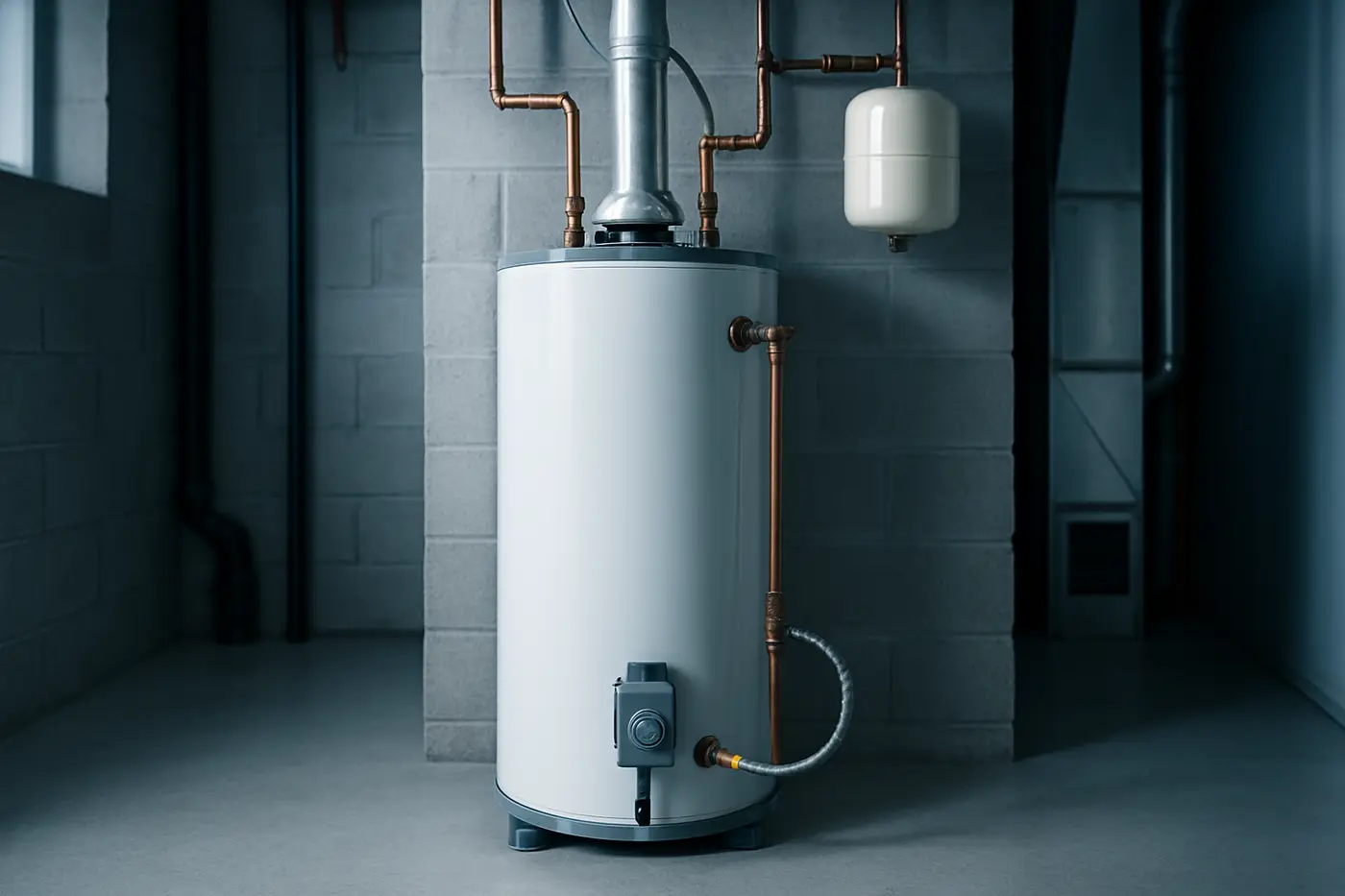
Venting. From the furnace to the termination: PVC joints and slope on a high-efficiency furnace, and the chimney connection on an older mid-efficiency one. The two white pipes outside are checked for damage and clearance. In a house where the furnace and hot water tank share a chimney, the tank’s draft is tested, because a tank that does not draft spills combustion gases into the basement.
Safety controls. The limit switch, rollout switch, pressure switch and flame proving are checked. A furnace that has been tripping a rollout switch is telling you flame is coming out where it should not; that is a finding, not a nuisance.
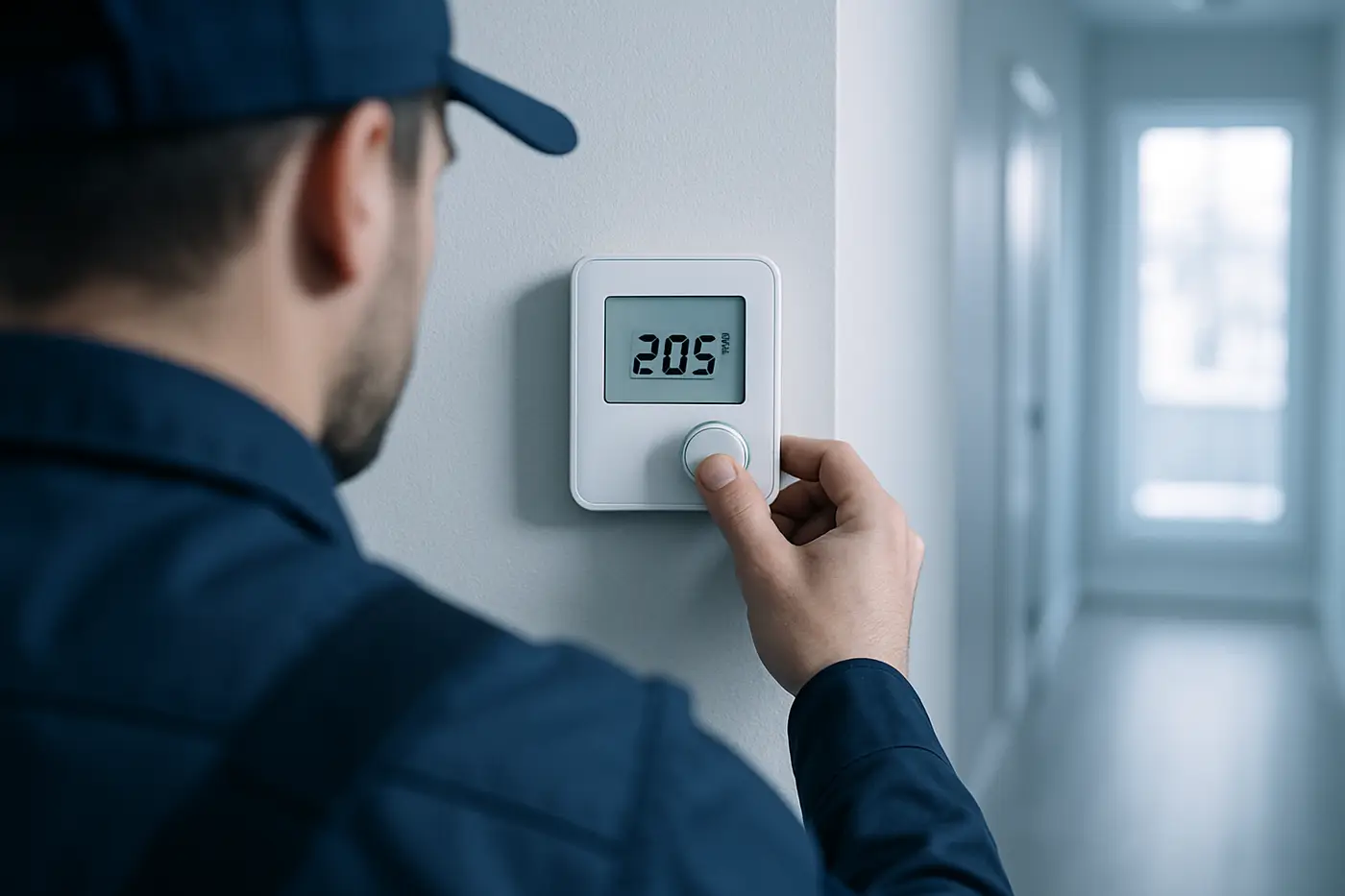
Operation. Gas pressure, temperature rise across the heat exchanger and blower operation are measured, because a furnace that runs too hot from poor airflow stresses the heat exchanger and cracks it sooner.
CO alarms. Their location relative to the bedrooms and the end-of-life date printed on each one, typically 7 to 10 years. Every home with a fuel-burning appliance should have CO alarms near sleeping areas, and they are required in new homes with fuel-burning appliances.
What a cracked heat exchanger means
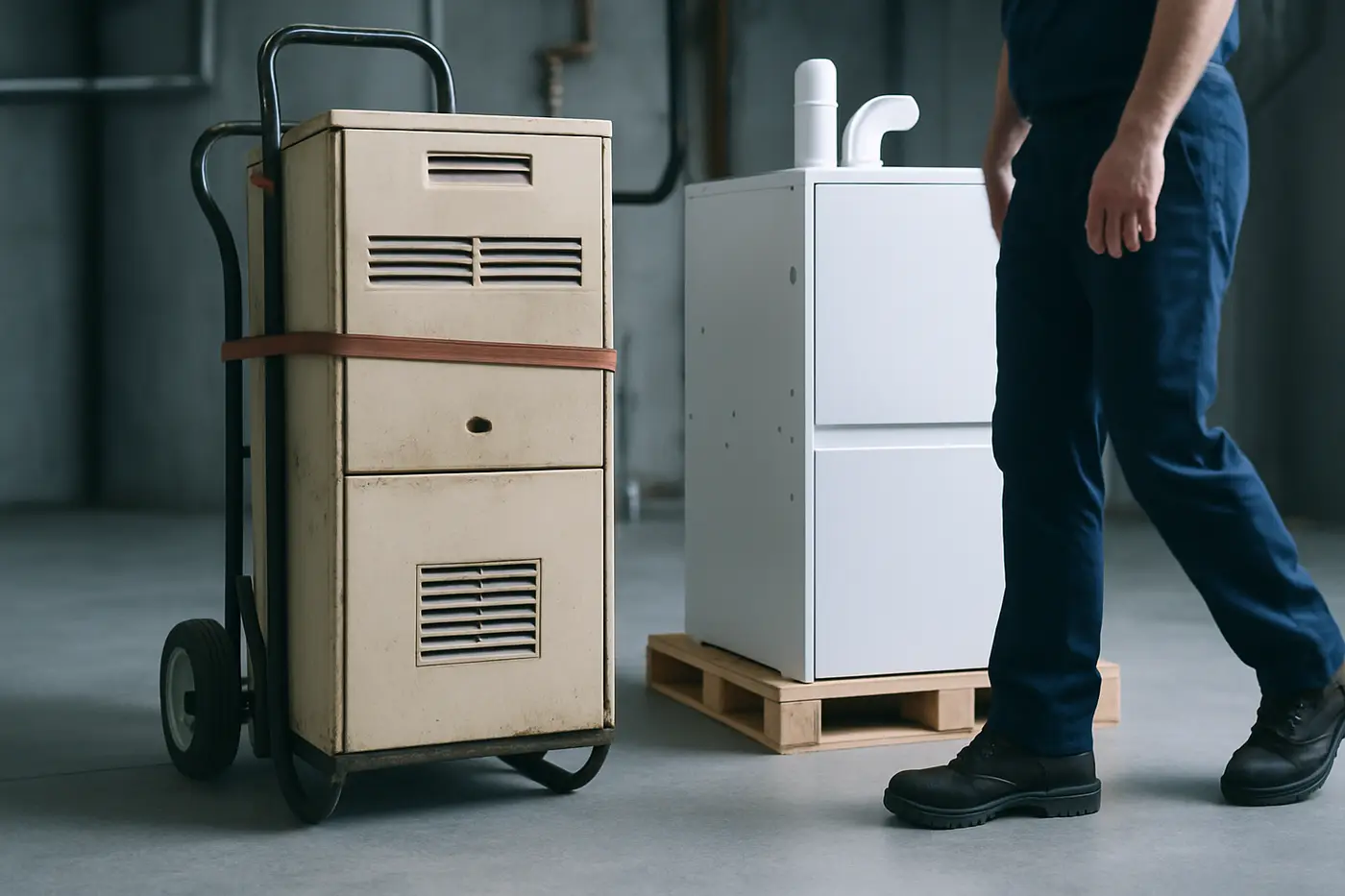
It means the wall between the fire and your house air can fail. In most cases a furnace with a cracked heat exchanger is shut off, and in most cases it means replacement. Heat exchangers are expensive, the labour to change one is heavy, and a furnace old enough to have cracked one usually has other major parts close to the end. Heat exchangers on neglected, oversized or short-cycling furnaces crack earlier than the typical 15 to 20 year service life.
Because the news is expensive, a second opinion is reasonable. If another company told you the heat exchanger is cracked, an inspection is a fair way to confirm it. If it is cracked, you see the evidence. If it is not, you hear that plainly. When it does mean replacement, see furnace replacement and repair or replace your furnace for how the decision works.
Home purchase inspections
A general home inspector covers the whole house in a few hours and usually notes the furnace age, whether it runs and whether the filter is dirty. That is useful and it is not a combustion test. If the furnace is over about 15 years old, or the general inspection flagged anything about it, a furnace inspection before the conditions come off tells you whether to budget for a new furnace soon.
It matters most in older neighbourhoods. In Garneau and Westmount, many early 1900s houses were converted from coal or gravity heat, with a furnace and hot water tank sharing a chimney and ductwork added later. In 1950s bungalows in Beverly, Jasper Place or Bonnie Doon, the original chimney-vented furnace has been replaced at least once, and the next replacement raises the orphaned hot water tank question. An inspection on these houses pays close attention to the chimney and the tank’s draft.
Landlords, rentals and insurers
Landlords with rentals in Garneau, near the university, or anywhere else, often want a dated record that the furnace was inspected and combustion tested. Some insurers and property managers ask for an inspection on older furnaces or after a claim. The written report with the readings is what they usually need; check your policy or management agreement for exactly what they ask for. A yearly inspection record also makes a replacement conversation easier with an owner who has not seen the furnace.
What you can check yourself
Look at the flame through the sight glass: it should be mostly blue and steady. Look for soot or scorch marks around the furnace. Test your CO alarms and read their end-of-life dates. Check that the two PVC pipes outside are clear of snow and frost. Do not open the burner compartment, remove panels beyond the blower door, or reset a rollout switch repeatedly; a rollout switch that trips is a reason to stop and book the inspection.
What it costs
Typical Edmonton ranges; your price is confirmed in writing before any work starts. A furnace safety inspection with combustion and CO test runs $149 to $249. If the inspection finds an orphaned hot water tank that is not drafting, a chimney liner or re-vent runs $400 to $1,500, or the tank itself may be due; see hot water tank replacement. A limit or rollout switch runs $225 to $450. The full table is on the pricing page.
Who does the work
Gas work in Alberta is done by a certified gasfitter, and refrigerant work by a certified refrigeration and air conditioning mechanic. A furnace replacement needs a gas permit that the contractor pulls, followed by an inspection by the municipality. An inspection report is not a sales pitch: door-to-door sales of furnaces have been banned in Alberta since 1 March 2019, and anyone knocking on your door offering a “free furnace inspection” to sell you a new one is breaking the rule. More on that in how to choose a furnace company in Edmonton.
Book the inspection
Request a visit and tell us why: a purchase with a condition date, a rental, an insurance request, an alarm, or a concern. If a CO alarm is sounding right now, leave the house and call 911 from outside first.
Last updated September 24, 2026