In Depth
Emergency Furnace Repair in Edmonton, Explained
What a no-heat call looks like in Edmonton
Edmonton January daily means sit around -10°C, and most winters bring at least one cold snap below -30°C. In the week of 13 January 2024, the region went into the -40s with wind chill and Alberta’s grid operator asked people to cut their electricity use. That is the week every furnace technician in the city remembers, and it is the week a furnace that has been limping along decides to stop. A furnace in Edmonton runs far more hours per year than one in Vancouver or Toronto, from late September into May, so parts that are close to the end tend to fail when the load is highest.
The good news is that a large share of emergency calls are not a dead furnace. They are a frosted vent, a frozen condensate line, a filter so plugged the limit switch trips, a thermostat with dead batteries, or an igniter that finally cracked. Those are same-visit repairs. The rest are real part failures, and a few are the kind of news nobody wants on a cold night: a cracked heat exchanger on a furnace that is 20 years old.
The failures we see most in a cold snap
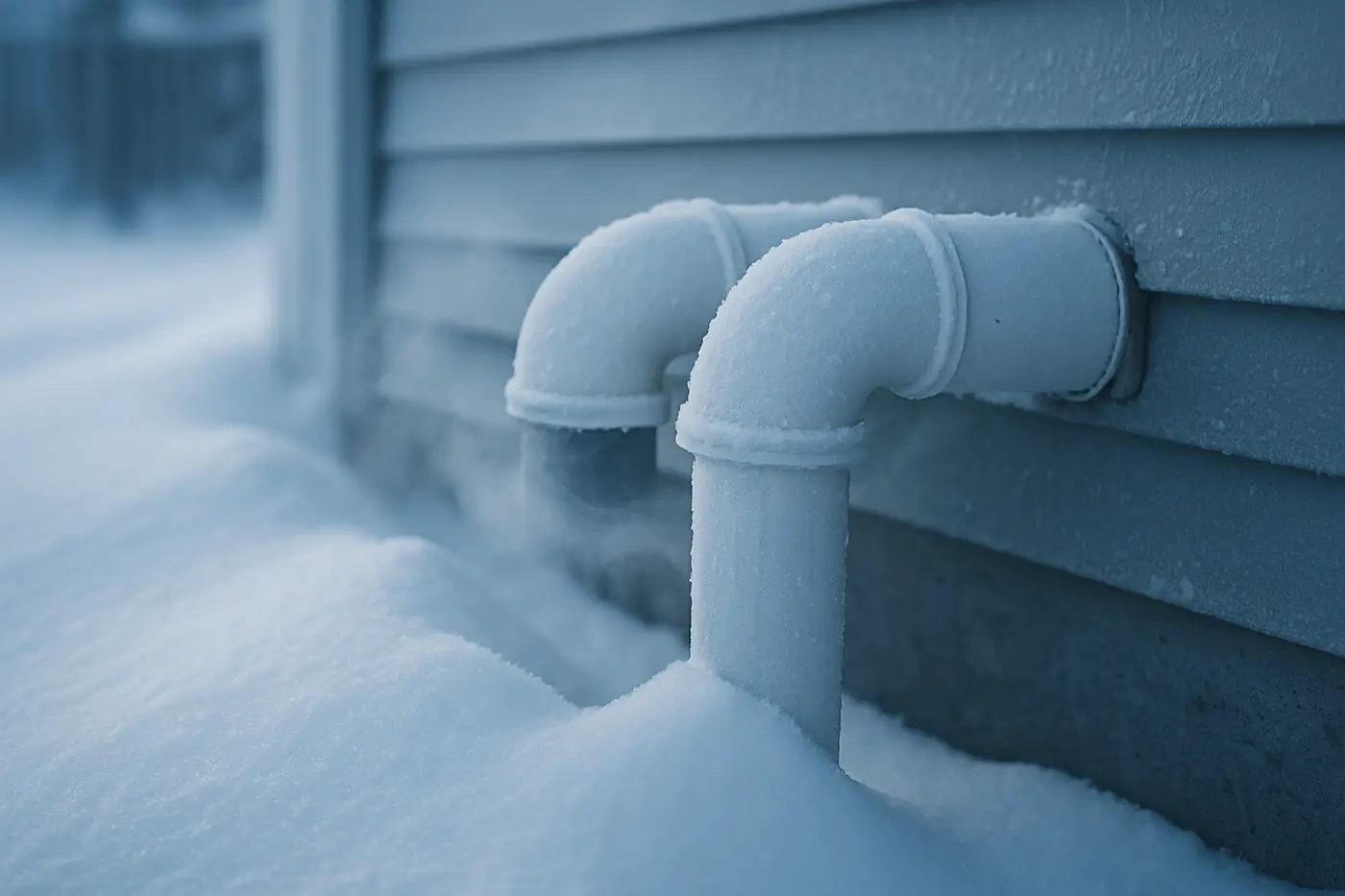
Frosted or drifted vents. High-efficiency furnaces vent through two white PVC pipes in the side wall. The exhaust is warm and wet, and at -30°C the moisture freezes on the pipe and on the siding around it. Drifting snow buries the intake on the windward side of the house. Either one starves the furnace of air or blocks the exhaust, and the pressure switch shuts it down. This is one of the most common no-heat calls in newer subdivisions like Windermere, where every house vents out the side wall, often a few feet from a neighbour’s fence where snow piles up.
Frozen condensate. A condensing furnace makes water, a few litres a day in heavy use. It drains through a trap and a line to a floor drain or a pump. When the line runs along a cold outside wall, through an unheated crawl space or out to a drain in a cold room, it freezes, the water backs up, and the furnace shuts off on its safety switch. The thaw is quick; the real fix is rerouting the line so it does not freeze again next week.
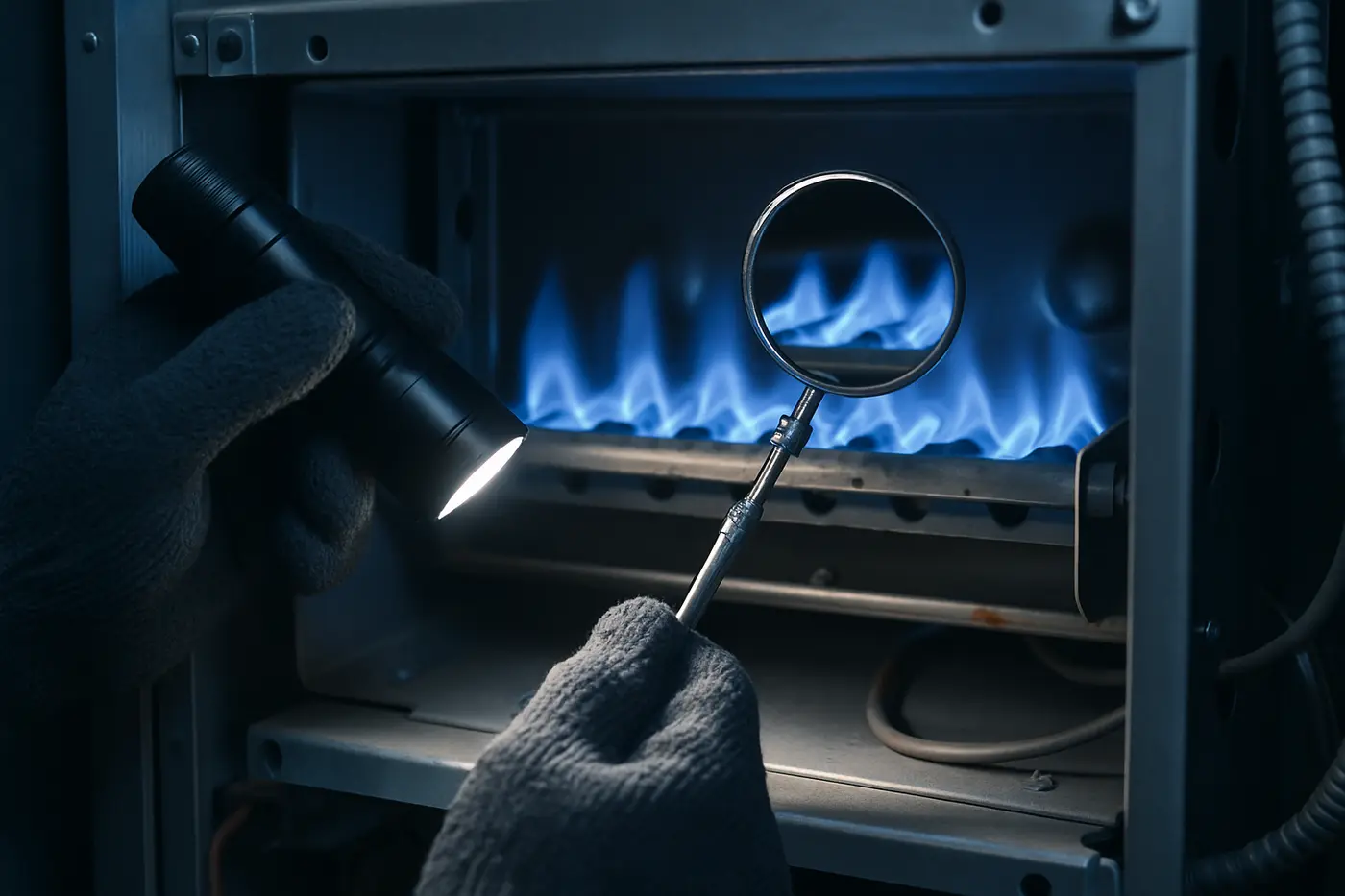
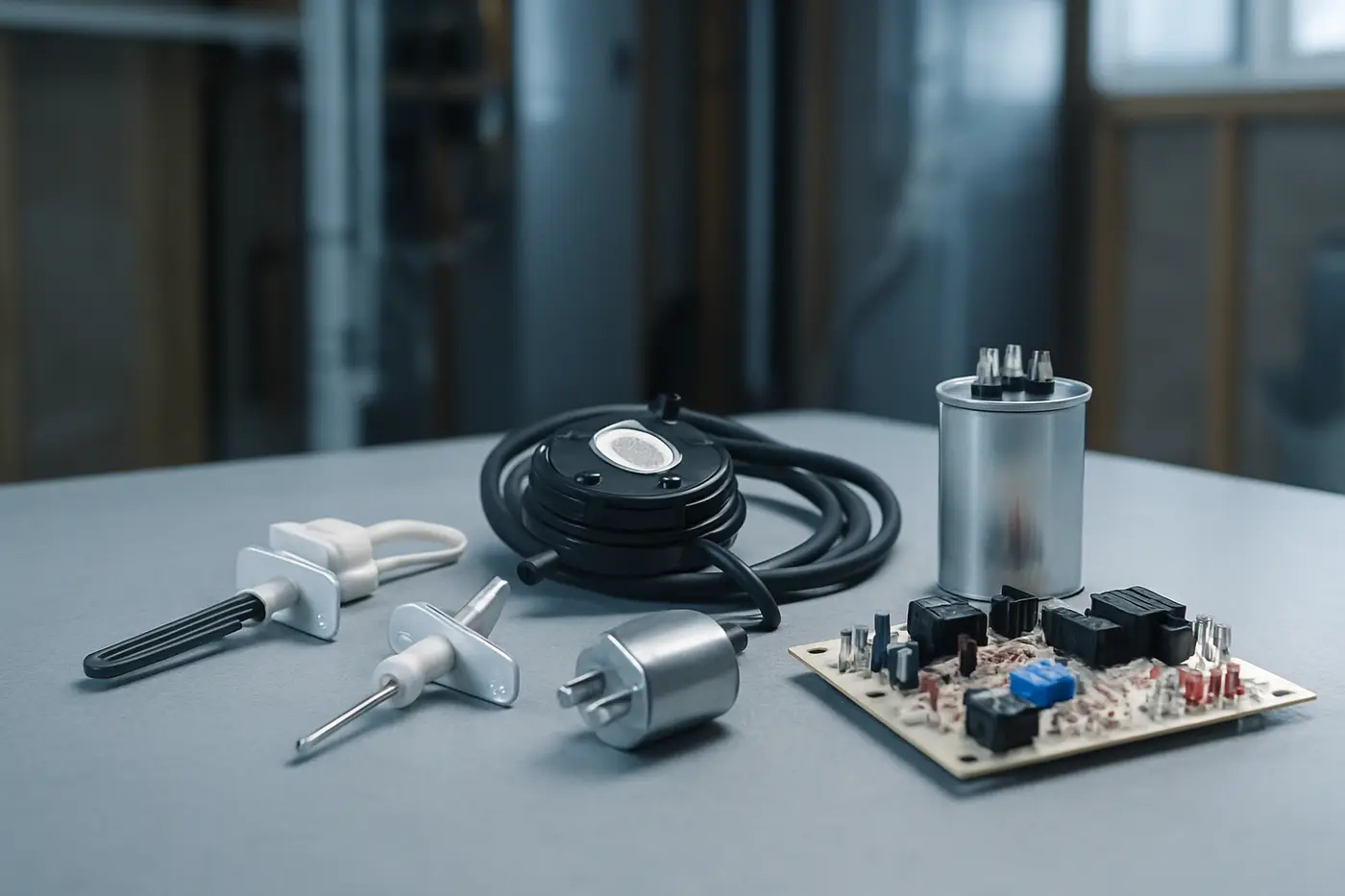
Igniter and flame sensor. A hot surface igniter is a fragile ceramic part that glows to light the gas. It cracks with age and it fails most often on the first cold starts or deep in a cold snap when the furnace cycles constantly. A dirty flame sensor lets the burners light for a few seconds and then shuts the gas off because the board cannot prove there is flame. Both are common, both are inexpensive next to anything else in the furnace.
Inducer and blower. The inducer motor pulls combustion gases through the heat exchanger and out the vent. Worn bearings get loud and then stop, often on a cold start. The blower motor or its capacitor moves the house air; when it fails, the furnace heats up, trips its limit switch and shuts down while the house gets colder. In 1970s and 1980s neighbourhoods like Mill Woods and Castle Downs, a lot of furnaces are on their second or third generation and these motors are the parts that wear out.
The full list, with typical prices for each part, is in how much furnace repair costs in Edmonton.
What you can check before you send the form
These are safe, and they fix a real share of no-heat calls on their own:
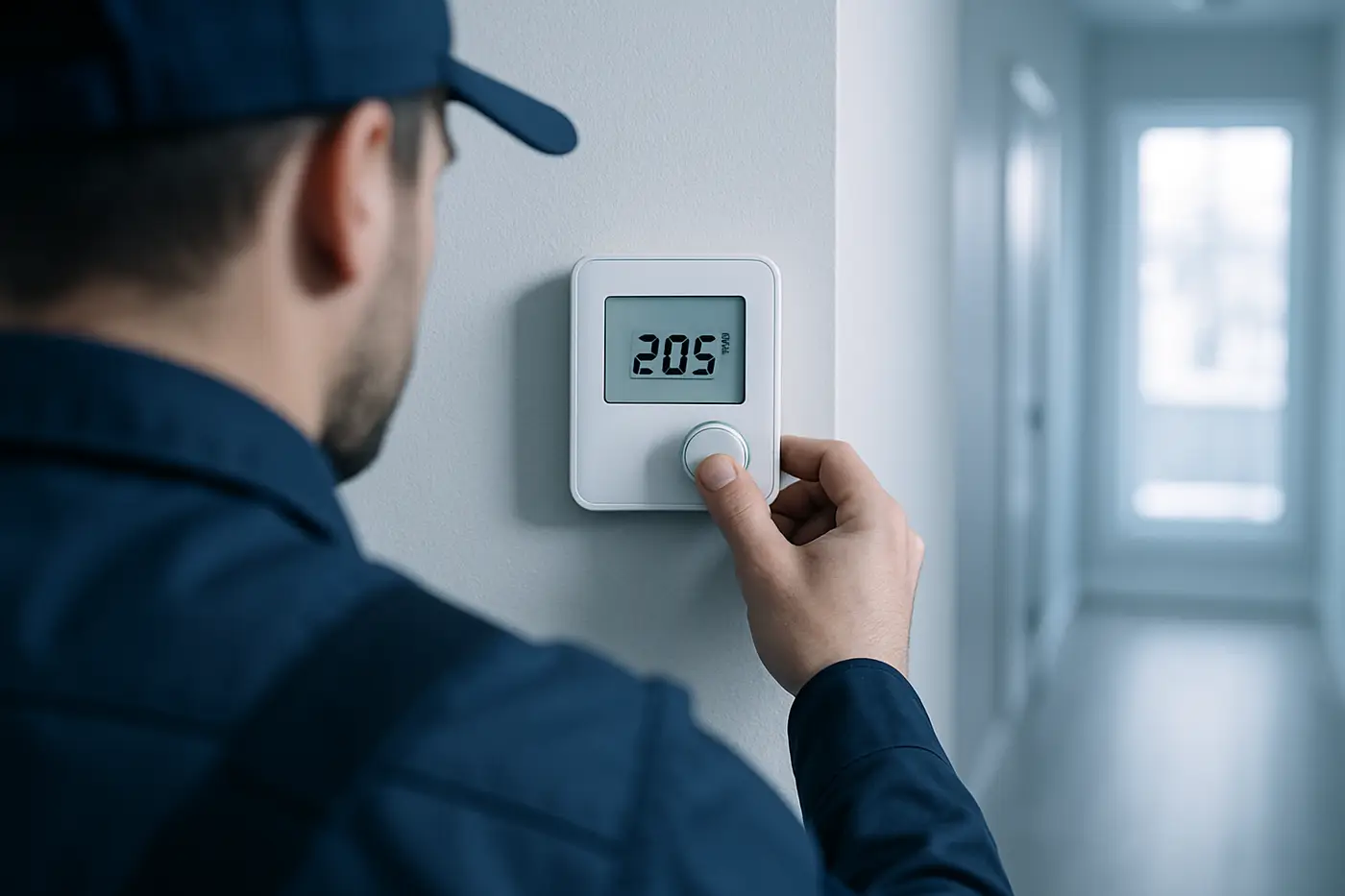
- Thermostat. Set to heat, setpoint a few degrees above room temperature, fresh batteries if it takes them.
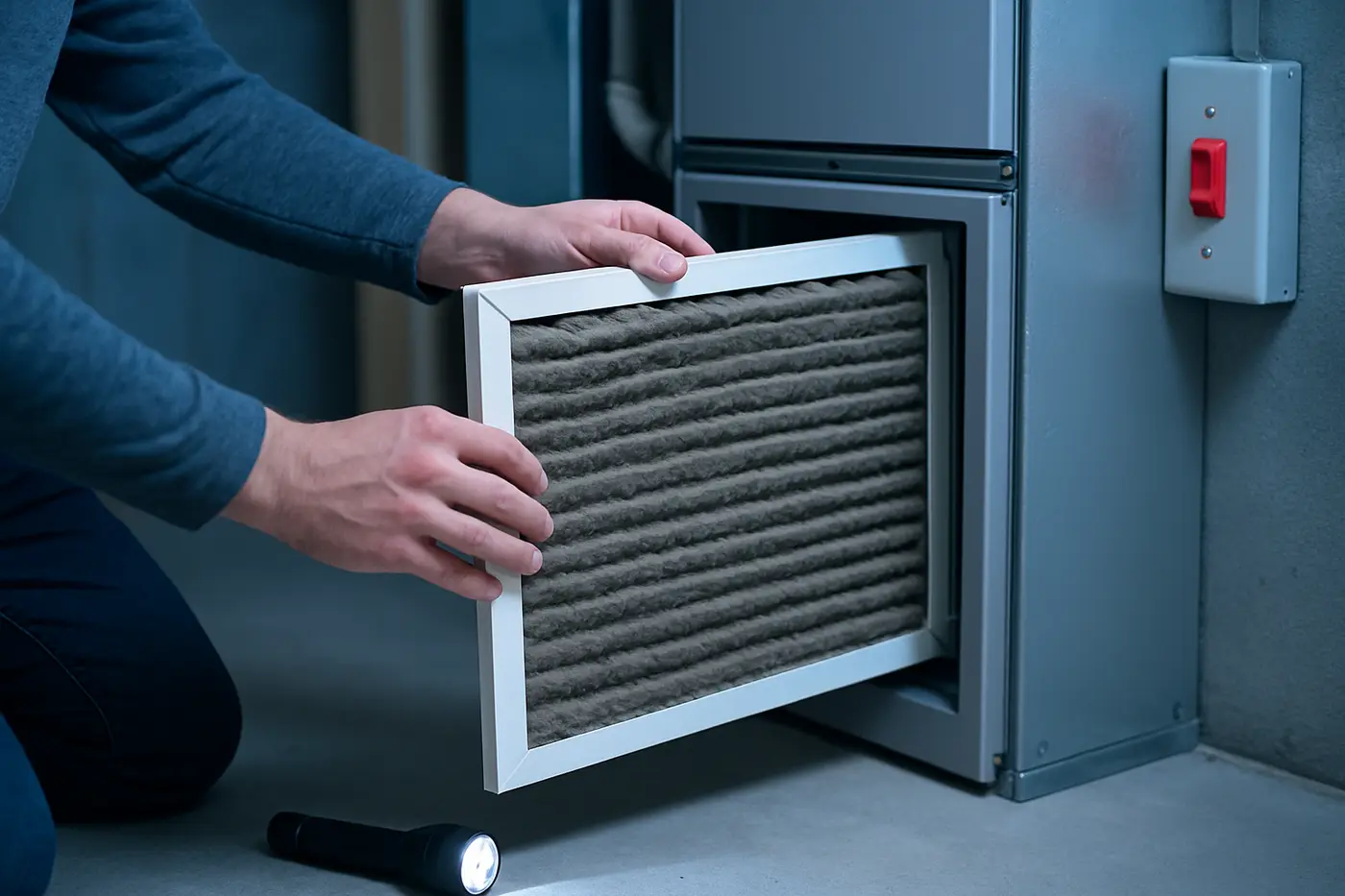
- Power. The furnace switch (it looks like a light switch on or near the furnace) is on, and the breaker is not tripped.
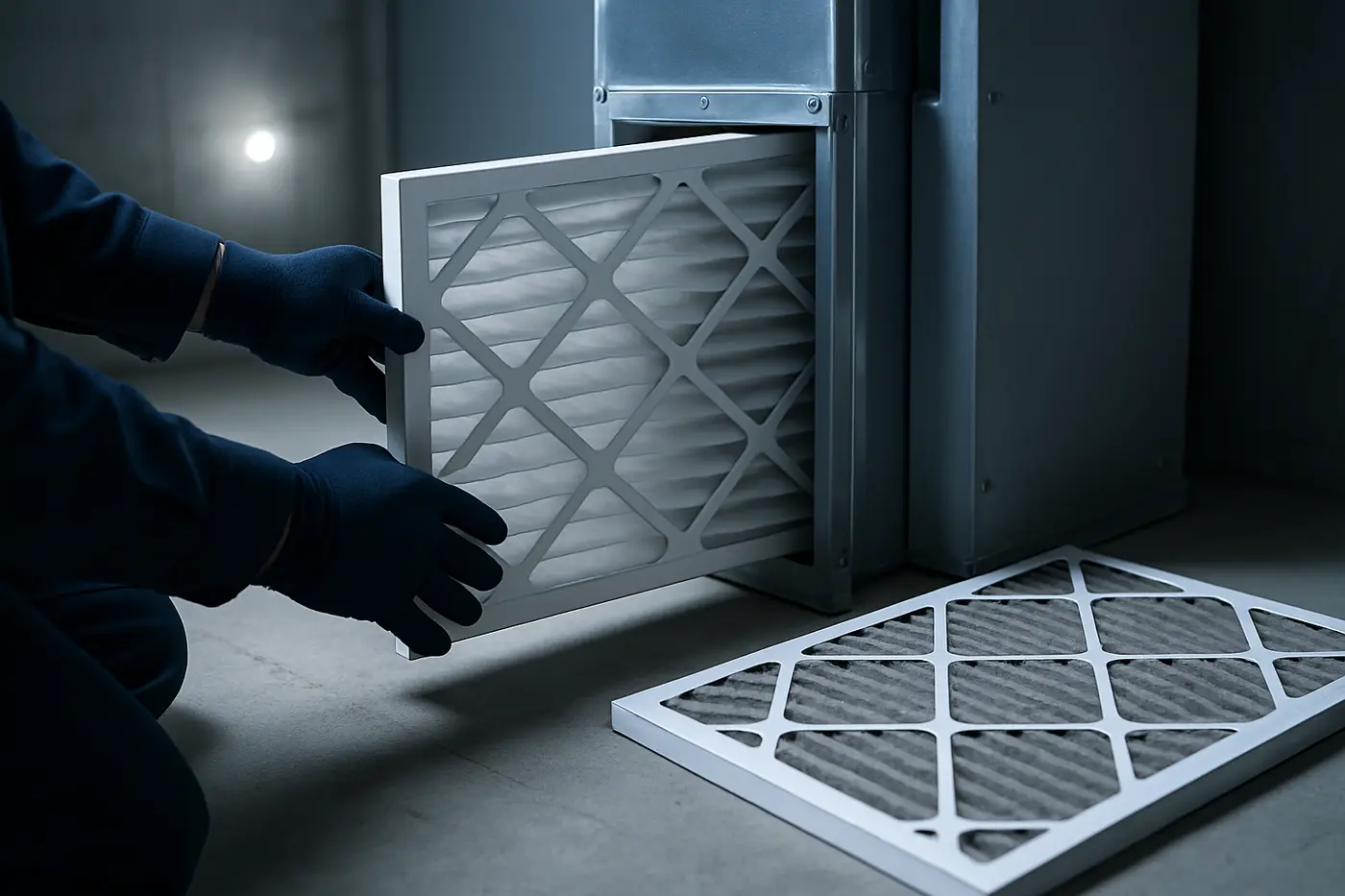
- Filter. If it is grey and bowed, change it. A plugged filter trips the limit switch.
- Blower door. It has to be seated properly, or a door switch keeps the furnace off.
- Vents outside. Look at both PVC pipes. Brush away snow and loose frost by hand. Do not chip at the pipe with anything hard.
- Condensate line. Look for ice or a kink in the clear or white line from the furnace. Look, do not cut it.
- Error code. Count the LED blinks through the sight glass on the blower door and match them to the chart on the inside of the door. Tell us the code in the form.
- Gas valve handle. Look to see it is in line with the pipe. Do not move anything else.
Do not open the burner compartment, jump a switch, bypass the pressure switch or limit switch, or try to light the furnace with a flame. Those switches shut the furnace off because something is wrong, and bypassing them is how houses get carbon monoxide. The nine checks are laid out with pictures in furnace not working? checks before you call.
Repair or replace, decided in daylight
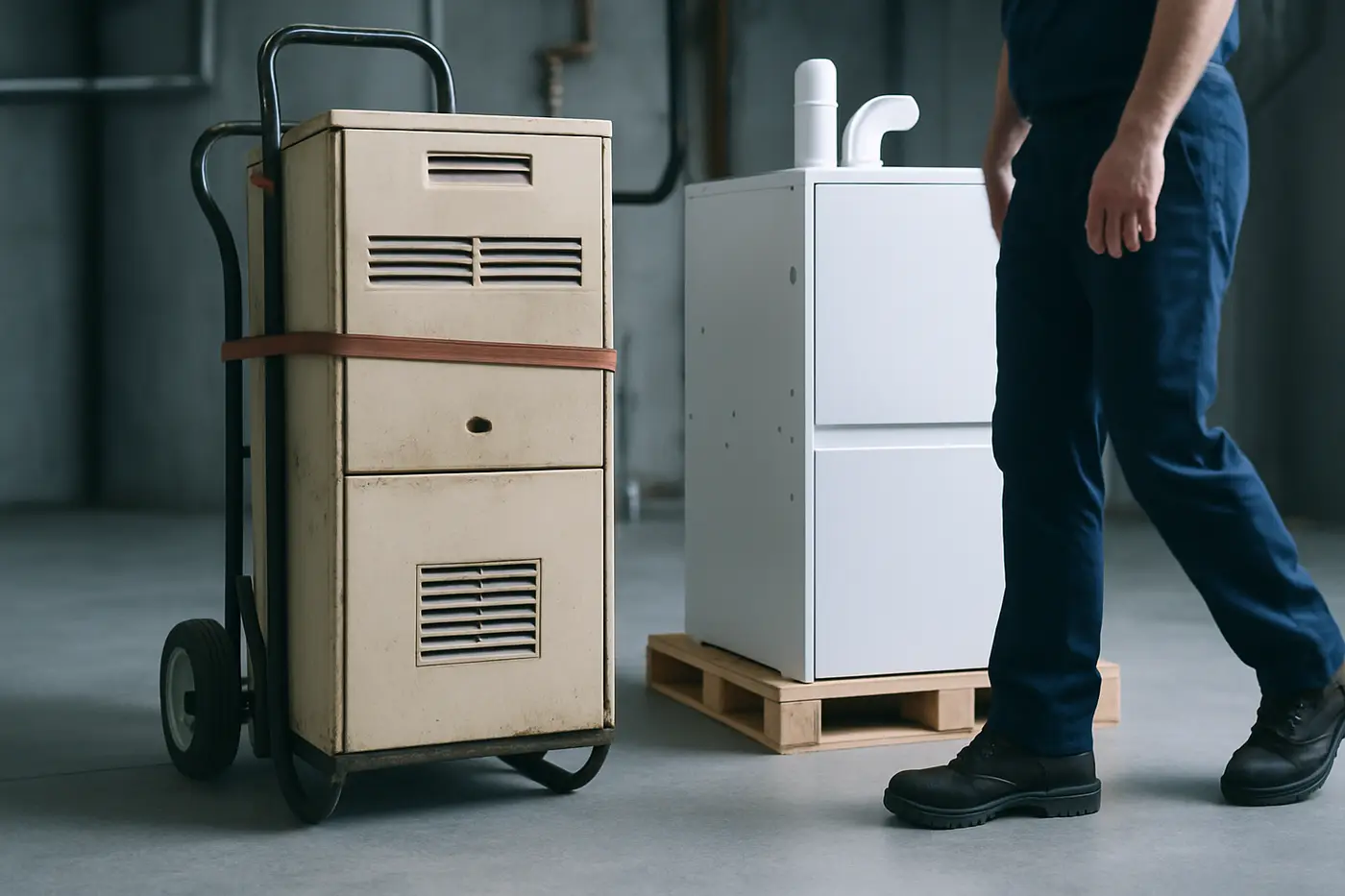
An emergency visit fixes the no-heat problem. It is not the moment to be sold a furnace. If your furnace is 12 years old and needs a $300 igniter, that is a repair, and it is the right call. If it is 15 years old with a failed pressure switch, it is usually worth one more repair. The answer changes when the heat exchanger is cracked, when the furnace is past 20 years, or when it has had two or three major failures in a couple of seasons. In those cases you hear it plainly, the furnace is made safe or shut off if it has to be, and a furnace replacement quote is written separately so you can compare it with daylight and a warm cup of coffee.
If the furnace has been shutting down repeatedly on safety switches, a combustion and CO test after the repair is part of the visit. A standalone furnace inspection covers the heat exchanger and combustion in more detail when something about the furnace does not feel right.
What it costs
Typical Edmonton ranges; your price is confirmed in writing before any work starts. An after-hours, weekend or holiday no-heat call runs $199 to $349, and a regular-hours diagnostic $129 to $199. Clearing a blocked or frosted vent runs $150 to $600, the top end when a termination kit is added so it does not happen again. A frozen condensate thaw and reroute is $150 to $450. An igniter is $225 to $450, a flame sensor $129 to $299, a pressure switch $275 to $550 and an inducer motor $650 to $1,400. The full table is on the pricing page.
Who does the work
Gas work in Alberta is done by a certified gasfitter, and refrigerant work by a certified refrigeration and air conditioning mechanic. The contractor pulls the permits the job needs; a furnace replacement needs a gas permit that the contractor pulls, followed by an inspection. We do not quote arrival times in minutes and we do not promise a guaranteed window around the clock: no-heat calls get priority, and we confirm the arrival window when we reply to your request.
While you wait
Keep doors closed, open cabinet doors under sinks on outside walls, and use space heaters only on their own circuit, away from bedding and curtains. Never heat the house with a gas range, oven or barbecue. Then tell us what the furnace is doing: the error code, the age of the furnace, how cold the house is and what you already checked. A regular tune-up each fall is what keeps most of these calls from happening in the first place.
Last updated September 24, 2026