In Depth
Air Conditioner Repair in Edmonton, Explained
Why air conditioners fail in an Edmonton summer
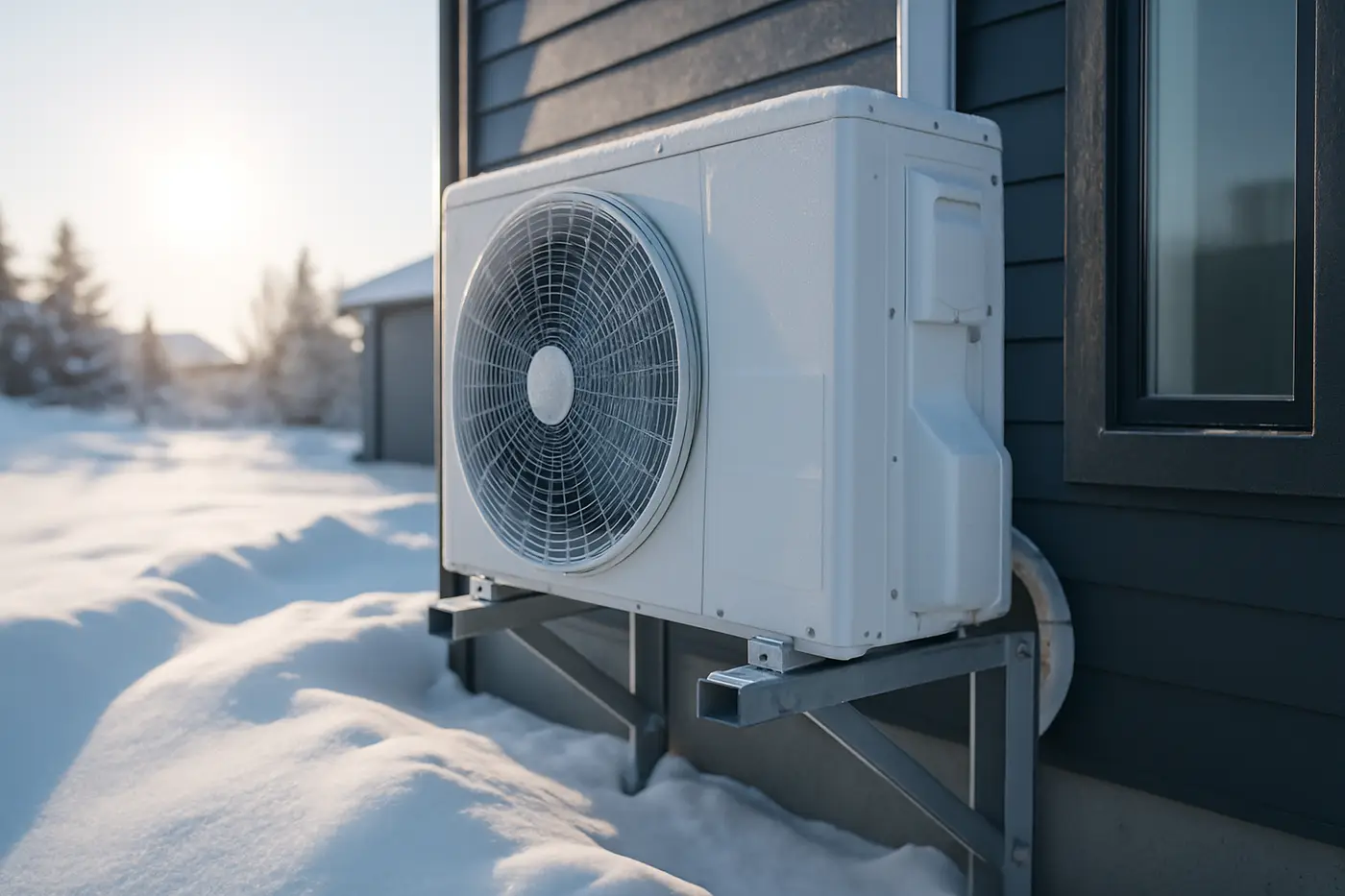
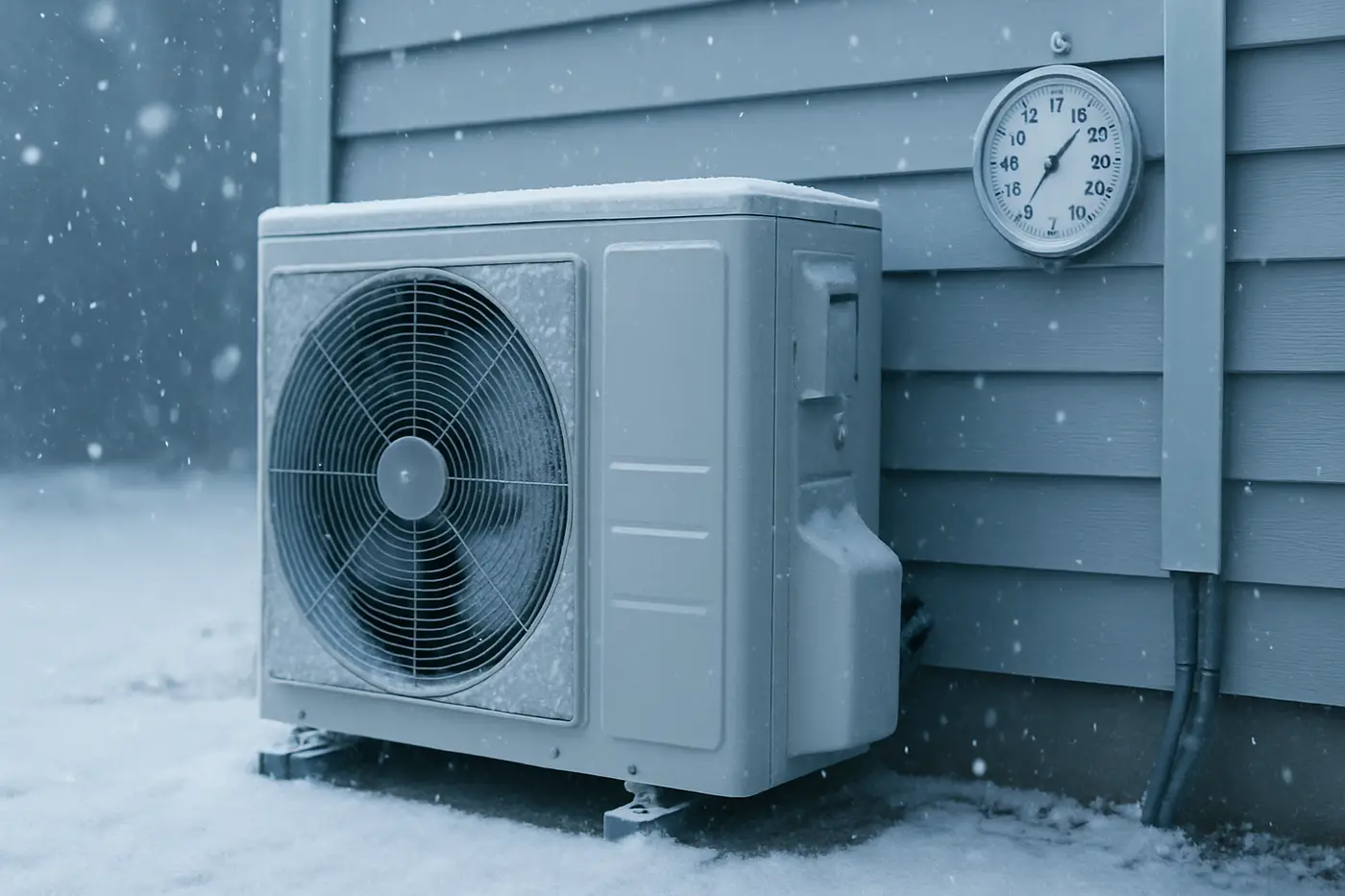
An Edmonton air conditioner has an odd working life. It sits idle under snow from late September to May, then gets asked to work hard through a few hot spells above 30°C that arrive most summers. A lot of failures show up on the first hot afternoon of the year, when a part that weakened over the winter is asked to start a compressor for the first time in eight months.
The usual list, roughly in order of how often it comes up:
- Capacitor. The outdoor unit has a capacitor that gives the compressor and the fan motor their starting kick. They weaken with heat and age. The symptom is a unit that hums and clicks but whose fan does not spin, or a fan that spins while the compressor does not.
- Contactor. The switch that the thermostat closes to start the outdoor unit. The contact points pit and burn, and ants and debris get into it. The unit may not start, or may not shut off.
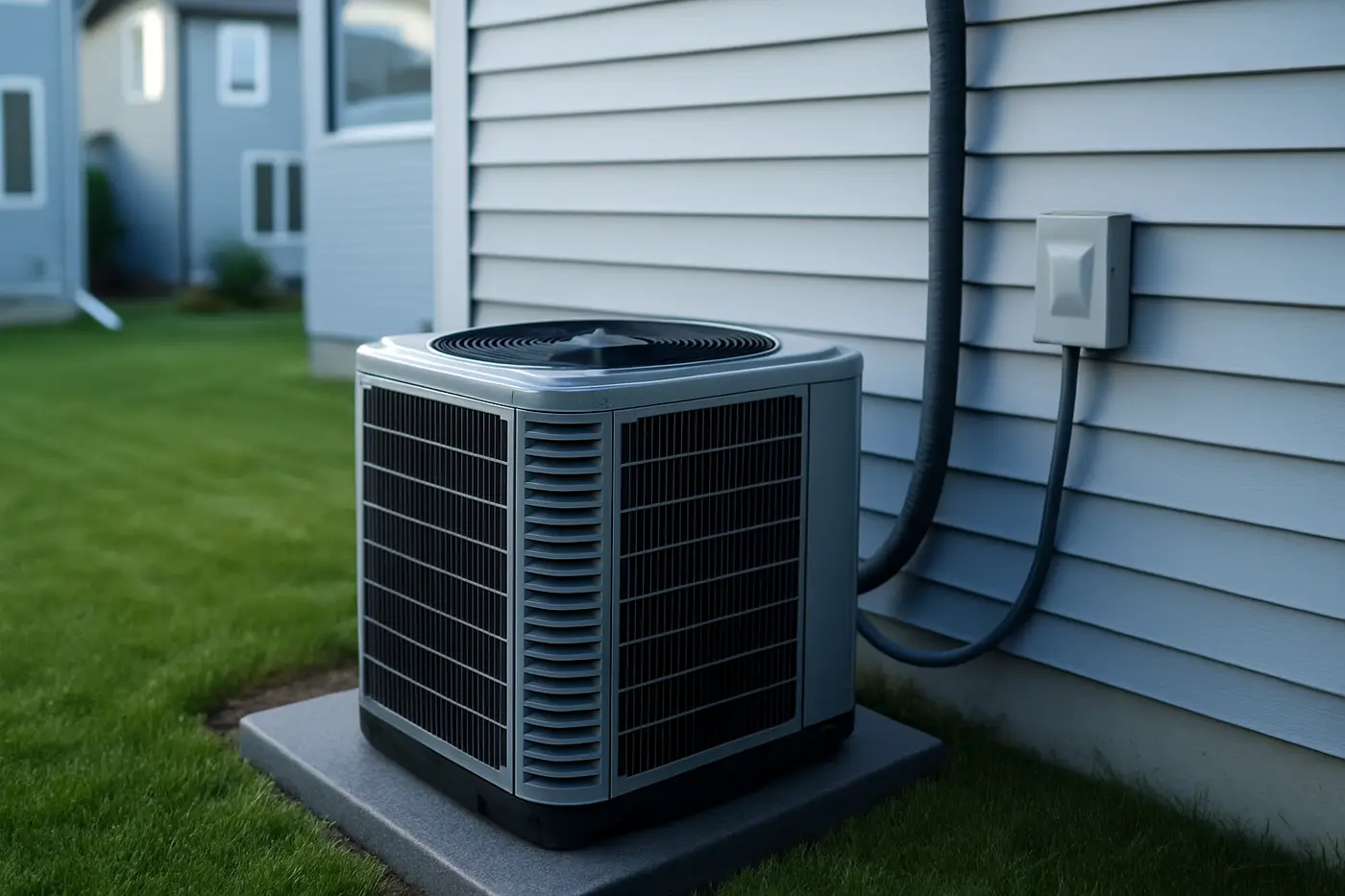
- Dirty condenser coil. Seed fluff in early summer, grass clippings from the mower, dust and leaves pack into the fins. The unit cannot get rid of heat, pressures climb, and it either trips or cools poorly.
- Frozen evaporator coil. The coil above the furnace ices over when too little air moves across it (dirty filter, closed registers, a weak blower) or when the refrigerant charge is low.
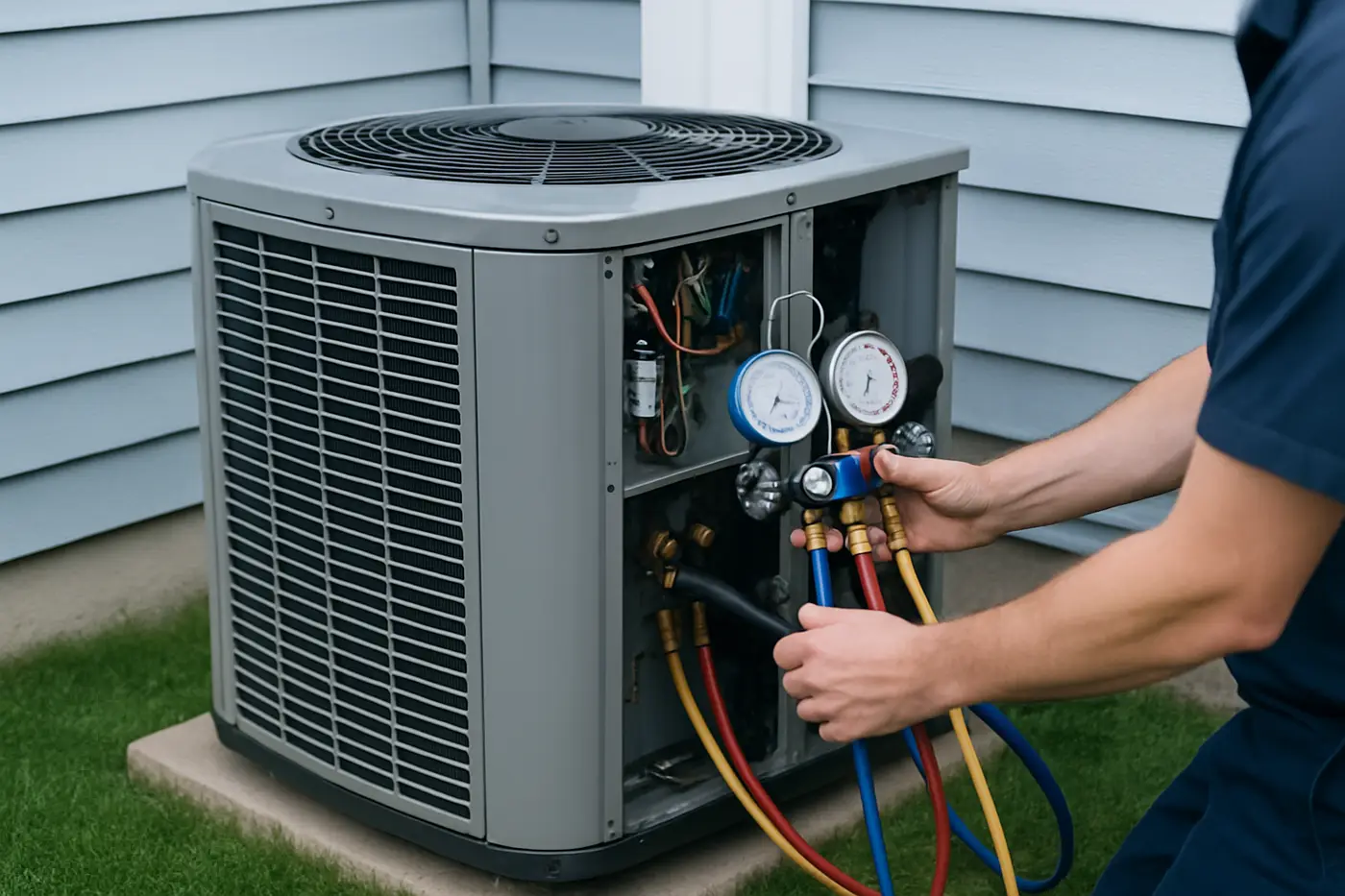
- Refrigerant leak. Vibration and corrosion open small leaks in the coils or at fittings. The system cools less every week until the coil freezes.
- Furnace-side faults. Blower motor, blower capacitor, ECM module or control board. More on these below.
The furnace is half of your air conditioner
Central air in Edmonton is almost always a split system built around the furnace. The outdoor condenser pumps refrigerant to a coil sitting on top of the furnace, and the furnace blower pushes house air across that coil and through the same ductwork that carries heat in winter. If the blower does not run, or runs slowly because its capacitor or motor is failing, the outdoor unit keeps working, the coil ices up, and the house gets no cooler.
That is why an AC diagnosis starts at the furnace. A blower that has been struggling for two winters often gives out on the first hot day, because cooling asks it for more airflow than heating does. It is also why a furnace that gets regular maintenance tends to have fewer AC problems: a clean blower wheel and a fresh filter are part of both.
What you can check before booking
These are safe and they solve a fair share of calls:
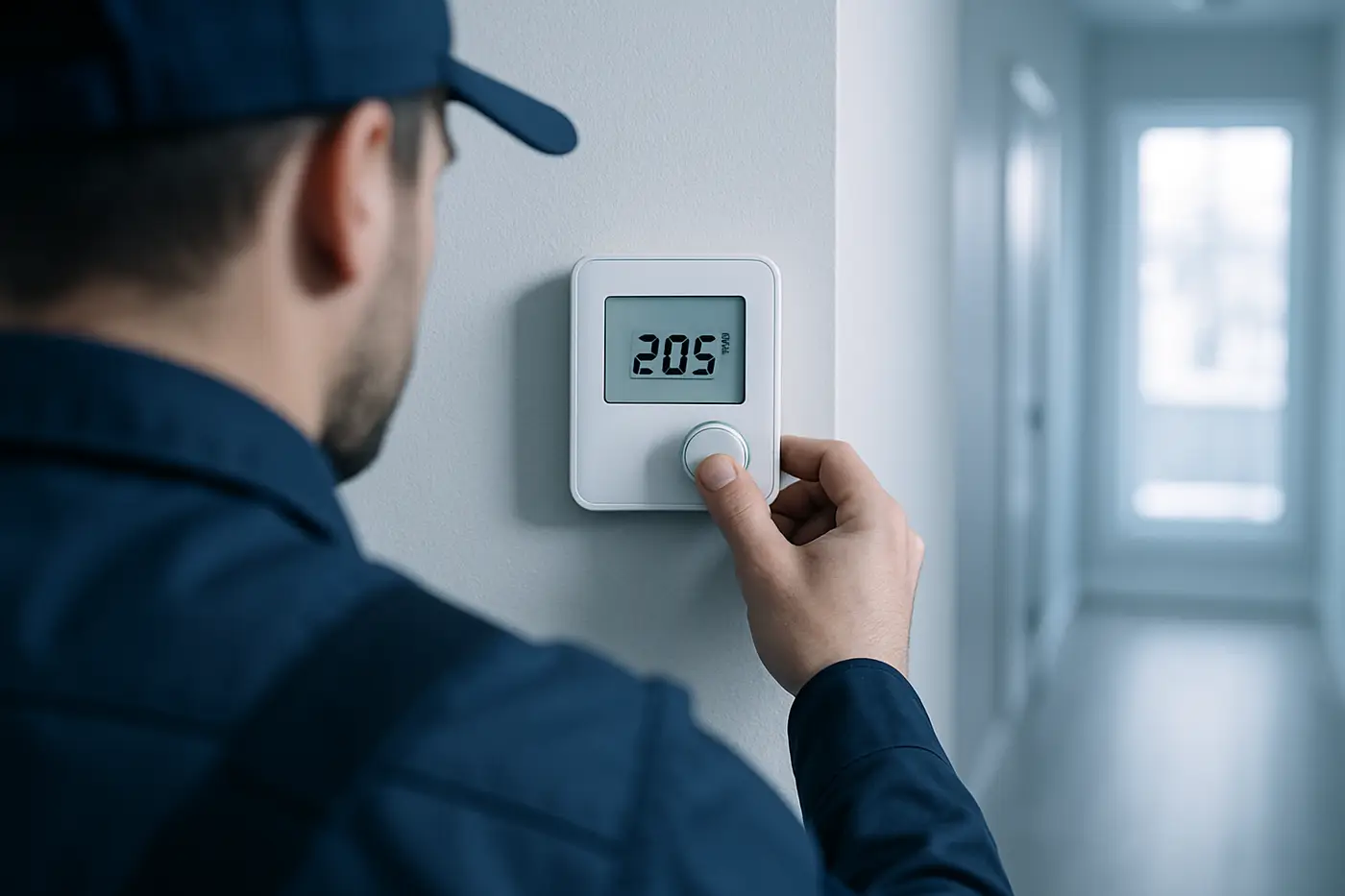
- Thermostat. Set to cool, set point a few degrees below room temperature, fresh batteries if it takes them.
- Breakers. There is usually one for the furnace and a separate double breaker for the outdoor unit. A tripped breaker can be reset once. If it trips again, leave it off and request a visit.
- Furnace power switch and door. The furnace switch is on, and the blower door is fully seated; a loose door stops the blower on its safety switch.
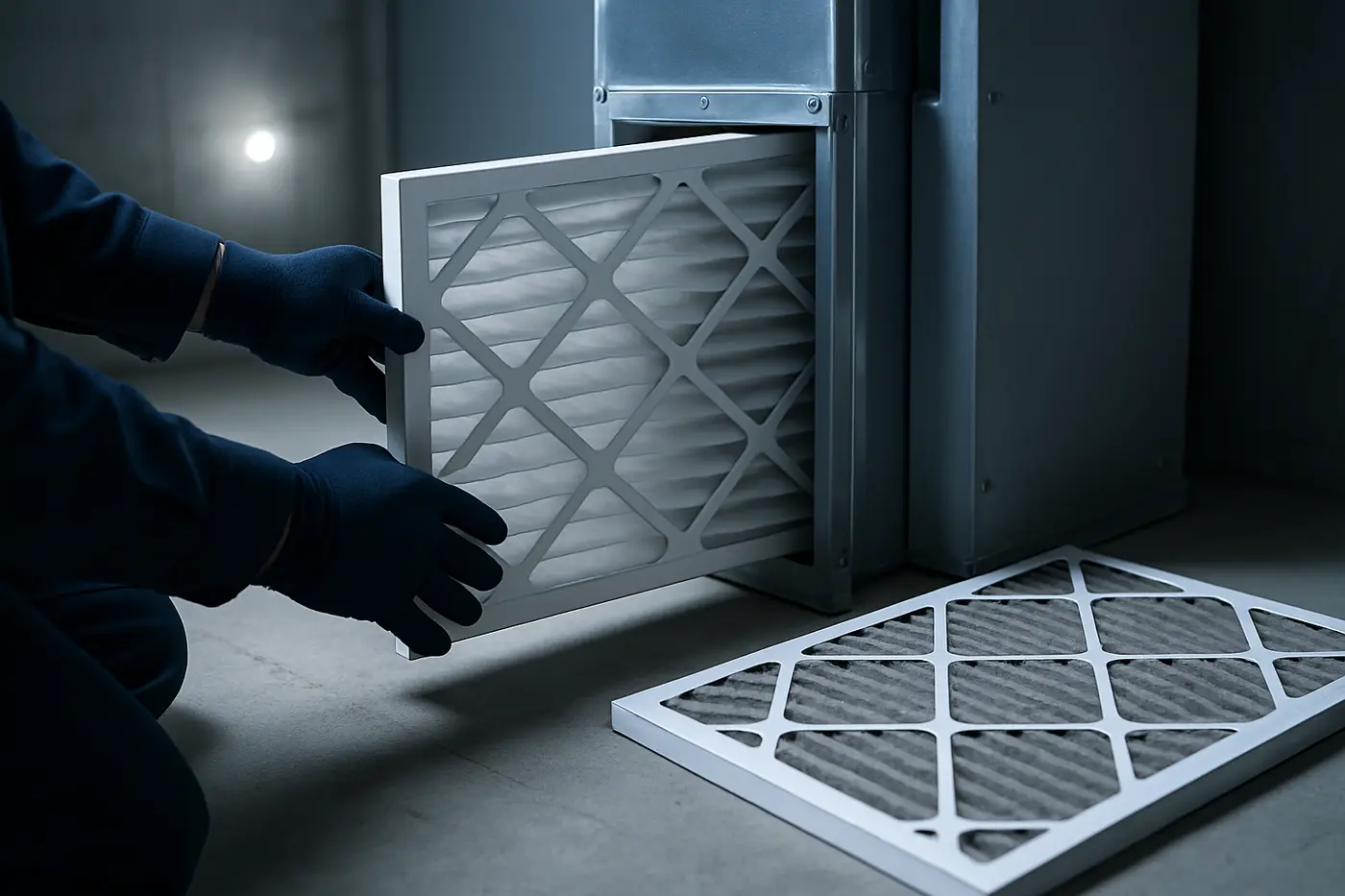
- Filter. Hold it up to a light. If light barely comes through, replace it.
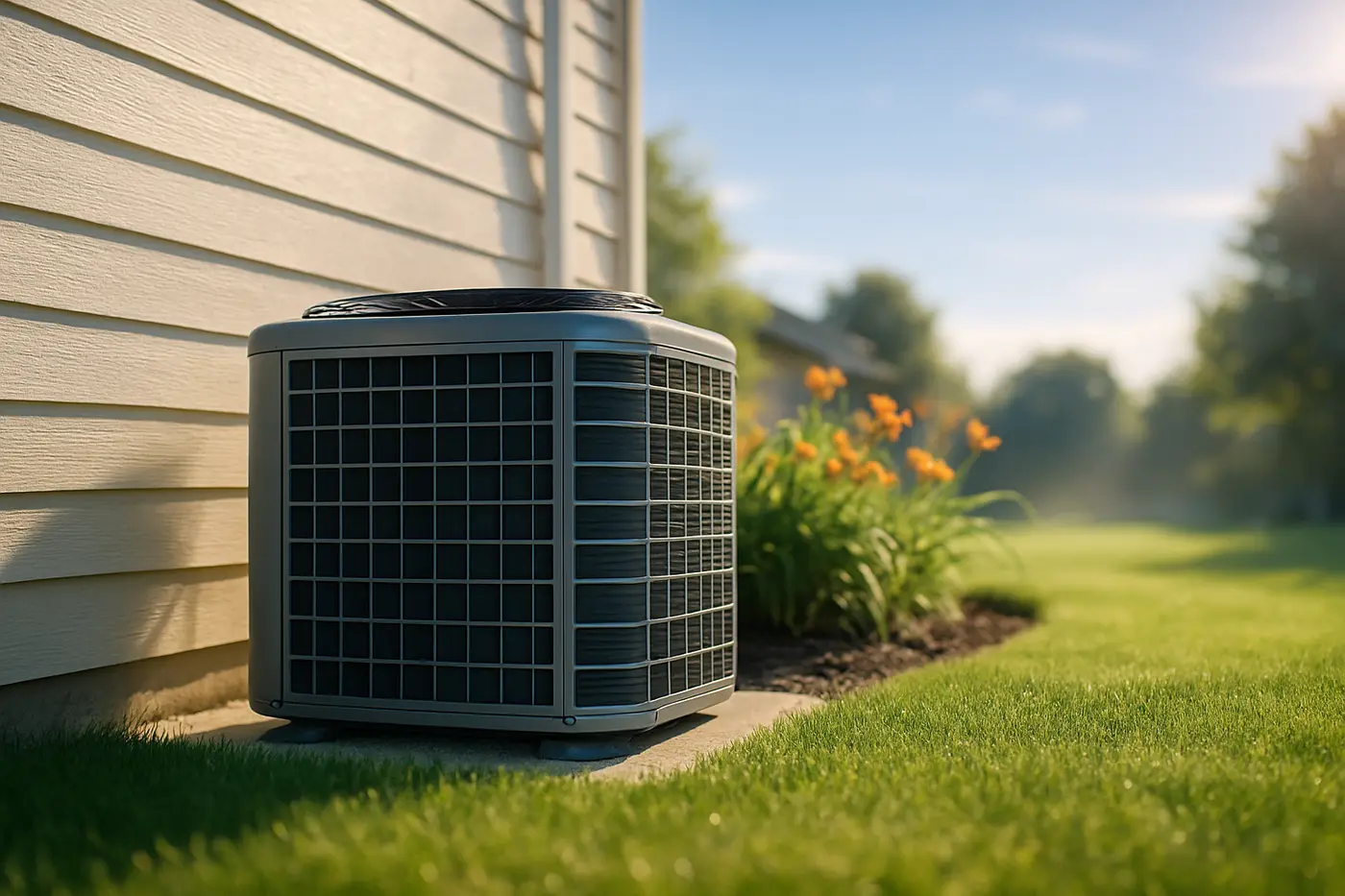
- Outdoor unit. Look at it while it should be running. Is the fan turning? Is the coil matted with fluff or clippings? Is anything stacked against it? Clear what is around it by hand; leave the fins and the inside for the technician.
- Ice. If there is ice on the copper line or the indoor coil, turn cooling off, run the fan to thaw it, and book the visit.
Do not open the outdoor unit’s service panel, touch the capacitor, or add refrigerant from a store-bought kit. The capacitor holds a charge with the power off, and refrigerant work is a certified trade.
Refrigerant, R-410A and the phase-down
Most air conditioners running in Edmonton today use R-410A. New equipment is moving to lower global-warming refrigerants such as R-454B and R-32 as Canadian rules phase down HFCs, so R-410A and the parts for R-410A systems are getting more expensive. That changes the math on a leak. Finding and fixing a leak in an accessible fitting and recharging is a reasonable repair. Topping up an older unit every summer without finding the leak is paying for the same refrigerant over and over, and a leak in a coil on an older system often makes replacement the better use of the money.
Repair or replace
The honest rules of thumb:
- A capacitor, contactor, fan motor or a leak at a fitting on an otherwise healthy unit: repair it.
- A failed compressor on an older unit: compare the compressor price with a new unit before deciding. The compressor alone is typically $2,000 to $3,800, and a new central AC on the existing furnace and ducts typically runs $4,800 to $8,500.
- A leaking coil on an older R-410A system, or a unit that has needed refrigerant several summers running: usually replace.
- A furnace that is also near the end of its 15 to 20 years: price the AC and the furnace together, and consider a heat pump that cools in summer and shares the heating with the furnace.
When replacement is the better call, the details of sizing and placement are on the air conditioner installation page.
Edmonton houses and air conditioning
The age of the house changes the problem. In 1970s and 1980s suburbs like Mill Woods, Castle Downs, Clareview and Callingwood, most air conditioners were added years after the house was built, on original ductwork with returns sized for heating. The upstairs runs hot, the coil runs cold, and a system that is technically working still feels weak. In newer subdivisions like Terwillegar, Windermere and Summerside, the bonus room over the garage is the usual complaint: cold in January, hot in July. And in character homes in Garneau, Westmount and Glenora, ductwork added decades after the house was built is often too small to carry enough cool air upstairs.
None of those is a broken part, and the diagnosis says so when it is the house and not the equipment.
What it costs
Typical Edmonton ranges; your price is confirmed in writing before any work starts. A diagnostic or service call runs $129 to $199 in regular hours. A capacitor or contactor repair is $175 to $450. A refrigerant leak search, repair and recharge runs $450 to $1,800 depending on where the leak is and how much refrigerant the system holds. A compressor replacement is $2,000 to $3,800. An AC tune-up is $129 to $219. The full list is on the pricing page, and the bigger picture of what air conditioning costs to buy and run is in how much does air conditioning cost in Edmonton.
Who does the work
Refrigeration and Air Conditioning Mechanic is a compulsory certified trade in Alberta, so any work on the refrigerant circuit is done by a certified refrigeration mechanic. Electrical and furnace-side repairs are done to the same standard. Warranty terms on parts come from the manufacturer and are written on your quote.
Request a visit
Send the form with what the unit is doing, whether the furnace fan runs, and roughly how old the system is. We confirm the arrival window when we reply to your request, and you get the diagnosis and the price before anything is replaced. Start at the contact page.
Last updated September 24, 2026