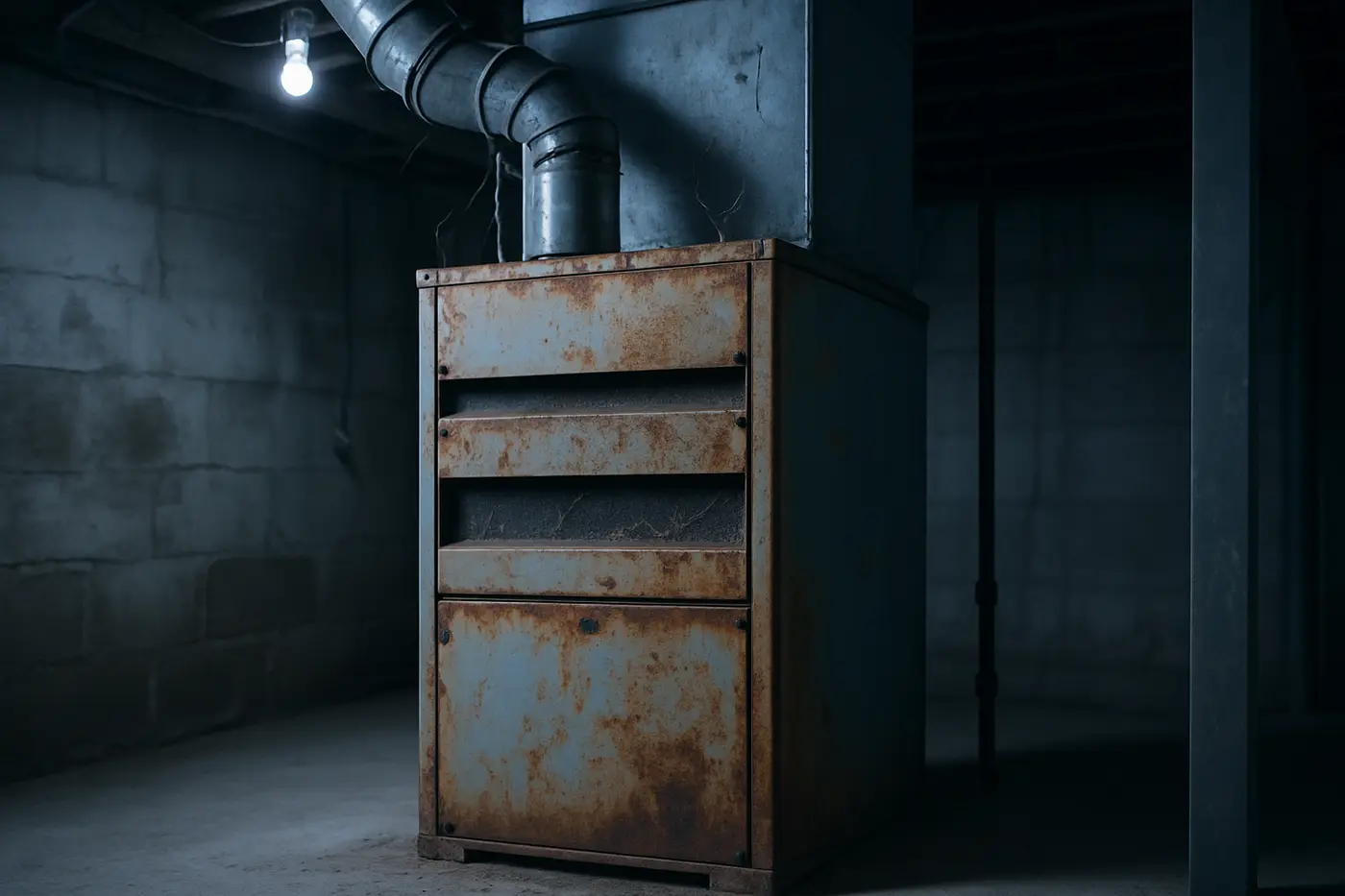
- #repair or replace
- #furnace replacement
- #furnace repair
- #heat exchanger
- #edmonton
- #furnace age
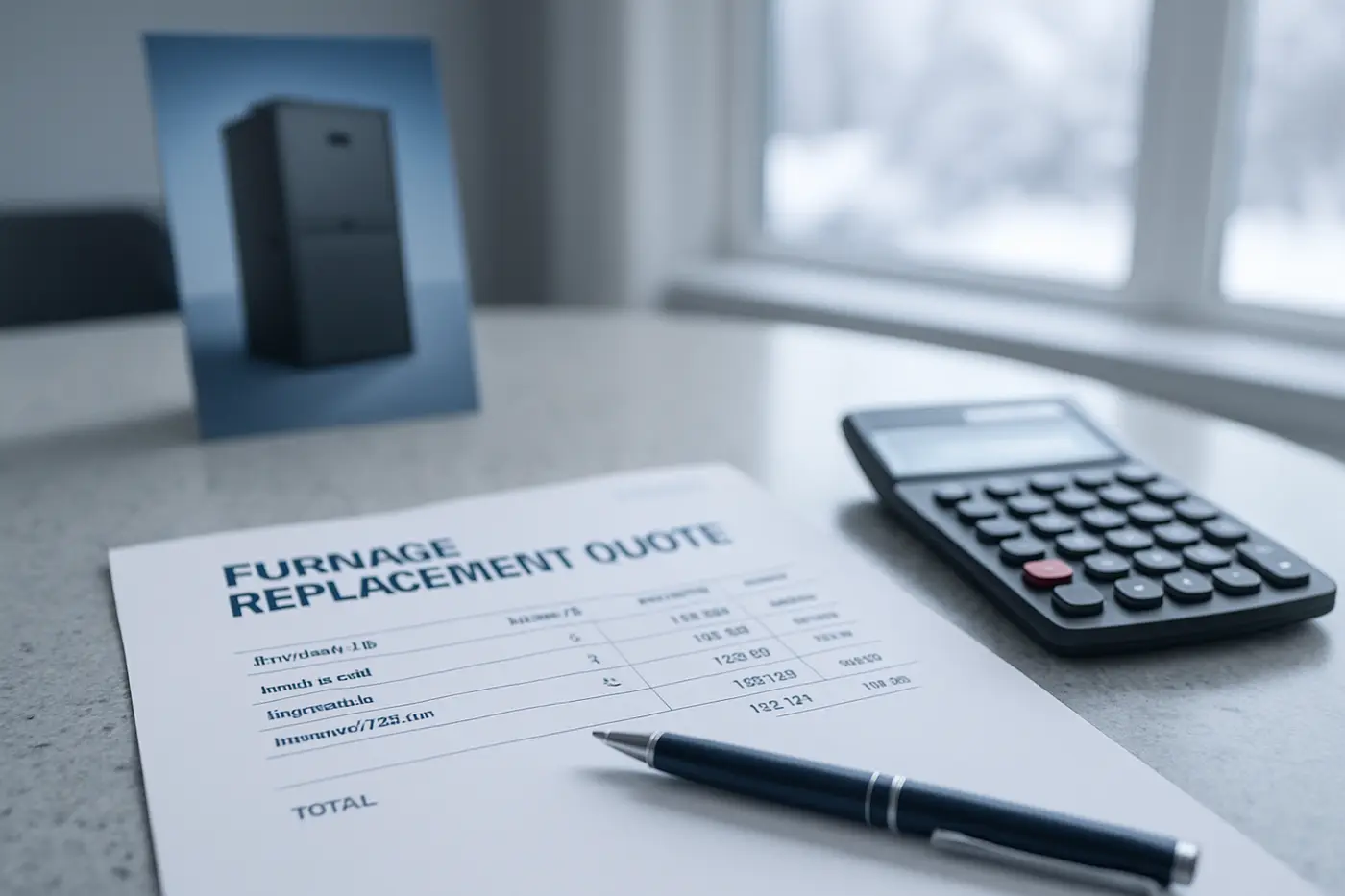
Quick answer: Repair the furnace when it is under about 15 years old, the heat exchanger is sound, and the repair is a small part such as an igniter, flame sensor or pressure switch. Replace it when the heat exchanger is cracked, the furnace is past 20 years, or it has needed repeated major repairs. Between those, weigh the repair cost against the $4,800 to $7,500 a new single-stage furnace typically costs installed in Edmonton.
That is the short version. The long version is below, with the numbers, because this decision is one where contractors have a clear incentive to lean one way. A furnace technician who is honest will tell you a 15-year-old furnace is often worth one more repair, and will also tell you when it is not.
Rule 1: Age sets the frame, not the answer
A furnace’s typical service life is 15 to 20 years. It is shorter if the furnace was oversized, short-cycled or never maintained, and heat exchangers on neglected units crack earlier. In Edmonton, the furnace runs from roughly late September to May, so a furnace here puts in far more hours per year than one in Vancouver or Toronto. Fifteen years in Edmonton is a lot of running.
But age alone does not condemn a furnace. A well-maintained 16-year-old furnace with a clean heat exchanger and a failed igniter is a repair. The age tells you how much life is probably left to protect with the repair money, which is the real question.
| Furnace age | General approach |
|---|---|
| Under 10 years | Repair almost anything except a cracked heat exchanger; check warranty terms on parts first |
| 10–15 years | Repair small and middle items; price big items against replacement |
| 15–20 years | Repair small items; for big items get both quotes and compare |
| Over 20 years | Small repairs to get through a winter are fine; plan the replacement |
Rule 2: Compare the repair to what it protects
Put the repair price next to the price of a new furnace and ask how much life the repair buys. Typical Edmonton ranges for 2026, before GST, from the pricing page:
| Repair | Typical range | Share of a $4,800–$7,500 new furnace |
|---|---|---|
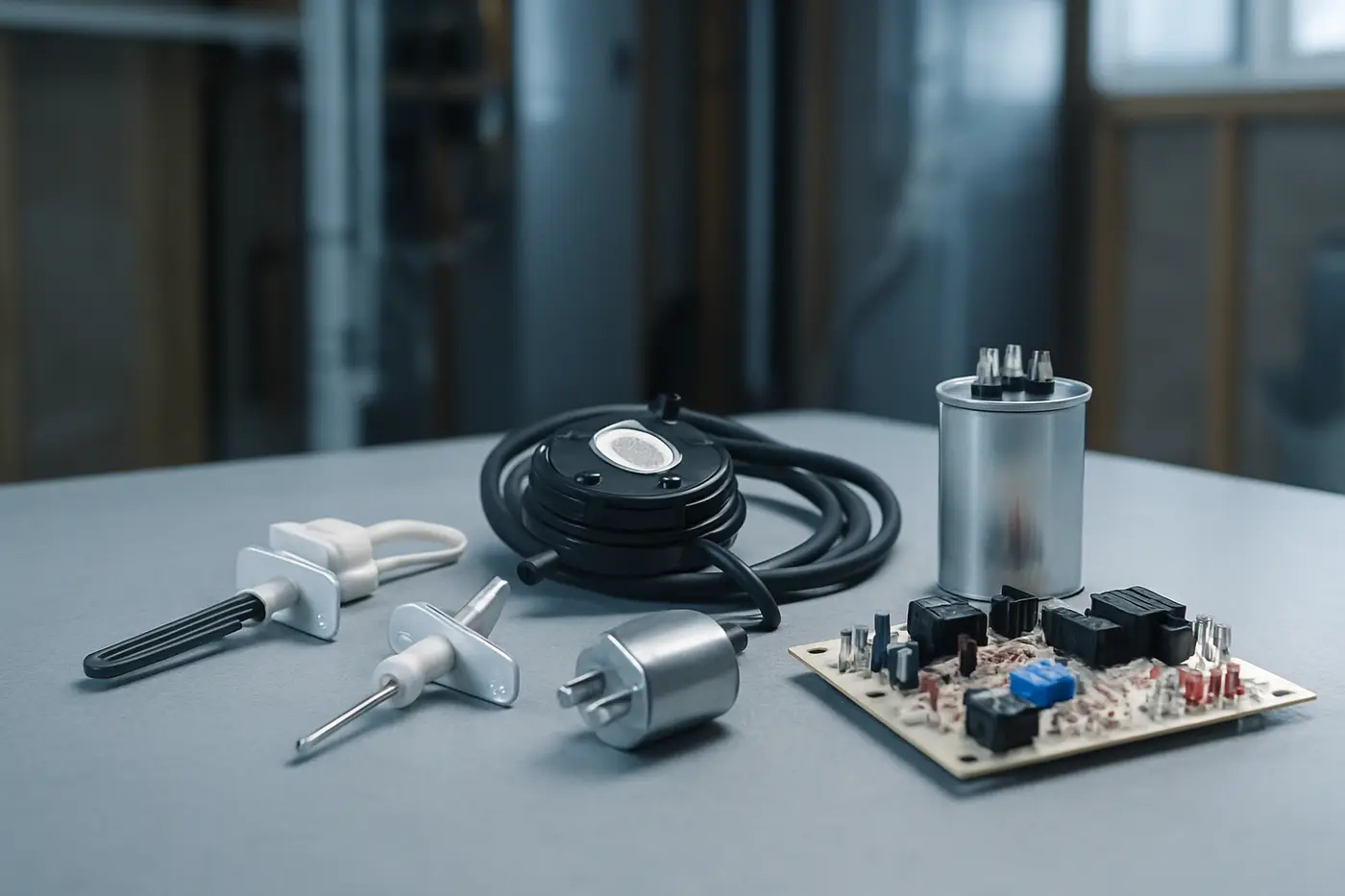
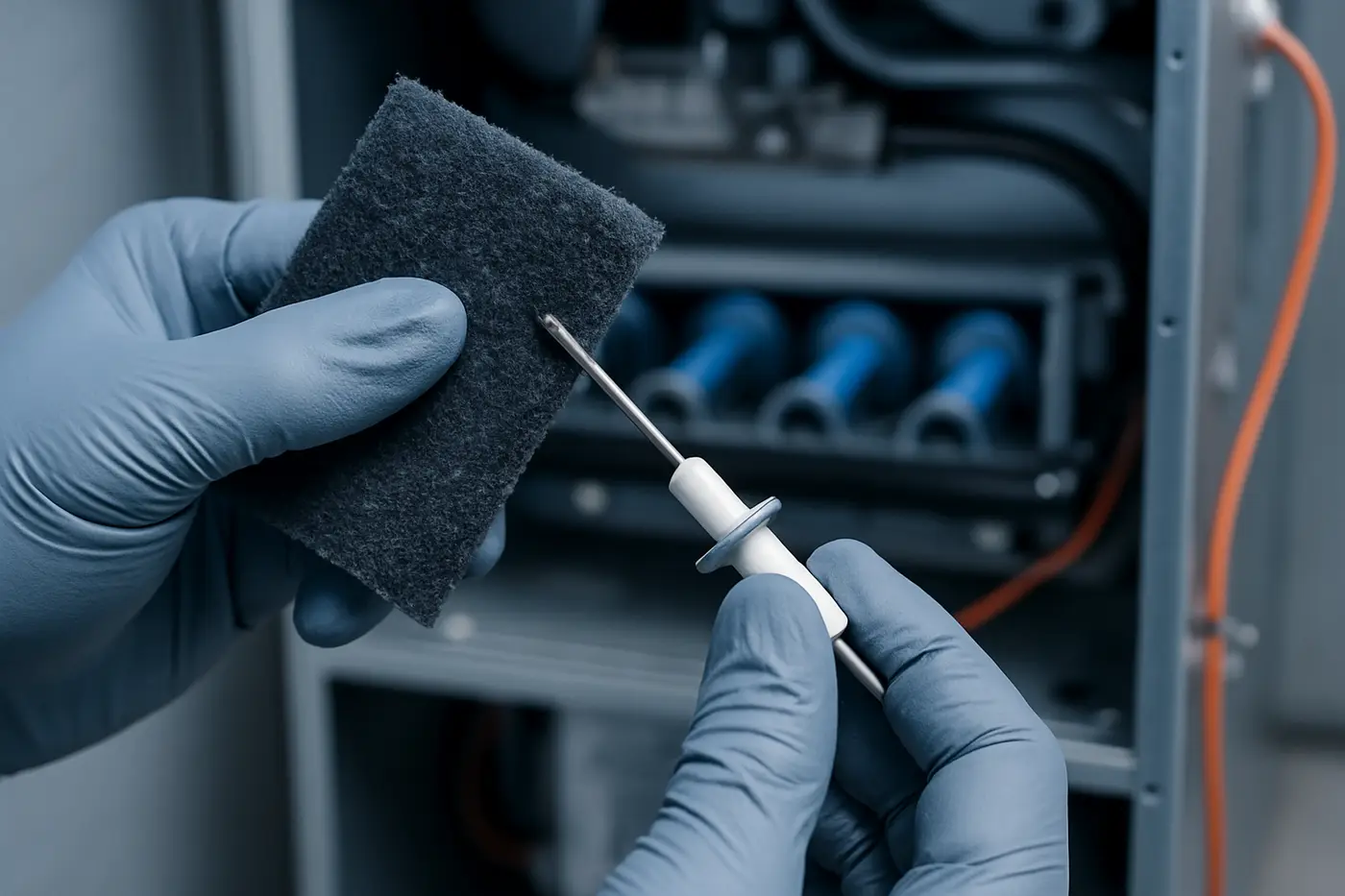
| Flame sensor clean or replace | $129–$299 | Small |
| Hot surface igniter | $225–$450 | Small |
| Pressure switch | $275–$550 | Small |
| Control board | $500–$1,200 | Middle |
| Gas valve | $550–$1,100 | Middle |
| Inducer (draft) motor | $650–$1,400 | Large |
| ECM blower motor or module | $900–$2,000 | Large |
| Cracked heat exchanger | Usually means replacement | Near the whole furnace |
A $300 igniter on a 12-year-old furnace is the textbook repair. It buys years of heat for a small fraction of a new furnace. A $1,800 ECM module on a 19-year-old furnace is a different sum: you are spending a real share of a new furnace to keep a unit near the end of its life running, and the next failure is not far away. That does not make it wrong, but it means you should see a furnace replacement quote before you approve it.
Rule 3: A cracked heat exchanger ends the discussion
The heat exchanger is the metal chamber that keeps the flame and combustion gases separate from the air the blower pushes through your house. When it cracks, those gases, including carbon monoxide, can get into the air stream. On most residential furnaces, replacing the heat exchanger costs close to what a new furnace does, and every other part of the furnace is as old as the part that failed. That is why a cracked heat exchanger usually means replacement.
Two things to insist on. First, the furnace should be shut down until it is replaced, and the CO alarms near the bedrooms should be tested and within their end-of-life date. Second, ask to see the evidence: a photo or a camera image of the crack, and the combustion readings. A cracked heat exchanger is a real and common finding on older and neglected furnaces, and it is also the finding a pushy salesperson reaches for. If you are unsure, a furnace inspection with a combustion and CO test, typically $149 to $249, gets you a second look.
If a CO alarm sounds, or people in the house have headaches or nausea that ease outside, get everyone out and call 911 from outside. If you smell gas, leave the house now, do not touch switches, the thermostat or the furnace, do not use a phone inside, and call ATCO Gas’s 24-hour emergency line or 911 from outside.
Rule 4: Repeated major failures count
One inducer motor in 17 years is normal wear. An inducer one winter, a control board the next and a blower motor this January means the furnace is wearing out as a whole. Add up what the last two or three winters cost. When that total heads toward a third or half of a new furnace, the repair-by-repair path is costing more than it looks like one bill at a time, and you are still left with an old furnace.
Rule 5: Efficiency is a smaller factor than people think
Since the end of 2009, new natural gas furnaces sold in Canada have had to be at least 90% AFUE. High-efficiency units run 95 to 98%. If your current furnace is already a high-efficiency condensing unit, the gas savings from a new one are modest, and they rarely justify replacing a furnace that works.
The case is stronger in two situations. An old mid-efficiency furnace, about 80% and vented into a chimney, is a bigger step up; it is also the kind of furnace found in 1950s to 1980s homes where the next replacement brings a venting change and the orphaned hot water tank question, which adds $400 to $1,500. And a two-stage or modulating furnace, typically $6,500 to $11,000 installed, changes comfort more than the bill: steadier temperatures, quieter running, and less of the cold bonus room problem common in newer subdivisions.
When repair clearly wins
Some cases are not close:
- A 12-year-old furnace with a failed igniter ($225 to $450). Repair.
- A 15-year-old furnace that shuts down with a dirty flame sensor ($129 to $299). Repair, and book a furnace tune-up so it does not happen again in January.
- Any-age furnace shut down by a frozen condensate line ($150 to $450) or a snow-blocked vent ($150 to $600). These are installation and weather problems, not a worn-out furnace.
- A 17-year-old furnace with a pressure switch ($275 to $550), sound heat exchanger and no big repairs in its history. Repair, and start planning the replacement for a calm fall rather than a cold snap.
When replacement clearly wins
- A cracked heat exchanger at any age.
- A furnace past 20 years facing an inducer, blower or ECM repair.
- Three major repairs in two winters.
- An oversized furnace that short-cycles, keeps tripping its limit switch and never kept the house even. A new, properly sized furnace fixes the cause, not the symptom.
Timing the replacement
If the answer is “replace soon” rather than “replace now”, use the warm months. Replacing a furnace in September gives you time to compare two quotes, look at single-stage against two-stage or modulating, and think about a heat pump in a hybrid setup. Replacing one during a cold snap like January 2024, when the region fell into the -40s with wind chill, means deciding fast in a cold house. Homes in older neighbourhoods such as Castle Downs, many on their second or third furnace, are good candidates to plan ahead.
A furnace replacement in Edmonton needs a gas permit, pulled by the contractor, followed by an inspection, and the gas work is done by a certified gasfitter. The permit belongs on the written quote.
What to do next
Write down the furnace age from the rating plate inside the door and the repairs from the last few winters. Then request a visit. You get a repair price and, when the furnace is near the end, a free written quote for replacement alongside it, so you can compare the two on paper. Prices are typical Edmonton ranges until the furnace is looked at; your price is confirmed in writing before any work starts. For the full breakdown of replacement prices, see how much does a new furnace cost in Edmonton.