- #furnace-tune-up
- #maintenance
- #furnace-filter
- #hrv
- #edmonton
- #heating-season
Quick answer: Service your furnace once a year, in late summer or early fall, before the Edmonton heating season starts. Check the filter monthly through the winter and change it when it is loaded, and if your home has an HRV, have it serviced at the same visit. A typical Edmonton tune-up runs $129–$219; your price is confirmed in writing before any work starts.
That is the short version. The longer version is about why Edmonton furnaces need it more than most, what a tune-up should actually include, and what you can safely do between visits.
Why once a year is the minimum here
Edmonton’s heating season runs roughly from late September to May. January daily means sit around -10°C, and most winters bring a cold snap below -30°C. A furnace here runs far more hours in a year than one in Vancouver or Toronto, and every one of those hours wears on the igniter, the inducer motor, the blower and the heat exchanger.
The other reason is timing. The worst week to discover a weak igniter or a plugged condensate trap is the first real cold snap, when every heating company in the city has a full board. The January 2024 cold snap, when the region went into the -40s with wind chill and Alberta’s grid operator issued an emergency alert on 13 January asking people to cut electricity use, is the reference point for what a no-heat call feels like in the worst week of the year. A tune-up in August or September finds most of those problems while the house is still warm and the parts are easy to get.
When to book it
| Timing | Why it works | Watch out for |
|---|---|---|
| July to early September | Easy scheduling, time to order parts, problems found before you need heat | Book early; the calendar fills as the nights cool |
| Late September to October | Still ahead of the real cold | First cold nights bring a wave of no-heat calls |
| November to March | Better than nothing, and a furnace that is acting up should be seen now | Longer waits during cold snaps |
| Spring | Good time to pair with an AC tune-up | Any furnace problem found waits until fall to matter |
If you also have central air, a spring AC tune-up and a fall furnace tune-up is the usual pattern. Some homeowners do both in one visit; that works as long as the furnace side gets its full check.
What a proper furnace tune-up includes
A tune-up is not a filter change and a glance. On a modern high-efficiency furnace, a technician should work through the following and give you a written list of what was checked and what was found:
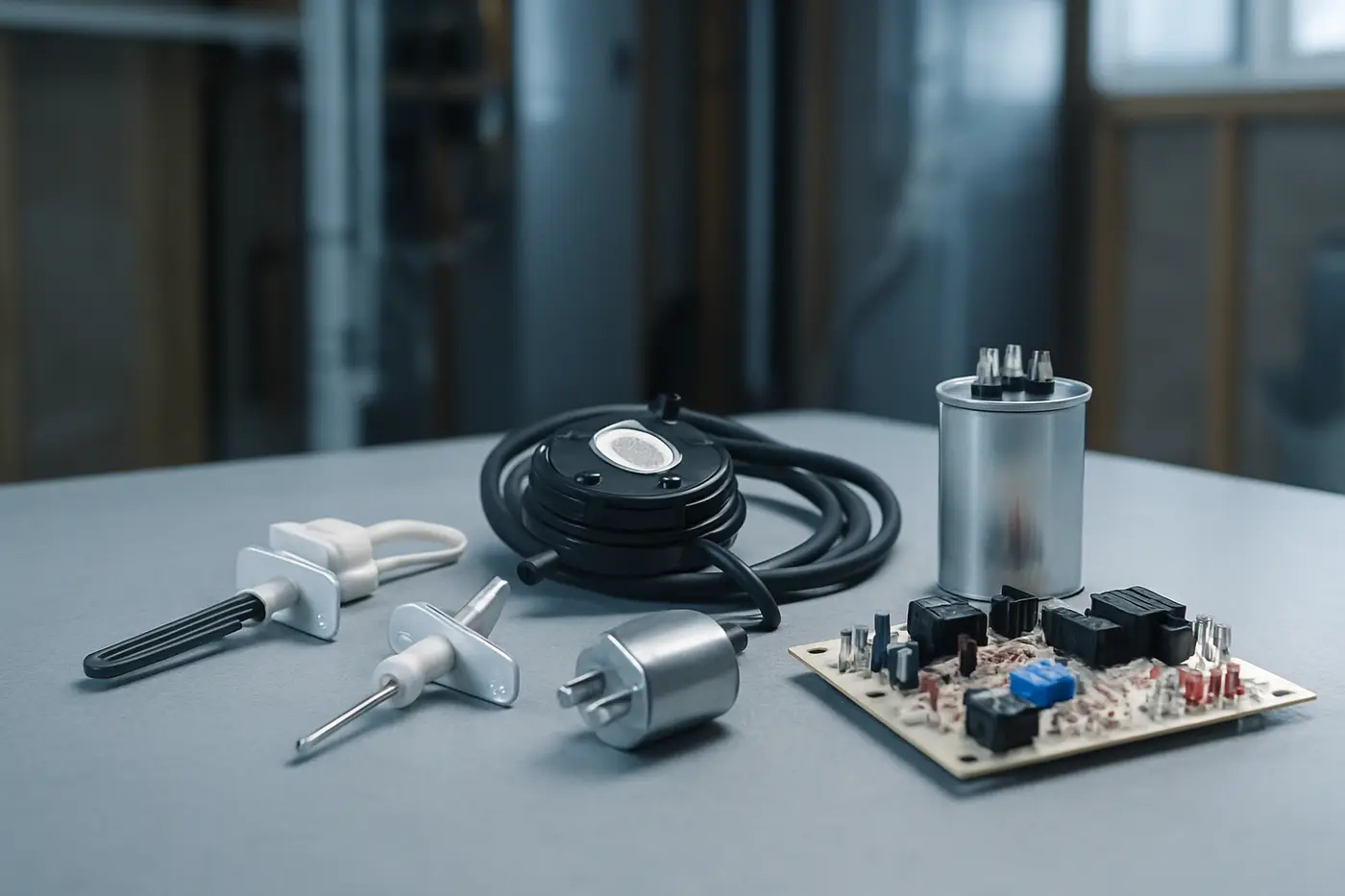
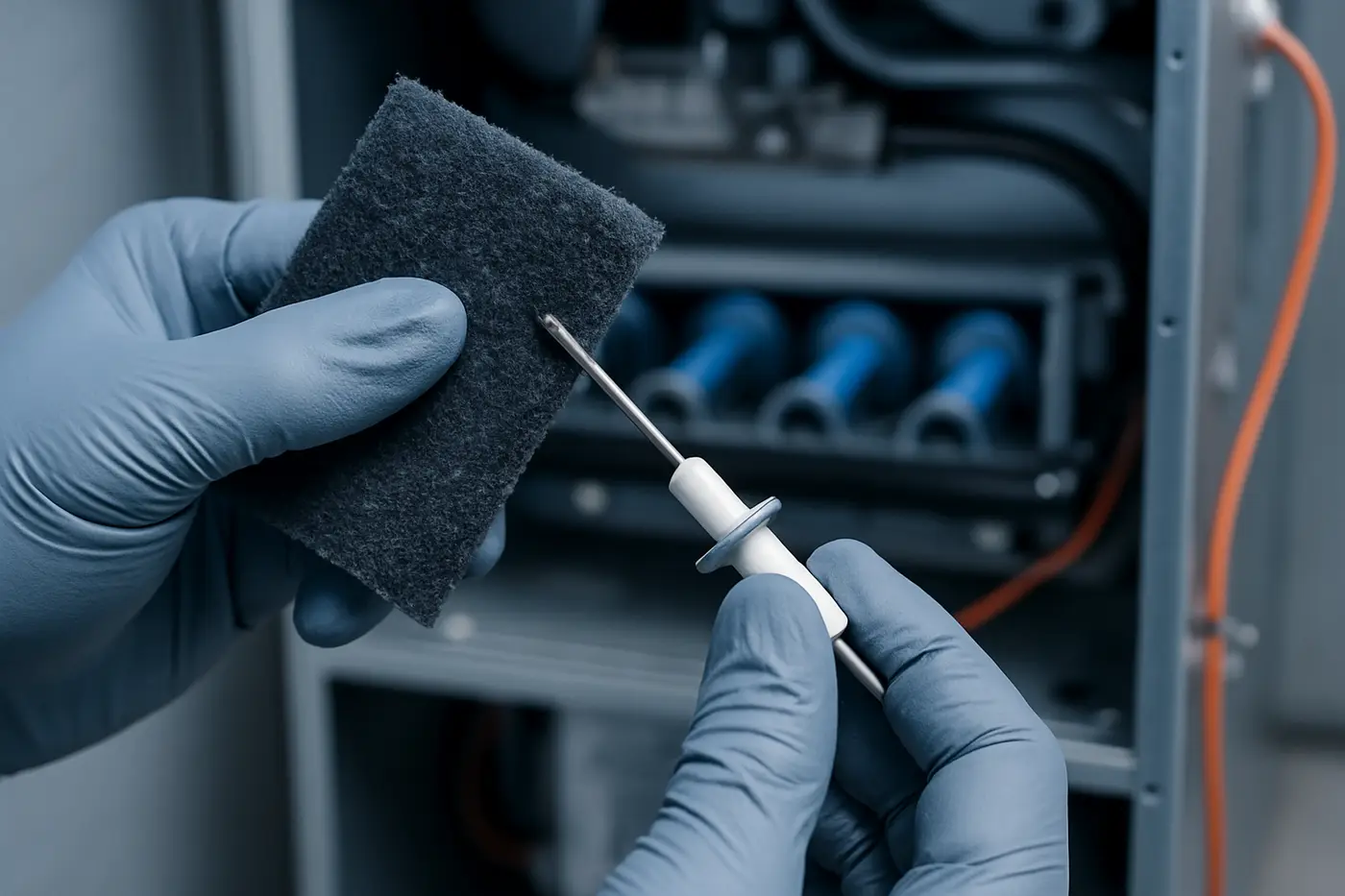
- Flame sensor cleaned. A dirty flame sensor is one of the most common reasons a furnace lights and then shuts off after a few seconds.
- Hot surface igniter inspected for cracks and tested. Igniters are a wear part; catching a weak one in September saves a cold night.
- Burners and flame checked for a clean, even flame.
- Inducer (draft) motor checked for noise and bearing wear.
- Pressure switch and hose checked for cracks, water in the hose and correct operation.
- Blower motor and capacitor, or the ECM motor, checked, and the blower wheel looked at for dust build-up.
- Condensate trap and line cleaned and checked for sags, kinks and runs near cold walls where they can freeze.
- Intake and exhaust venting checked end to end, including the side-wall terminations outside.
- Temperature rise measured across the heat exchanger, which tells you whether airflow is right.
- Safety switches (limit, rollout, pressure) confirmed to be working. Tested, never bypassed.
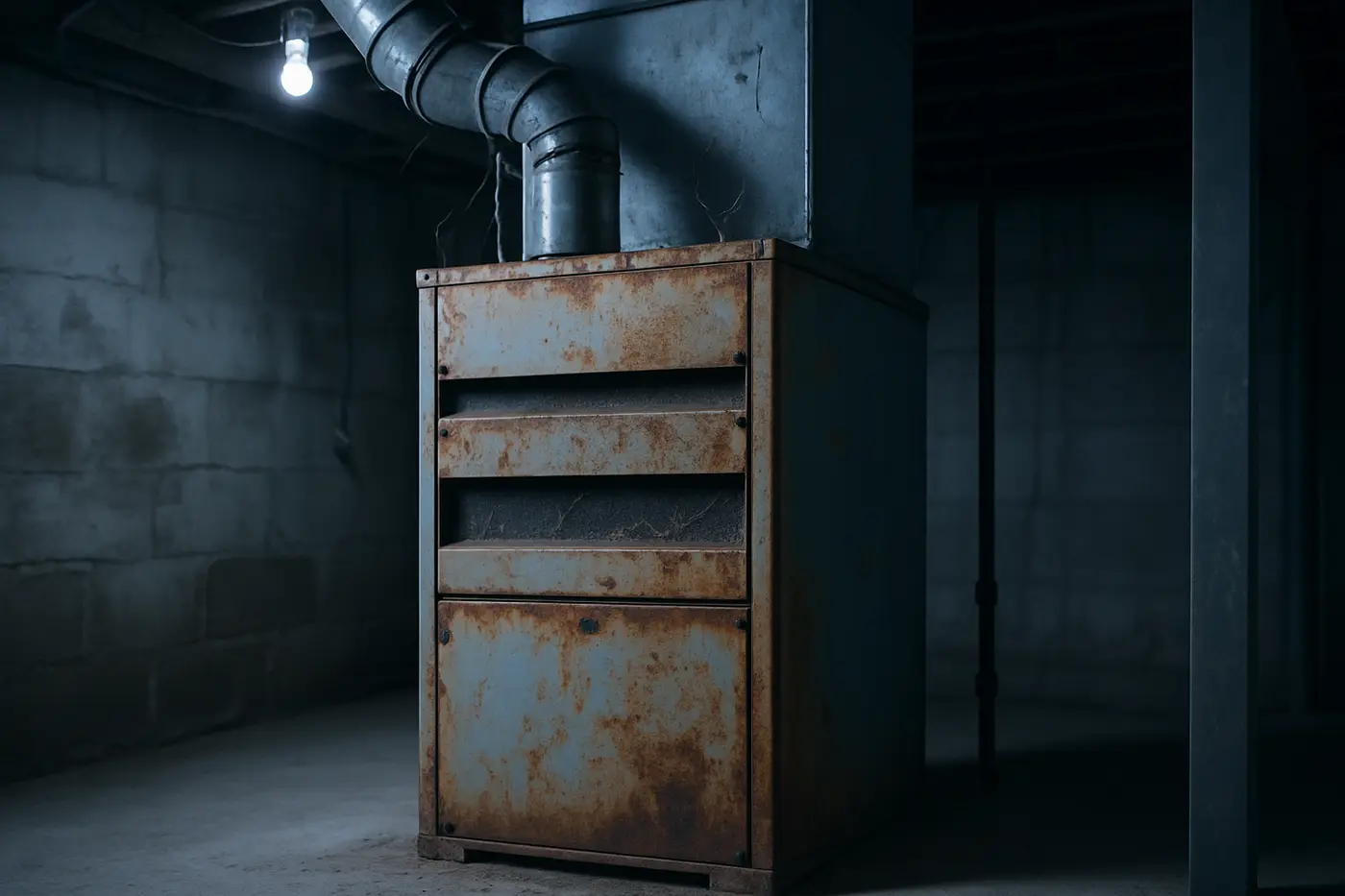
- Heat exchanger inspected for cracks, rust and signs of overheating.
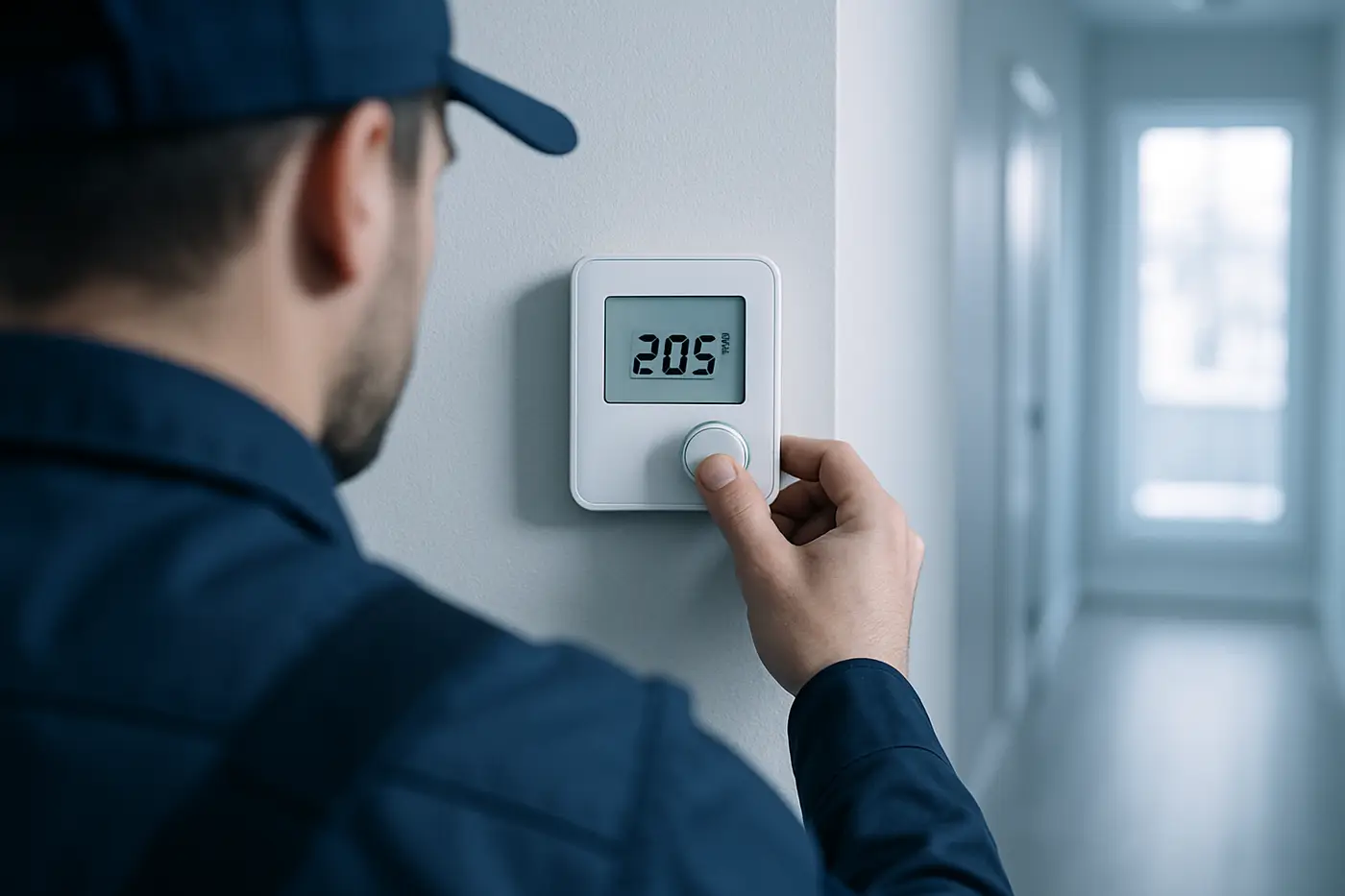
- Thermostat operation checked, and batteries if it uses them.
- Filter checked and changed or noted.
If you want a combustion analysis and a carbon monoxide check with written readings, that is a furnace safety inspection, typically $149–$249 in Edmonton. It makes sense on older furnaces, after a CO alarm event, when buying a house, or when a furnace is past 15 years. The standard furnace maintenance and tune-up covers the rest.
Filters: the part you control
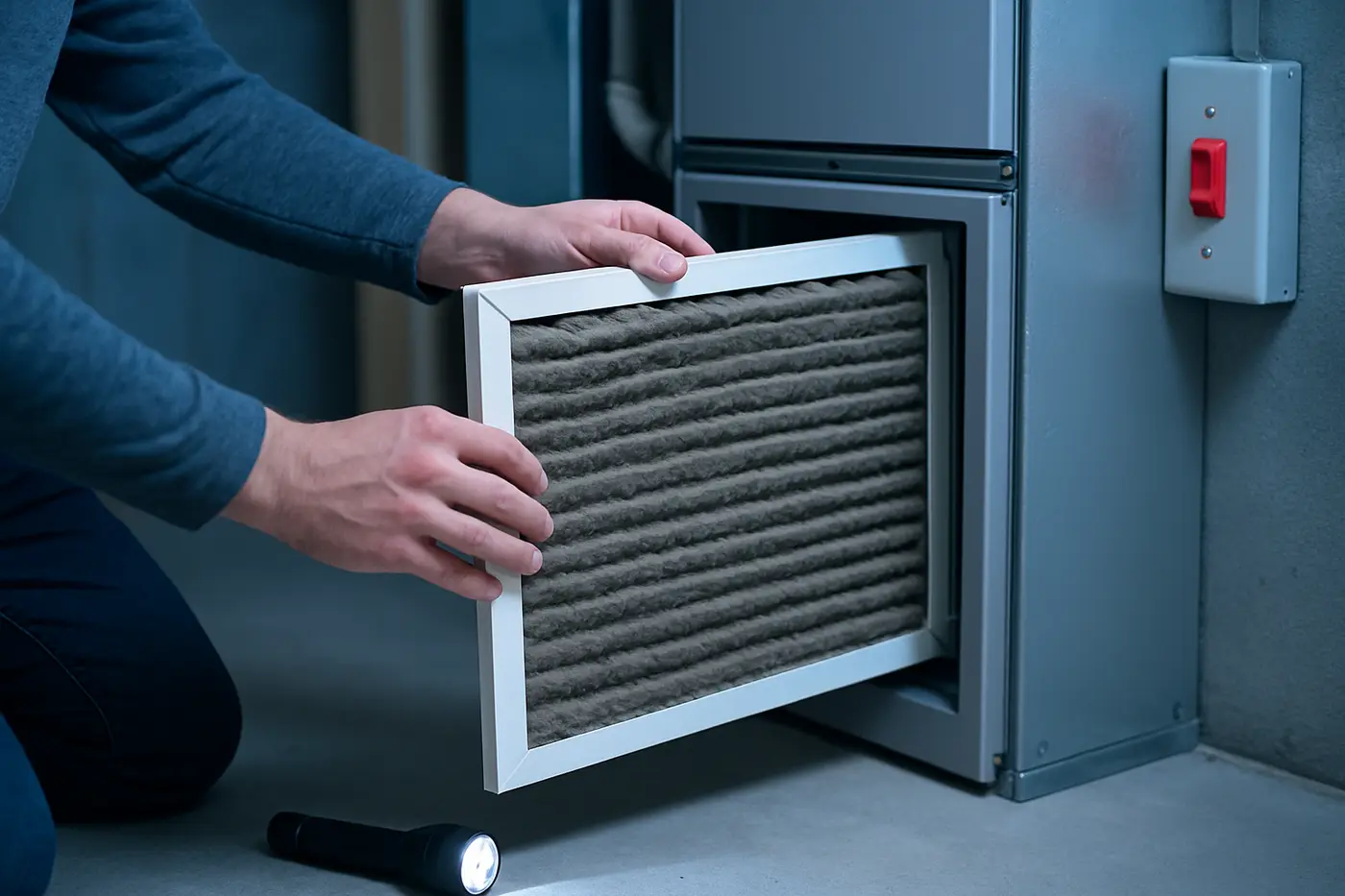
A clogged filter is behind a surprising number of Edmonton no-heat calls. The furnace overheats because air cannot get through, the limit switch trips to protect the heat exchanger, and the furnace shuts down. Over years, running hot like that shortens the life of the heat exchanger.
| Filter type | Typical check | Typical change |
|---|---|---|
| Standard 1-inch pleated | Monthly in heating season | Every 1–3 months, when grey or loaded |
| 4- or 5-inch media cabinet | Every few months | Per the maker’s guidance, often longer than 1-inch |
| Washable or electronic | Monthly | Clean on schedule; don’t run it wet |
A few practical notes. Write the size on the furnace cabinet so you buy the right one. Pay attention to the airflow arrow. A very restrictive filter in a slot built for a basic one can starve the furnace of air, so if you want better filtration, which many Edmonton households did after the smoky summer of 2023, ask about a media cabinet sized for your blower rather than jamming the tightest 1-inch filter into the old slot. Renovation dust and pets load filters fast; check more often during a basement reno.
The HRV, if you have one
Newer Edmonton homes are built tight, and many have a heat recovery ventilator to bring in fresh air. HRVs are easy to forget because they sit quietly next to the furnace, but the core needs cleaning and the filters need changing. In a cold snap an HRV core can frost up and stop moving air properly, which is a common winter service item. A typical Edmonton HRV service (core clean, filters, balance check) runs $129–$229, and it is sensible to have it done at the same visit as the furnace. Homes in newer southwest neighbourhoods like Terwillegar usually have both a high-efficiency furnace and an HRV on the same maintenance schedule.
What you can do yourself, safely
Between tune-ups, these checks are safe for any homeowner and catch many problems before they become a no-heat call:
- Check the filter monthly in winter, and change it when it is loaded.
- Keep the outside intake and exhaust pipes clear. High-efficiency furnaces vent through PVC pipes in the side wall. Drifting snow, ice and frost from the exhaust plume can block them, and the furnace shuts down on its pressure switch. After a storm or a cold night, look at them and brush away snow by hand.
- Look at the condensate line. If it runs near a cold wall or to a floor drain in an unheated space, check it isn’t frozen or kinked. Look, don’t cut.
- Test your CO alarms and check the end-of-life date printed on them, typically 7–10 years. Every home with a fuel-burning appliance should have CO alarms near sleeping areas.
- Check the thermostat batteries and settings when the season changes.
- Read the error code. If the furnace is misbehaving, count the LED blinks through the sight glass on the blower door and match them to the chart inside the door. Tell the technician what you saw.
- Keep the area around the furnace clear of storage, paint cans and laundry.
What you should not do: open the burner compartment, bypass or jump any safety switch, touch the gas valve beyond looking at the handle position, or try to relight a modern furnace with a flame. If you smell gas, leave the house now, do not touch light switches or the thermostat, and call ATCO Gas’s 24-hour emergency line or 911 from outside. If a CO alarm sounds, or people in the house have headaches or nausea that ease outside, get everyone out and call 911 from outside.
What a tune-up finds, and what it costs
Most tune-ups end with a clean furnace and a short list. Sometimes they find a part that is close to failing. The honest approach is to tell you what was found, how urgent it is, and what it would cost, then let you decide.
| Common tune-up finding | Typical Edmonton range |
|---|---|
| Flame sensor clean or replace | $129–$299 |
| Hot surface igniter replacement | $225–$450 |
| Blower capacitor | $175–$350 |
| Pressure switch replacement | $275–$550 |
| Frozen condensate line / trap thaw and reroute | $150–$450 |
These are typical Edmonton ranges; your price is confirmed in writing before any work starts. The full list is on the pricing page, and how much furnace repair costs in Edmonton goes part by part.
A tune-up is also the moment to have the repair-or-replace conversation calmly rather than at -30°C. A furnace’s typical service life here is 15 to 20 years. A $300 igniter on a 12-year-old furnace is an easy yes. A heat exchanger showing cracks, or a furnace past 20 years with a list of worn parts, is a different conversation, covered in repair or replace your furnace.
Does skipping a year matter?
One skipped year on a newer furnace usually does not cause a breakdown on its own. The problem is that the things a tune-up catches, like a residue-coated flame sensor, a sagging condensate line or a cracked pressure switch hose, don’t announce themselves until they stop the furnace, and in Edmonton that tends to happen on the coldest night. Several skipped years add up: dirtier blower wheels, hotter heat exchangers, and parts that fail together. Neglected furnaces are the ones whose heat exchangers crack early.
Booking a tune-up
If your furnace hasn’t been looked at in the past year, book it before the nights turn cold. Request a visit and tell us the furnace’s age if you know it, whether you have an HRV or central air, and anything it has been doing lately, like noises, short cycles or an error code. We confirm the arrival window when we reply to your request, and you get a written list of what was checked and found.