- #air-conditioning
- #ac-cost
- #central-ac
- #ductless
- #heat-pump
- #edmonton
- #refrigerant
Quick answer: Central air conditioning added to an existing furnace and ductwork typically costs $4,800–$8,500 installed in Edmonton in 2026. A cold-climate heat pump paired with your gas furnace runs $9,000–$18,000 and heats as well as cools, and a single-zone ductless mini-split runs $4,000–$7,500. These are typical Edmonton ranges; your price is confirmed in writing before any work starts.
Edmonton summers are short and mostly mild, with July highs typically in the low to mid 20s °C. But most summers bring a hot spell above 30°C, and the late June to early July 2021 heat dome pushed the city into the mid to high 30s °C. That week is when a lot of households first priced air conditioning. The wildfire smoke summer of 2023 added another reason: keeping the windows closed with the air on and better filtration running. This guide covers what each option costs and why.
The 2026 price list
| Item | Typical Edmonton range (before GST) |
|---|---|
| Central AC, installed on existing furnace and ducts | $4,800–$8,500 |
| Cold-climate ducted heat pump, hybrid with existing furnace | $9,000–$18,000 |
| Ductless mini-split, single zone | $4,000–$7,500 |
| Ductless mini-split, multi-zone (2–4 heads) | $8,500–$18,000 |
| AC tune-up | $129–$219 |
| AC repair: capacitor / contactor | $175–$450 |
| AC repair: refrigerant leak search, repair and recharge | $450–$1,800 |
| AC compressor replacement | $2,000–$3,800 (often replace the unit instead) |
These are typical Edmonton ranges; your price is confirmed in writing before any work starts. The same ranges, grouped by service, are on the pricing page.
Option 1: central AC on your existing furnace
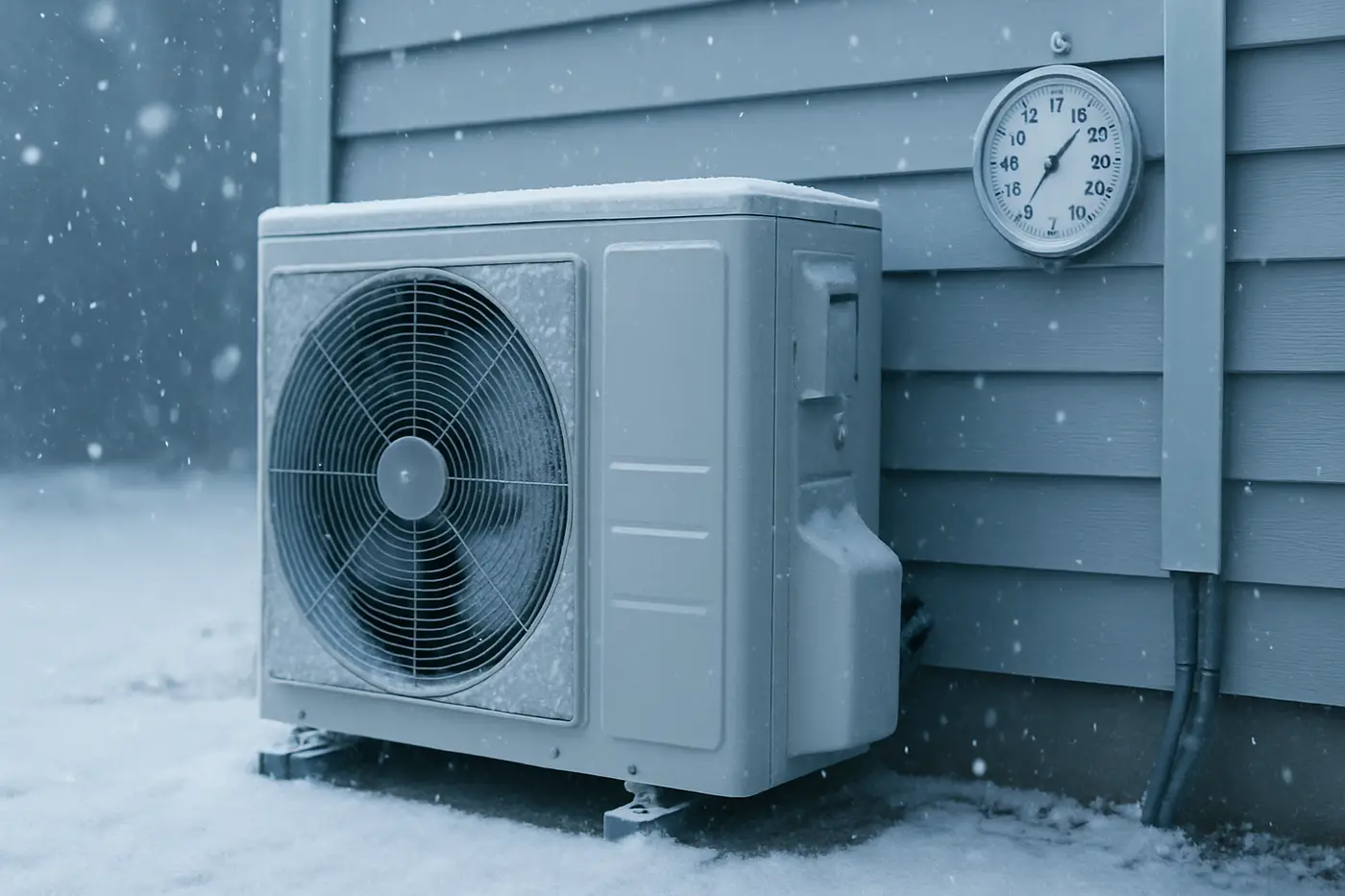
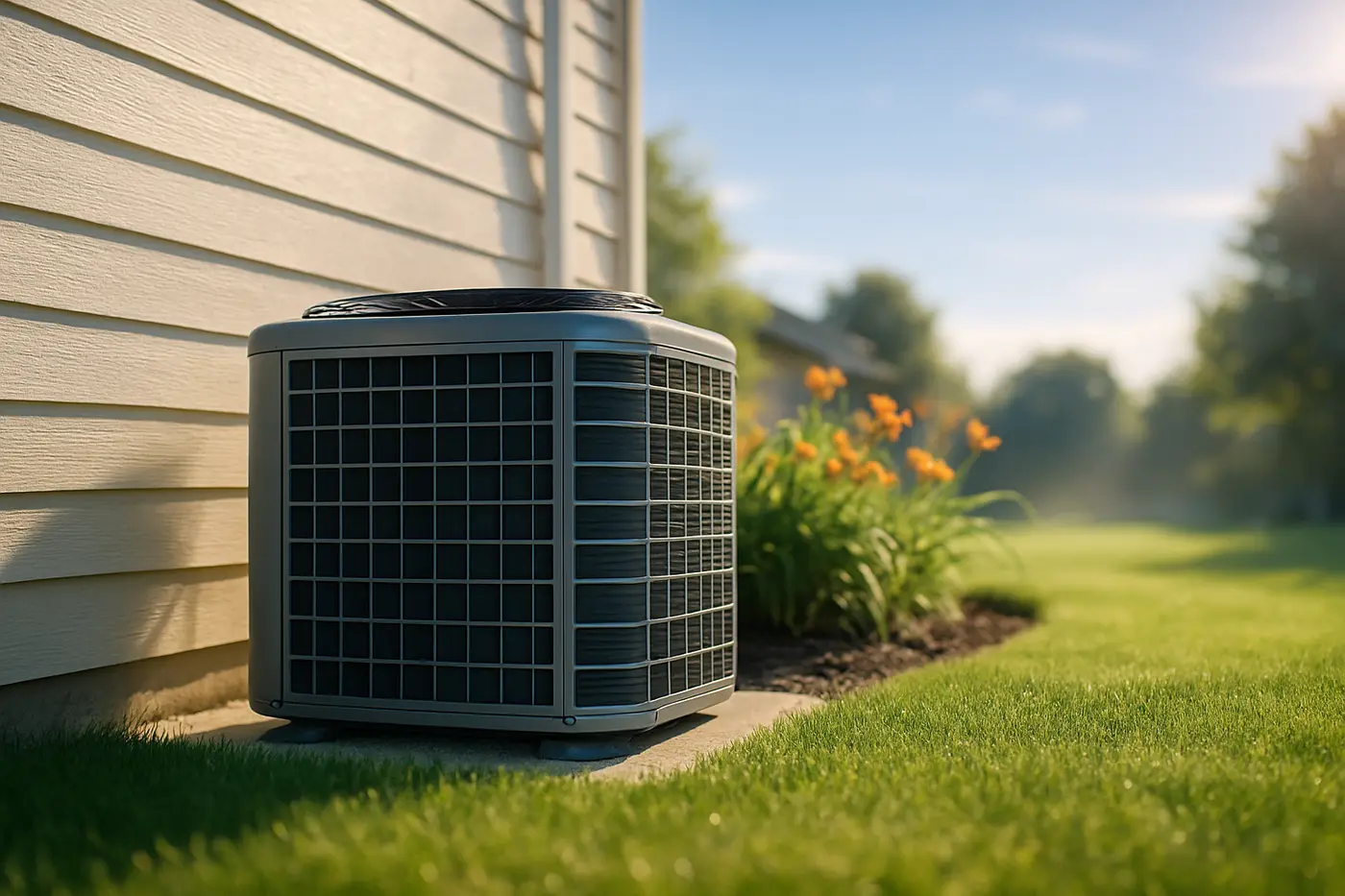
This is the most common setup in Edmonton, because most homes here heat with a natural gas forced-air furnace. Central AC uses the furnace blower and the ductwork that’s already there. A cooling coil goes on top of the furnace, an outdoor condenser goes on a pad or a wall bracket, and a refrigerant line set connects the two. The outdoor unit needs clearances from windows, property lines and the gas meter, which in tight infill lots and narrow side yards decides where it can go.
Central AC costs the least upfront and does one job: cooling. For a lot of Edmonton households that need cooling for a few weeks a year, that’s the right answer. See air conditioner installation in Edmonton for how the install works.
Option 2: a heat pump instead of an AC
A heat pump does everything a central AC does in summer, then runs in reverse in winter to heat the house. In Edmonton it’s almost always installed as a hybrid (dual-fuel) system: the heat pump heats through the milder part of the season, and the gas furnace takes over on the coldest days when the heat pump’s capacity drops. Cold-climate models keep producing heat well below -20°C, but they lose capacity and efficiency as it gets colder, which is why the furnace stays.
The gap between a central AC at $4,800–$8,500 and a hybrid heat pump at $9,000–$18,000 is real. What that gap buys is heating from the outdoor unit for a good part of the year. Whether that pays back depends on gas and electricity rates, which change, and on any financing program open at the time you buy. The full picture is in do heat pumps work in Edmonton winters.
Option 3: ductless mini-splits
Ductless systems put a head on the wall or ceiling in each zone, fed by an outdoor unit. No ducts required. They make sense when:
- The house has a hot water boiler and radiators, like some older central Edmonton homes, so there are no ducts to cool through.
- One room runs hot, typically a bonus room over the garage or a top floor, and the central system can’t fix it.
- There’s an addition, a basement suite or a garage conversion.
- The ducts in an older character home are too small for cooling airflow.
A single zone typically runs $4,000–$7,500 and a multi-zone system with 2 to 4 heads $8,500–$18,000. Many ductless units are heat pumps, so they can heat as well. More on ductless mini-split installation.
What moves the price
| Factor | Why it matters |
|---|---|
| Size of the unit | Sized to the house’s cooling needs, not just square footage; oversizing short-cycles and leaves the house clammy |
| Efficiency and features | Two-stage or variable-speed equipment costs more and runs quieter and more evenly |
| Condenser location | Pad vs wall bracket, clearances, distance from the furnace |
| Line set length and routing | Longer runs through finished basements take more time |
| Furnace compatibility | An old furnace blower may need changes, or the furnace may be due for replacement anyway |
| Return air and ductwork | Undersized returns limit cooling airflow and may need work |
| Electrical | A new circuit and disconnect for the outdoor unit, done under a permit |
| Refrigerant type | New equipment uses lower-GWP refrigerants; see below |
Ductwork is the one people don’t expect. In 1970s and 1980s suburbs like Mill Woods, Castle Downs and Clareview, AC was often added later on the original ductwork, and undersized returns are common. A technician should look at the return air before quoting, because an AC that can’t move enough air freezes its coil and never cools the upstairs properly. Basement renovations that boxed in ducts and blocked returns cause the same problem.
The age of the furnace matters too. If the furnace is 15 or more years old, it’s worth pricing a furnace and AC together. The typical service life of a furnace here is 15 to 20 years, and installing a new AC coil on a furnace you’ll replace in two years means paying for some of the work twice.
Refrigerant: why it affects what you buy now
Most existing air conditioners in Edmonton use R-410A. As Canadian rules phase down HFC refrigerants, new equipment is moving to lower-GWP refrigerants such as R-454B and R-32. For you, that means two things.
First, parts and refrigerant for older R-410A units are getting more expensive. A refrigerant leak search, repair and recharge typically runs $450–$1,800, and a compressor $2,000–$3,800. On an older unit, a compressor failure is usually the point where replacing the whole outdoor unit makes more sense than repairing it.
Second, when you replace, the new outdoor unit, coil and sometimes line set are matched to the new refrigerant. That’s part of the quote, not an extra you should be surprised by later. Only a certified refrigeration and air conditioning mechanic handles refrigerant; it’s not a homeowner job.
Repair or replace an existing AC
If you already have central air and it quit, a repair is often the sensible call. A failed capacitor or contactor at $175–$450 is a common summer fix and worth doing on almost any unit. A refrigerant leak on a 15-year-old R-410A unit is a harder call, and a compressor on an older unit usually isn’t worth it. Before paying for a repair, check the basics: the thermostat set to cool, the furnace power switch on (the AC needs the furnace blower), a clean filter, and the breaker for the outdoor unit. The air conditioner repair page lists the common failures.
A yearly AC tune-up at $129–$219, done in spring, catches weak capacitors and dirty coils before the first hot spell.
When to buy
The best time to install air conditioning in Edmonton is spring or early summer, before the first hot spell. When a heat wave arrives, everyone calls in the same week. Installing in late summer or fall is also fine and often easier to schedule; the unit is ready for next year.
Getting a real number
A quote you can compare should name the equipment by model, state the capacity and refrigerant, describe where the condenser goes and how the line set runs, list the electrical and permit work, and say whether any duct or return changes are included. Get it in writing before any work starts. For what else to look for when comparing contractors, see how to choose a furnace company in Edmonton.
When you’re ready, request a quote and tell us the age of your furnace, whether you have ducts in every room, and which rooms get hottest. We’ll price central AC, and a heat pump or ductless option where it fits the house, side by side.