- #furnace not working
- #no heat
- #furnace blowing cold air
- #troubleshooting
- #edmonton
- #high-efficiency furnace
Quick answer: Before booking a furnace repair in Edmonton, check the thermostat mode, setpoint and batteries, the furnace power switch and breaker, the filter, that the furnace door is seated, and that the outside intake and exhaust pipes are clear of snow and frost. Then look at the condensate line, the gas valve handle and the error code through the sight glass. If you smell gas or a CO alarm sounds, skip all of this: get out and call from outside.
A good share of no-heat calls in an Edmonton winter end with a thermostat battery, a switch someone bumped, a filter packed solid or a vent pipe buried in a drift. Those are worth checking before you pay for a service call. What follows is only what is safe for a homeowner to do. Nothing here involves opening the burner compartment, touching wiring or bypassing anything.
Safety first: gas and carbon monoxide
If you smell gas (rotten eggs): leave the house now. Do not touch light switches, the thermostat or the furnace, and do not use a phone inside. Call ATCO Gas’s 24-hour emergency line or 911 from outside.
If a CO alarm sounds, or people in the house have headaches or nausea that ease when they go outside: get everyone out and call 911 from outside. Do not go back in to check the furnace.
Every home with a fuel-burning appliance should have CO alarms near sleeping areas. They have an end-of-life date printed on them, typically 7 to 10 years out. If yours has passed it, replace it before you do anything else on this list.
The 9 checks
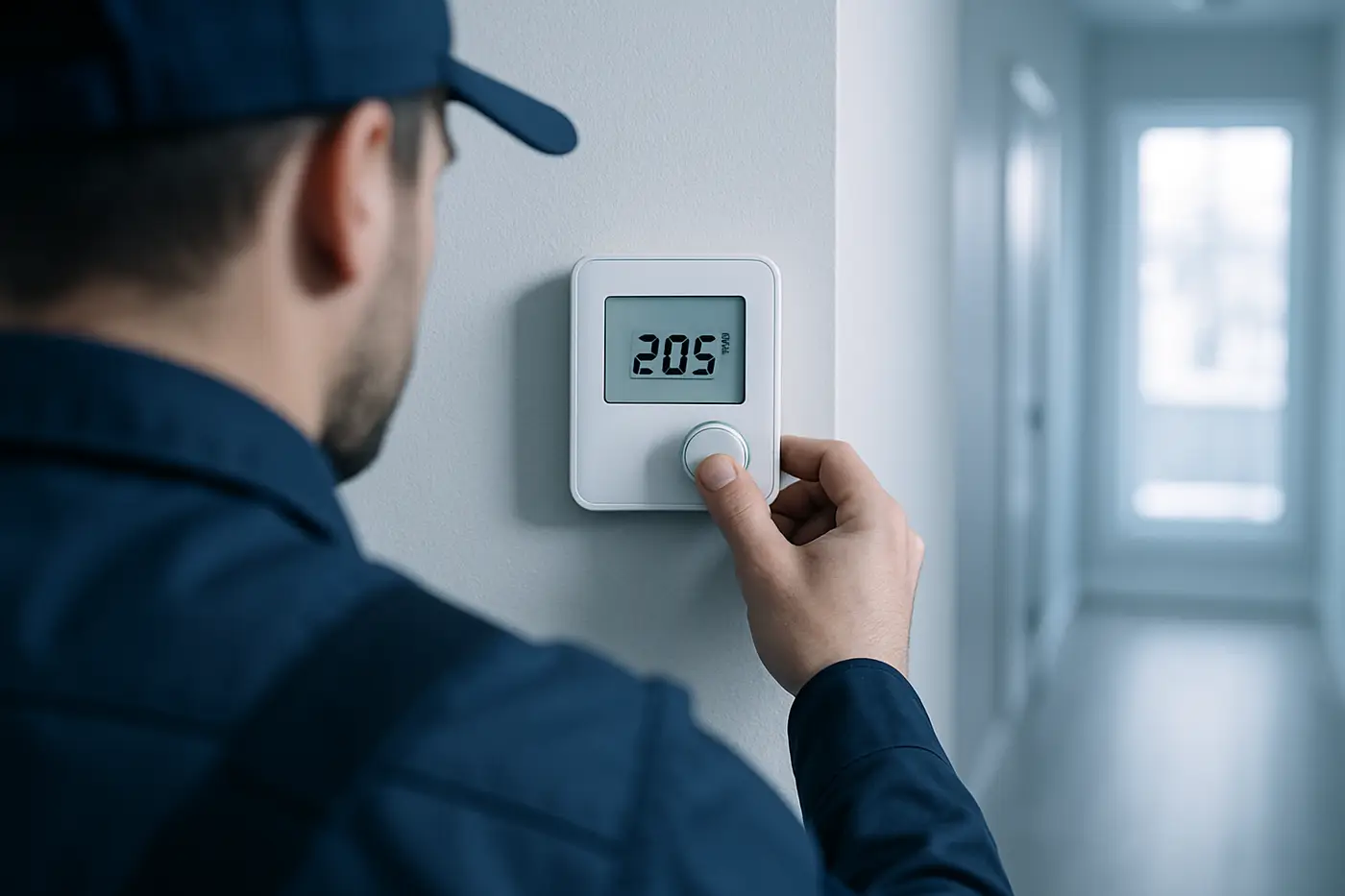
1. Thermostat mode and setpoint
Make sure the thermostat is on Heat, not Cool or Off, and set a few degrees above the current room temperature. If the fan is set to On instead of Auto, the blower runs all the time and blows room-temperature air between heat cycles, which feels like the furnace is blowing cold.
2. Thermostat batteries
Many thermostats run on AA or AAA batteries even when they are wired in. A blank or dim screen, or a low-battery icon, means new batteries. It is one of the most common and cheapest no-heat fixes there is.
3. Furnace power switch
There is a switch near the furnace, often on the wall or a ceiling joist and looking like a regular light switch. It gets flipped off by accident during basement cleaning or storage moves. Make sure it is on.
4. The breaker
Check the furnace breaker in the electrical panel. If it has tripped, reset it once. If it trips again, leave it off and book a service call; a breaker that keeps tripping is an electrical fault.
5. The filter
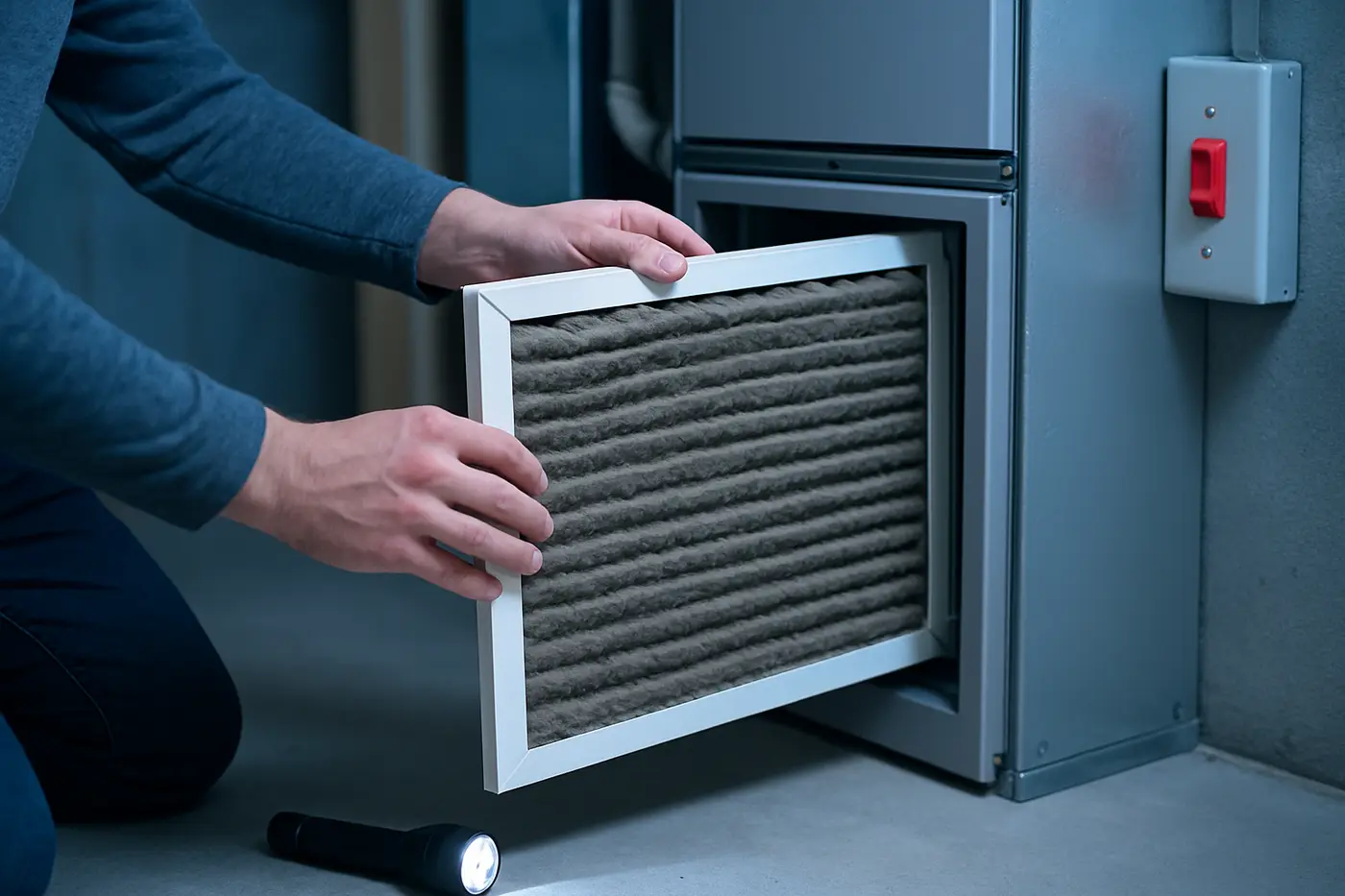
Pull the filter and hold it up to a light. If you cannot see light through it, replace it. A packed filter chokes airflow, the furnace overheats, and the limit switch shuts the burners off. The furnace then cycles on and off, or runs the blower with no heat. In winter, with the furnace running most of the day, a standard filter can clog faster than people expect.
6. Furnace door seated
Most furnaces have a safety switch that keeps the furnace off when the blower door is not fully closed. If someone changed the filter and the door is slightly out of place, the furnace will not run. Press the door firmly into place.
7. Outside intake and exhaust pipes
On a high-efficiency furnace, go outside and find the two white PVC pipes coming through the side wall or roof. Drifting snow, ice build-up and frost from the exhaust plume block them, and the furnace shuts down on its pressure switch. This is one of the most common no-heat calls in an Edmonton January, especially in newer subdivisions where the pipes sit in a narrow side yard that drifts in. Clear snow and frost gently by hand or with a soft brush. Do not cut, bend or pull the pipes.
8. Condensate line and trap
High-efficiency furnaces make water, which drains through a trap and a small line, usually to a floor drain. Where that line runs near a cold wall or through an unheated space, it can freeze. Look along it: is it visibly frozen, full of ice, kinked or pulled off the drain? Look, don’t cut. A frozen or rerouted line is a technician job.
9. Gas valve handle and the error code
Find the gas shut-off handle on the pipe leading to the furnace. When the handle runs in line with the pipe, it is open. Look only; if it is across the pipe, someone may have closed it for a reason, and that is a question for a technician. Then look through the small sight glass in the furnace’s blower door. Most modern furnaces flash an LED error code, and the chart that explains the blinks is printed on the inside of the door. Count the blinks and write the pattern down. That number saves time on the service call.
Symptom, likely cause, safe check, when to stop
| Symptom | Likely cause | Safe check | When to stop and book |
|---|---|---|---|
| Nothing happens at all | Thermostat batteries, power switch, breaker | Batteries, switch on, breaker reset once | Breaker trips again, or still no power |
| Blower runs, air is cold | Fan set to On, clogged filter, furnace locked out | Fan to Auto, replace filter, read error code | Still cold after one reset |
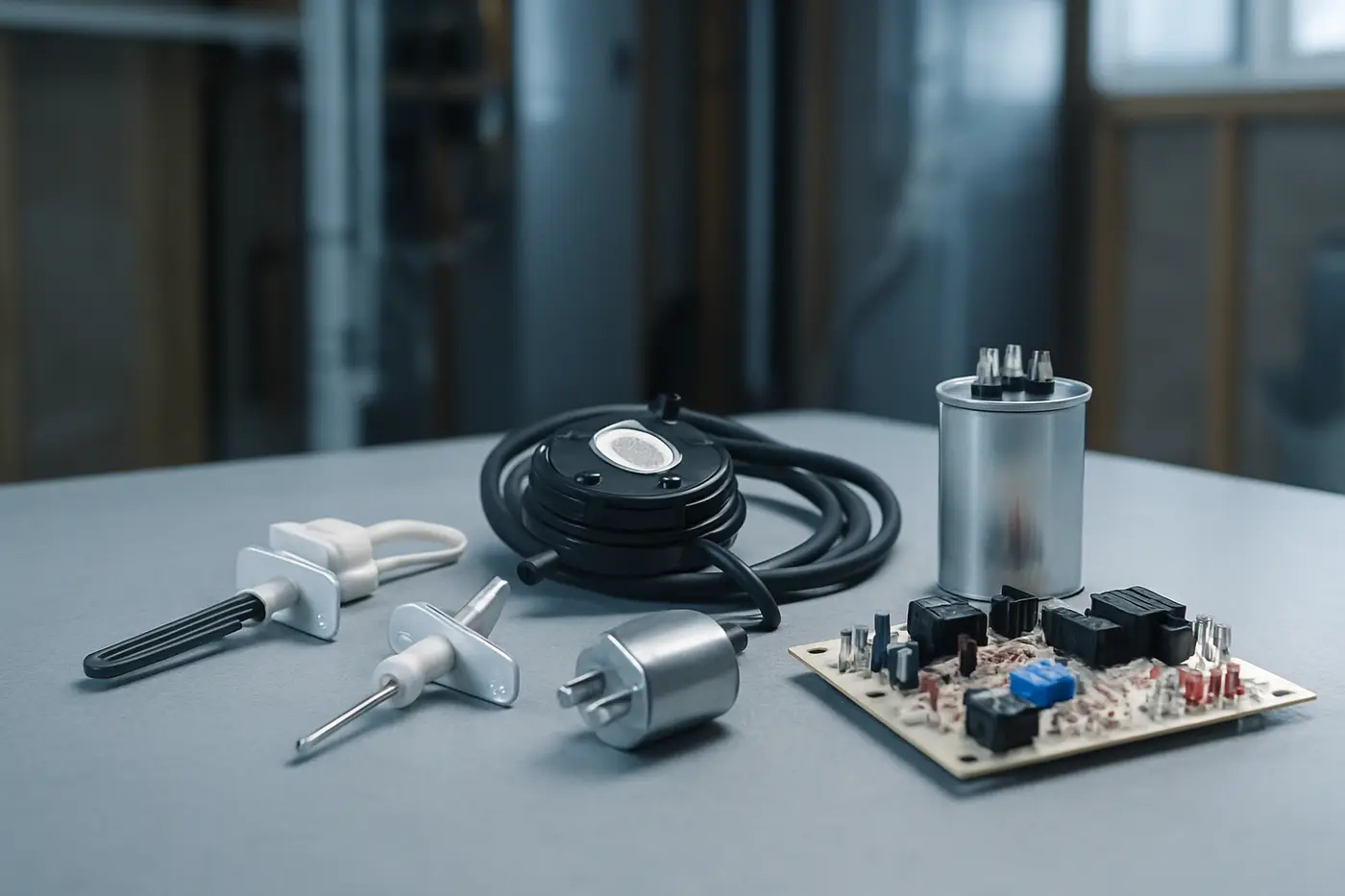
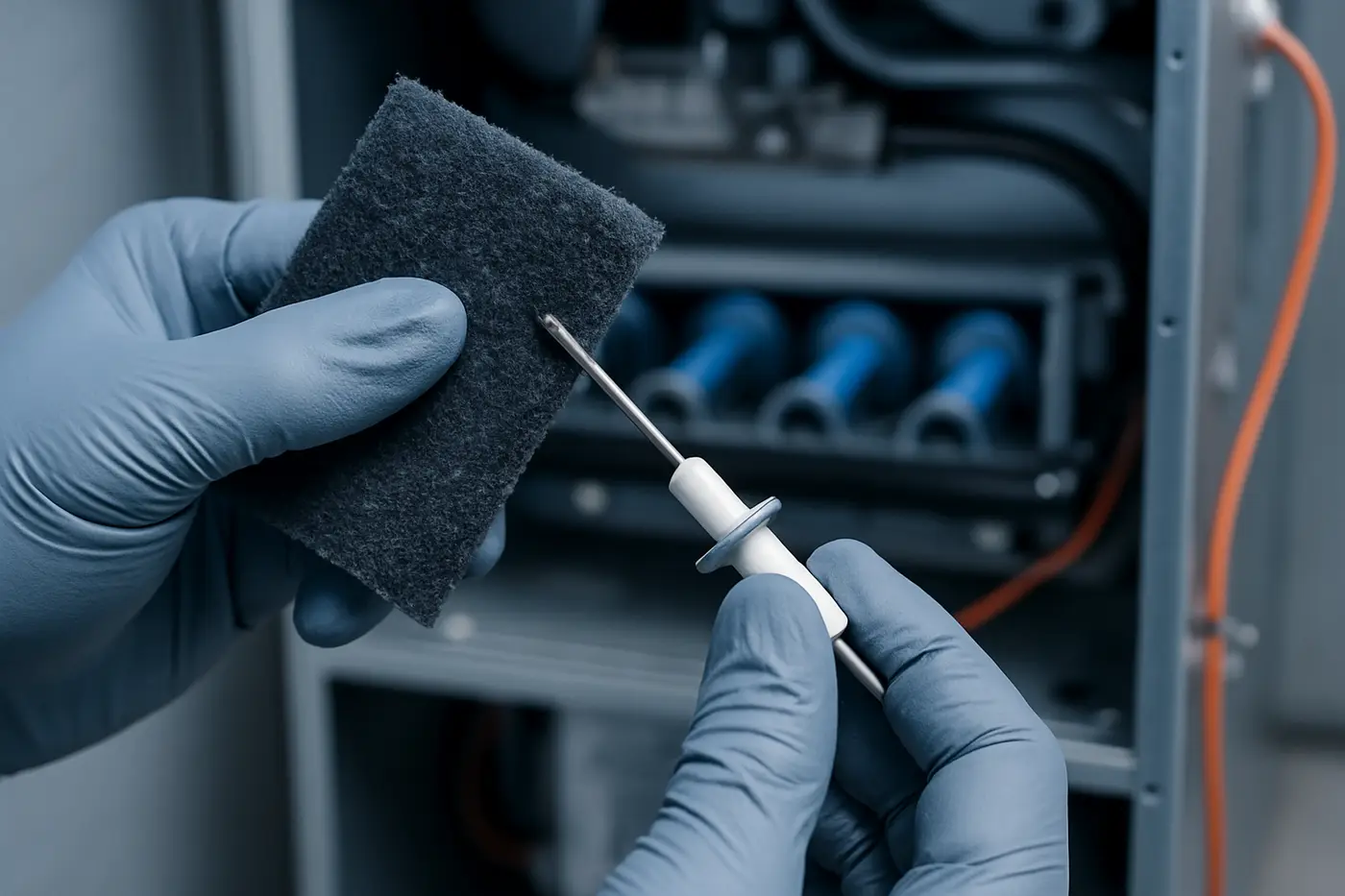
| Furnace starts, shuts off after a few seconds | Dirty flame sensor, gas supply | Look at gas valve handle, read code | Any repeat; do not keep resetting |
| Furnace off after a snowfall or cold night | Blocked intake or exhaust, frozen condensate | Clear pipes outside, look at condensate line | Pipes clear and it still will not run |
| Short cycling on and off | Clogged filter, limit switch tripping | Replace filter, check returns are not blocked | Continues with a clean filter |
| Humming or loud whine at start-up | Inducer motor, blower capacitor | Note the sound and when it happens | Straight away; do not reset repeatedly |
| Water on the floor near the furnace | Condensate trap or line problem | Look for a kinked or disconnected line | Straight away |
| Burning, electrical or scorching smell | Electrical fault, overheating | Turn the furnace off at its switch | Straight away |
| Rotten egg smell | Possible gas leak | None; leave the house | Call from outside |
| CO alarm sounding | Possible carbon monoxide | None; get everyone out | Call 911 from outside |
One reset, not five
After you fix an obvious cause, such as a new filter or clearing snow off the pipes, turn the furnace power switch off, wait about a minute and turn it on again. That is one reset. If the furnace locks out again, stop. Modern furnaces lock out for a reason, and repeated resets on a failing igniter or pressure switch can turn a small fault into a bigger one.
What homeowners should never do
Do not open the burner compartment. Do not bypass or jump any safety switch: the limit switch, pressure switch and rollout switch are there to stop the furnace when something is wrong, and bypassing them hides the problem that could hurt someone. Do not jump the control board. Do not try to relight a modern furnace with an open flame; they use electronic ignition. And leave anything involving gas lines or refrigerant to certified trades: gas work in Alberta is done by a certified gasfitter.
When the checks don’t fix it
If the furnace still will not heat, book a service call. A regular-hours diagnostic typically runs $129 to $199 in Edmonton, and an after-hours, weekend or holiday no-heat call $199 to $349. A dirty flame sensor runs $129 to $299 to clean or replace, an igniter $225 to $450, and a frozen condensate line thaw and reroute $150 to $450. These are typical Edmonton ranges; your price is confirmed in writing before any work starts. The part-by-part list is in how much does furnace repair cost in Edmonton and on the pricing page.
If the house is dropping fast during a cold snap, as happened across the region in January 2024 when temperatures fell into the -40s with wind chill, treat it as urgent. No-heat calls get priority; we confirm the arrival window when we reply to your request. See emergency furnace repair for what that visit looks like. Homes in newer southwest neighbourhoods such as Windermere, where high-efficiency furnaces vent through side-wall PVC pipes, see a lot of the snow and frost calls described above.
Preventing the next one
Most of these calls are avoidable. A yearly furnace tune-up cleans the flame sensor, checks the igniter, the pressure switch and hose, the condensate trap and the venting before the cold arrives. Change the filter on schedule through the winter, keep snow cleared from the pipes after every storm, and replace CO alarms by their end-of-life date. If you want the heat exchanger and combustion checked specifically, a furnace inspection with a combustion and CO test covers that.
When you are ready, request a visit and tell us what the furnace is doing, including the error code blink pattern if you have it.